Paesi miei. Storie e gesti di Una Boccata d'Arte
Una mostra di Fondazione Elpis in collaborazione con Toast Project
05.11.2025 – 21.12.2025Manifattura Tabacchi
Firenze
Aiko Shimotsuma, Qeu Meparishvili, Giuseppe Abate, Gabriele Ermini, Adele Dipasquale, Roberto Casti, Bibi Manavi, Atelier Tatanka
The Elpis Foundation, in collaboration with Toast Project, presents the group exhibition Paesi miei. Stories and Gestures from Una Boccata d’Arte, hosted by Manifattura Tabacchi in Florence and open to the public free of charge from November 6 to December 21, 2025.
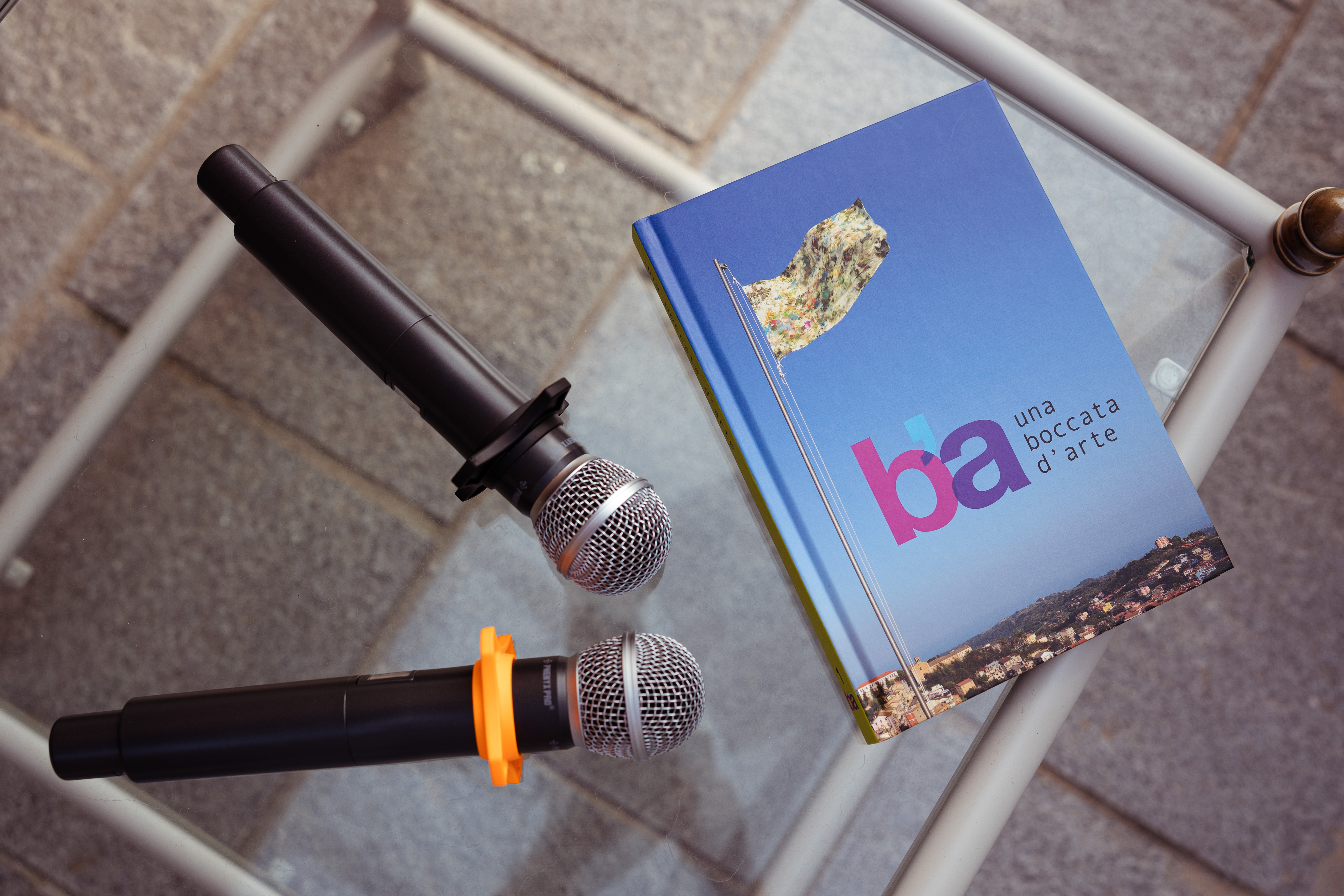
The exhibition chronicles the experience of Una Boccata d’Arte, a widespread project that, since 2020, has invited twenty artists each year to create works in twenty Italian villages—one for each region.
Within the spaces of Edificio B12, the works—originally conceived for local landscapes, squares, and architecture—keep alive the memory of the places they come from, transforming the experience of these territories into new visual narratives.
On view are works by Giuseppe Abate, Roberto Casti, Adele Dipasquale, Gabriele Ermini, Bibi Manavi, Qeu Meparishvili, and Aiko Shimotsuma, alongside an archival installation by Atelier Tatanka that maps the project’s six-year history.
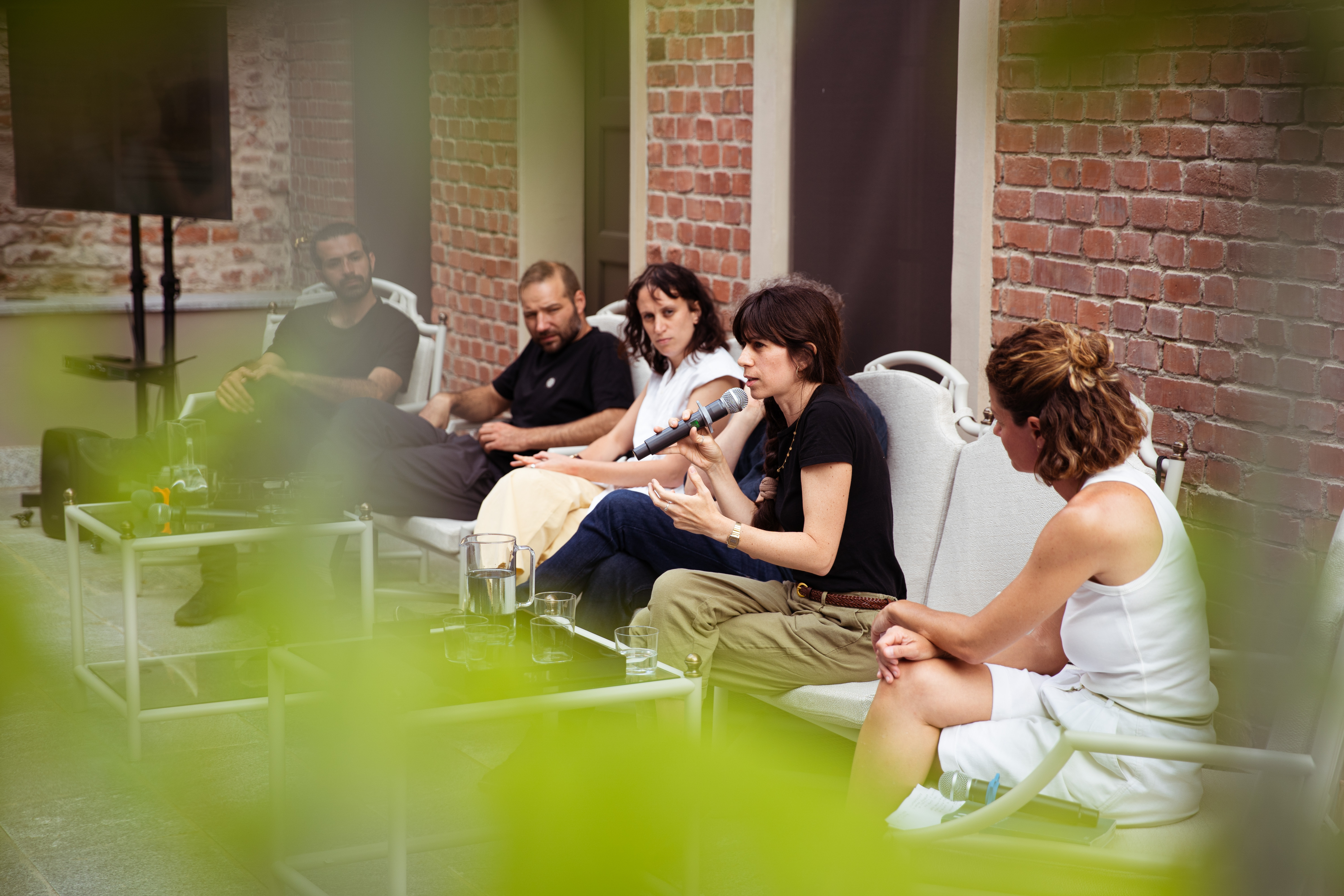
Throughout its run, Paesi miei will be accompanied by a public program of talks and screenings: every Wednesday, “Storie di Una Boccata d’Arte” features conversations with artists and curators, while on Thursday, December 4, the event “Voices – A Più Voci,” curated by Threes, will present performances by Sara Persico and the duo Babau.
Paesi miei is an invitation to rediscover Italy through its communities, its practices, and its landscapes, where art becomes a shared narrative and living memory.
Contenuti correlatu
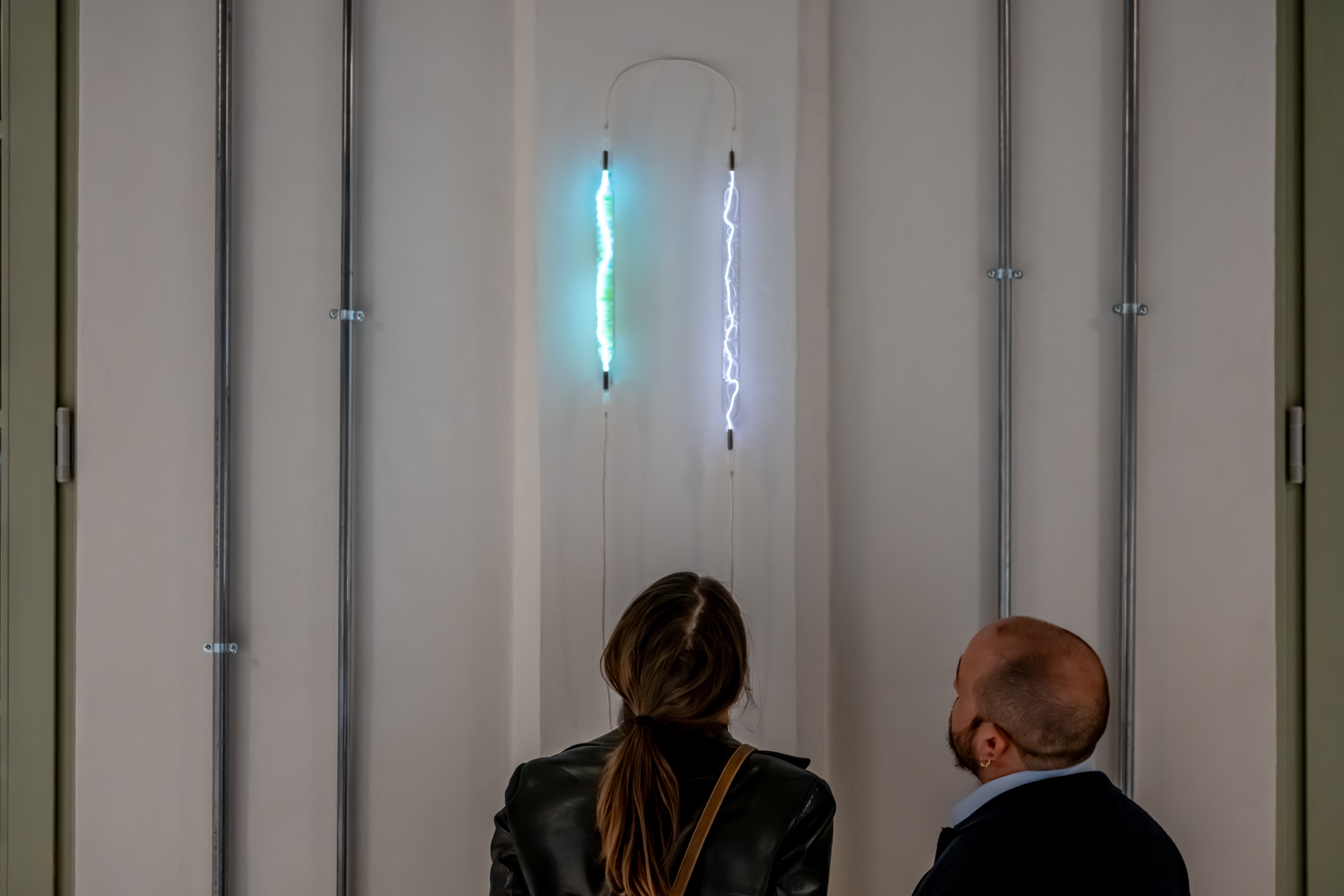
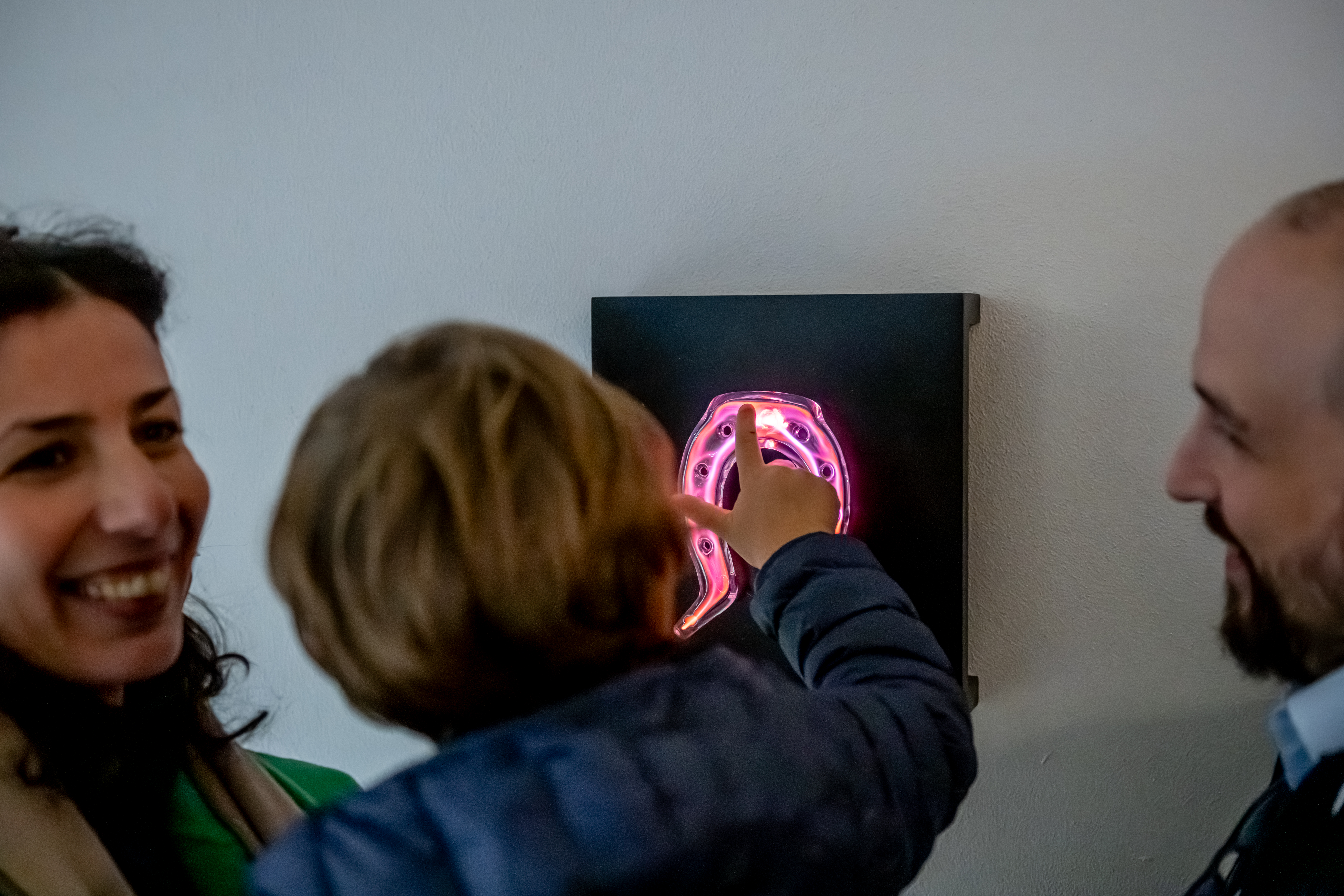
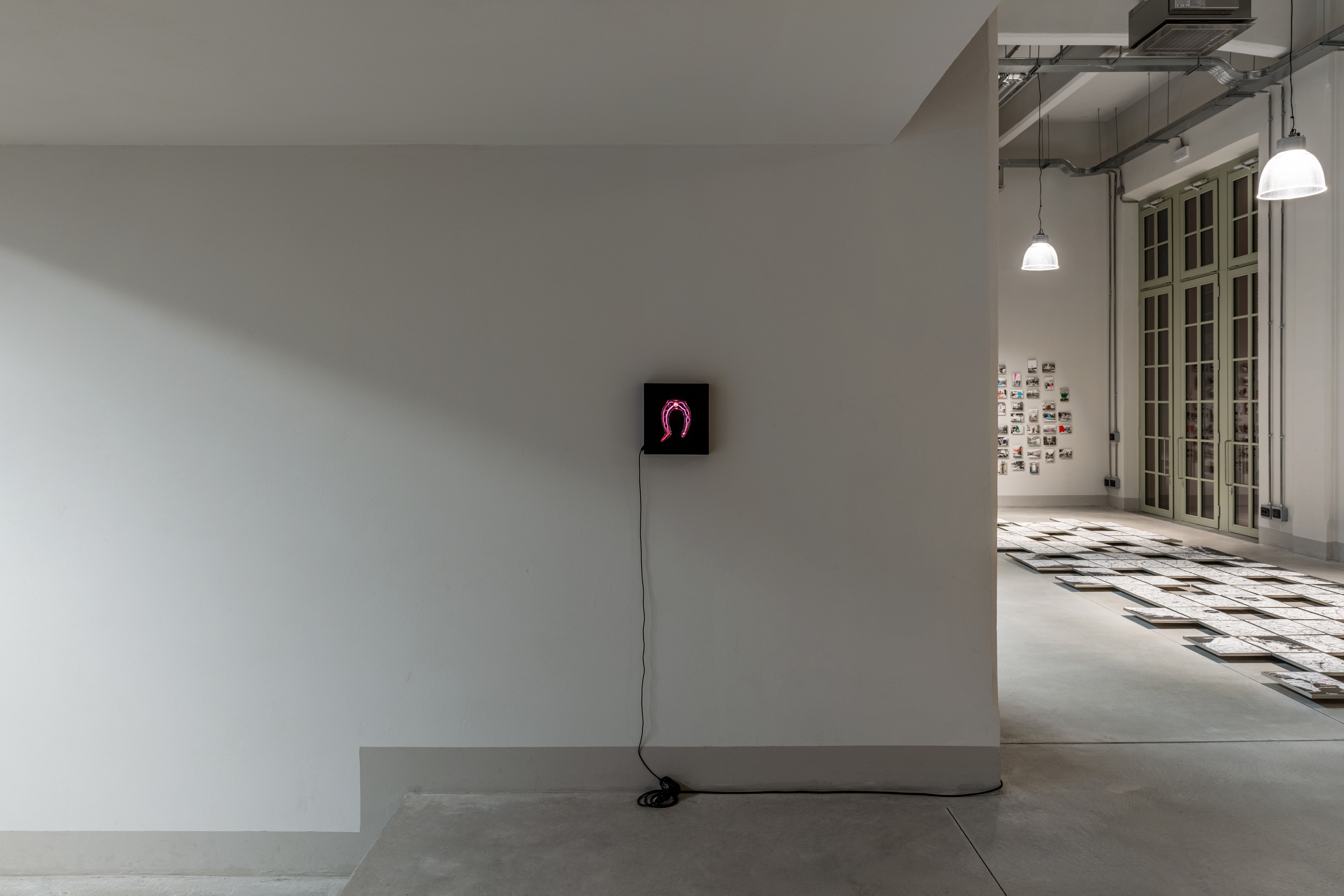
Sleeps the lake, Brunate (Como, Lombardia), curated by Edoardo De Cobelli
Wandering through the fog of Brunate, I began to sense how the unseen reveals itself through touch and tension. This project emerged from that moment, where perception blurs, and the boundary between presence and imagination softens.
In resonance with the atmospheric phenomena of Brunate — a village located five hundred meters above Lake Como and linked to the figure of Alessandro Volta — the project seeks to convey the sensations experienced in dialogue with its distinctive atmospheres. Visitors are invited to interact with the works: just as the lake and the weather are conceived as living, changing entities, so are the artworks. Horseshoe is a reproduction of a horseshoe found on the door of the building’s ancient well. Fascinated by the Italian belief in the object as a protective amulet, the artist recreated it in glass containing a special gas that reacts to touch, “calling in” good fortune, as tradition suggests. The vivid colors of Brunate’s sky — its dawns and sunsets so beloved by the local community — reappear in the series Matter is void, which pays homage to the landscape’s palette through subtle gradients and luminous, vibrant tones. The lighting reinforces the installation’s connection with elemental forces — light, air, and energy — and with the emotional resonance of the place. Together, these elements form a poetic interface between body, landscape, and invisible phenomena.
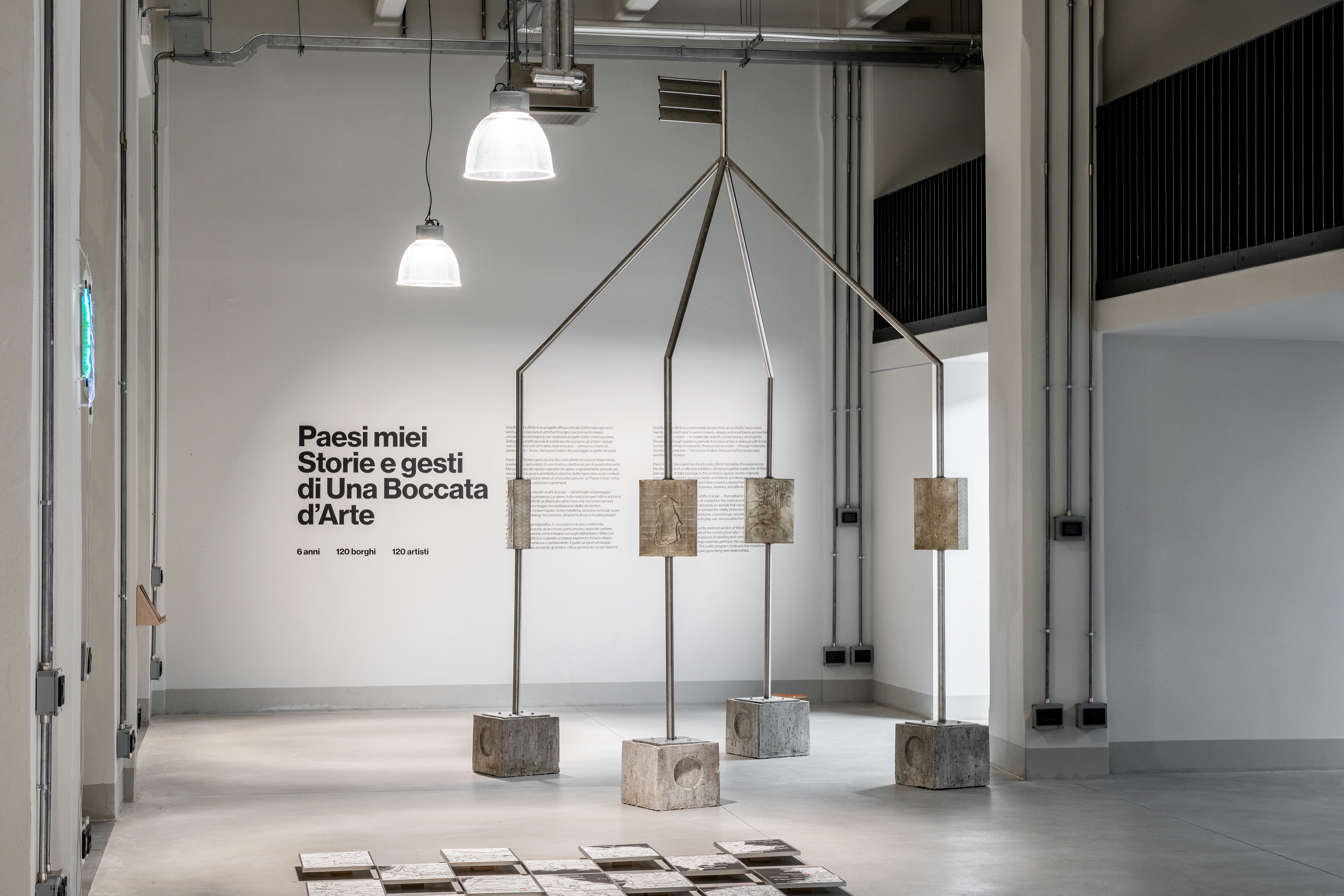
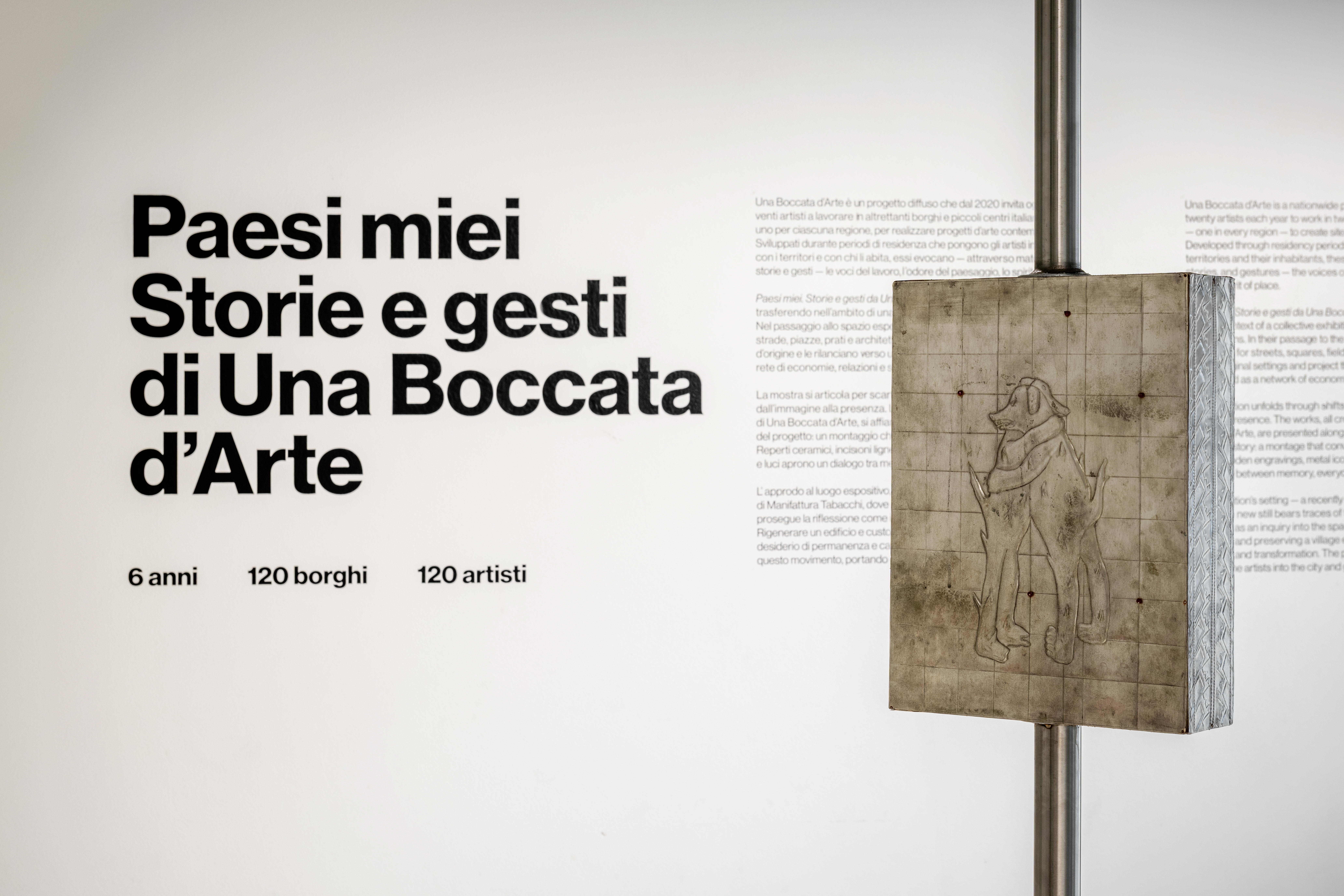
Edicola dei Randagi — Shrine of the Strays, Citerna (Perugia, Umbria), curated by Giovanni Rendina
The depiction of stray dogs goes beyond mere documentation. Its poetic dimension invites reflection on predatory instincts, the animal within the human and the human within the animal. It becomes a story of oppression, tolerance, shared space, and even, to some extent, gender roles.
The artwork is a sculptural installation composed of metal plates crafted using the traditional Georgian iconographic technique, now largely obsolete, in dialogue with the medieval architecture of Citerna. Each plate features the engraving of a stray dog-countless figures in the artist’s hometown of Tbilisi, here transformed into urban “relics.” Stray dogs, now an integral part of Tbilisi’s urban fabric, have names, stories, and form unique relationships with the residents of their neighborhoods. In this work, these small, everyday narratives are elevated to symbols, granted the same dignity as war chronicles, hagiographies, or royal biographies. The piece highlights the tension between wildness and domesticity, between power and solidarity, restoring poetry and value to marginal stories. The technique itself becomes an act of cultural preservation: a visual and artisanal knowledge on the verge of extinction — the traditional iconographic format of Georgian Christian Orthodox visual culture — which, through the artwork, finds a new possibility of survival.
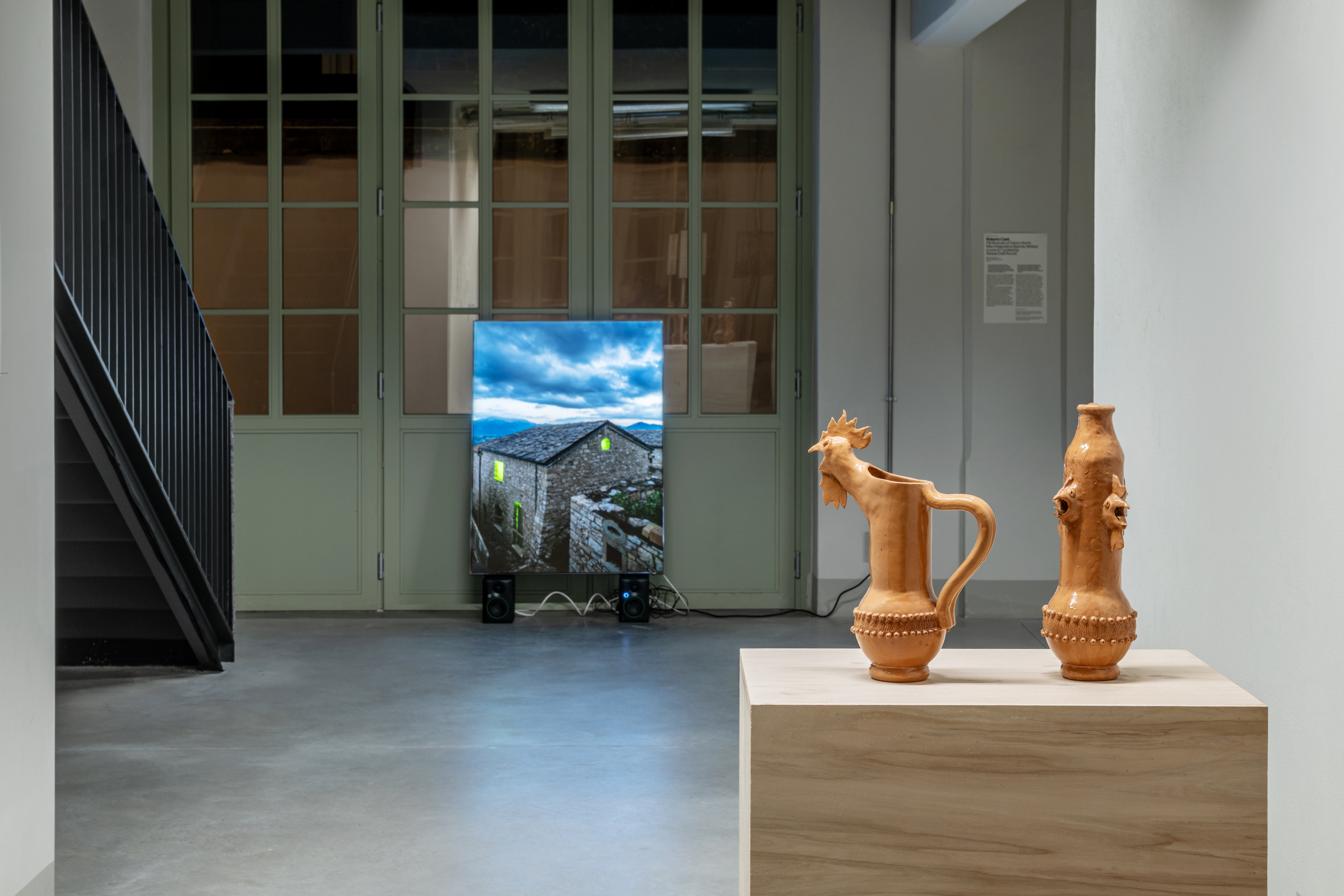
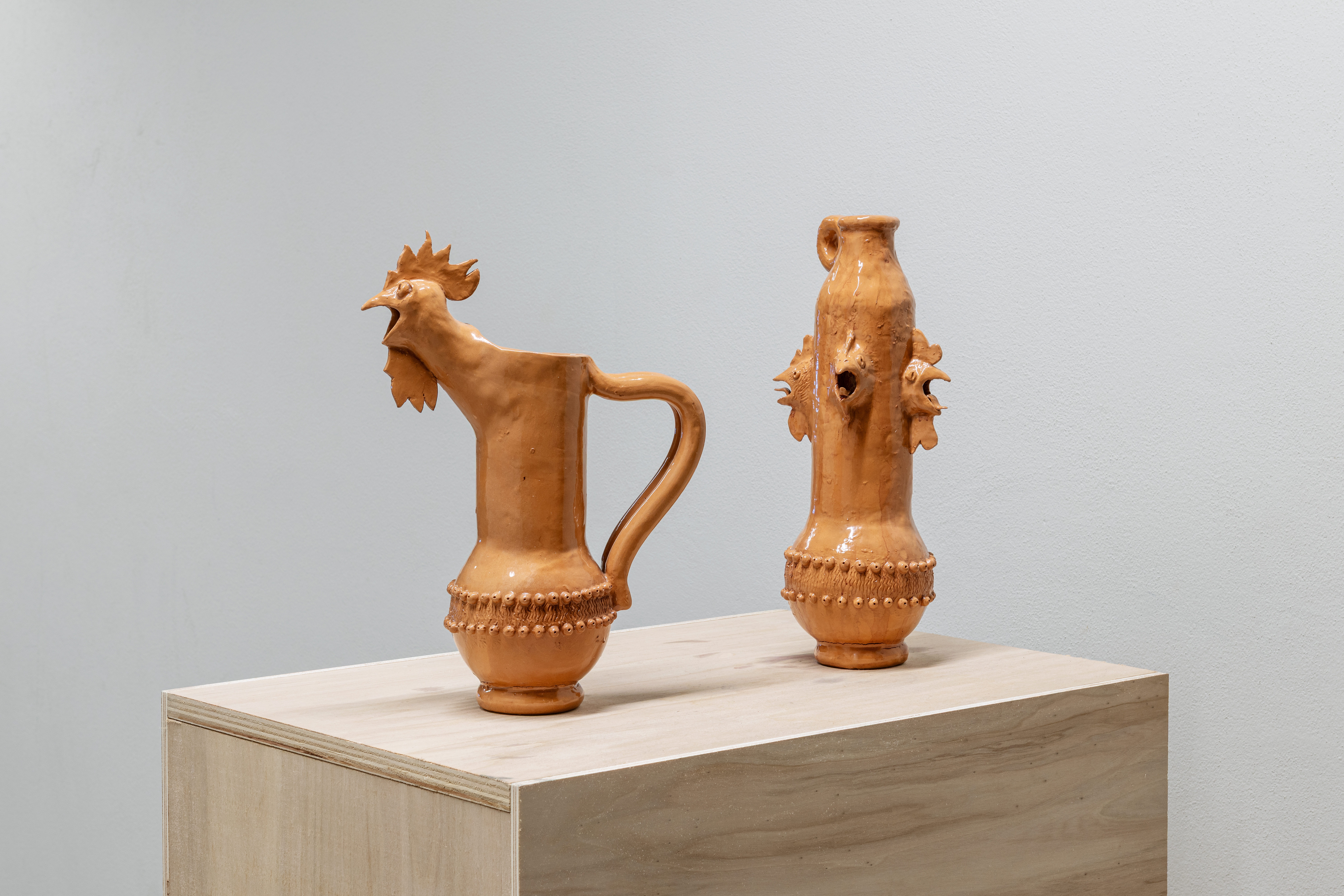
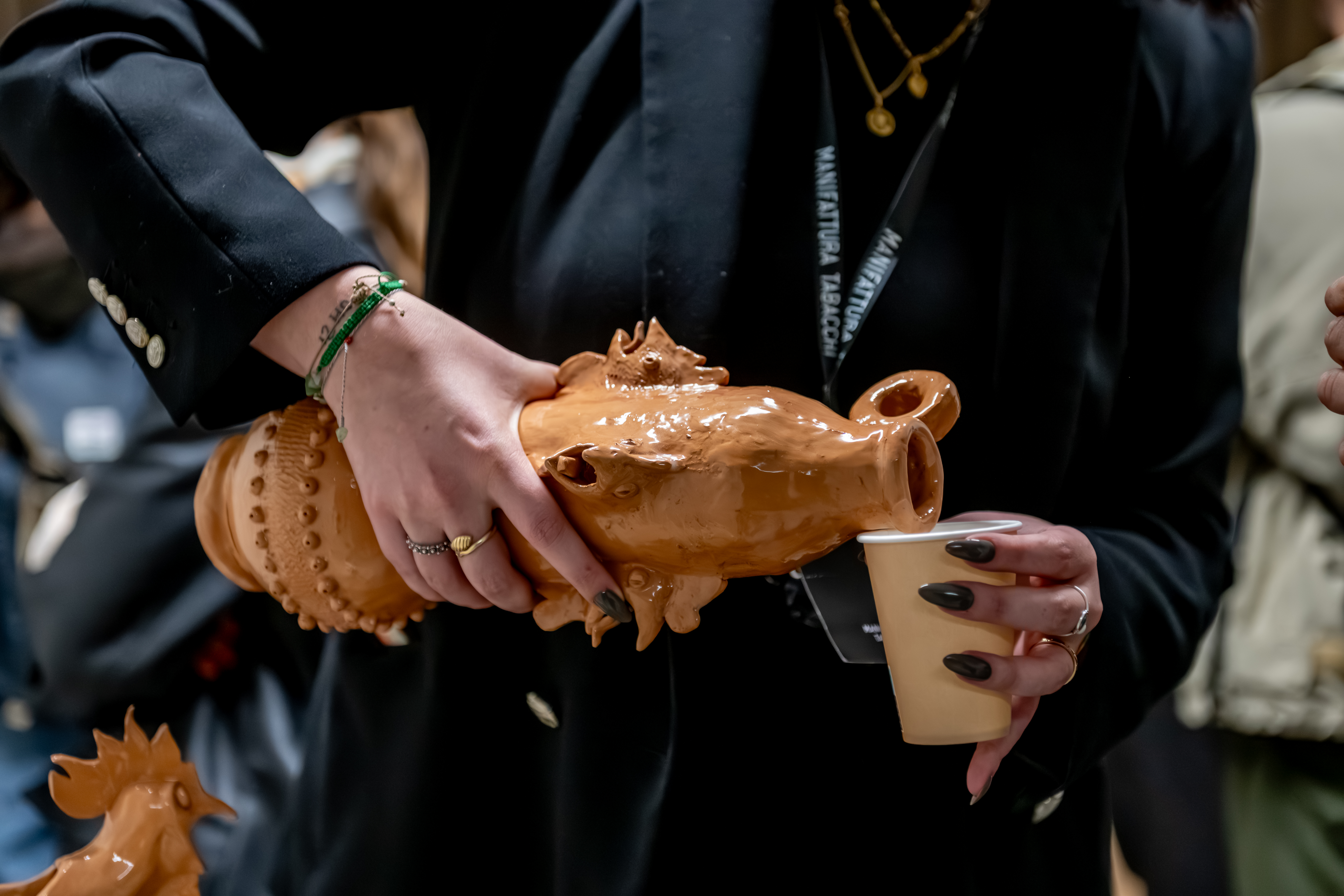
Lu Gallu, Altidona (Fermo, Marche), curated by Matilde Galletti
“There used to be a statue of a rooster there. Then they took it down”. Of all the things Luca told me about Altidona that evening, the brief story of the rooster on the town walls didn’t seem particularly significant. Yet it is from this minor story that the project takes shape.
The work stems from the dialogue the artist established with the local community during his residency. A chance story and an old black-and-white photograph — showing a small rooster sculpture that once stood at the village entrance and has since disappeared — inspired the artist and shaped his project: to return the rooster to the townspeople. Referring to the local tradition of the fornaciai—artisans who work clay to mold and fire the bricks used to build the village—the artist created the rooster in the same material. On the occasion of the project’s opening celebration, he produced a series of jugs for water and wine, giving form to a convivial moment that spontaneously turned into a village festival, celebrating together the rooster’s return to the town walls. The cockerel created by Abate is now permanently installed on the walls of Altidona, while the jugs and a tray are used to offer refreshment to visitors of the exhibition.
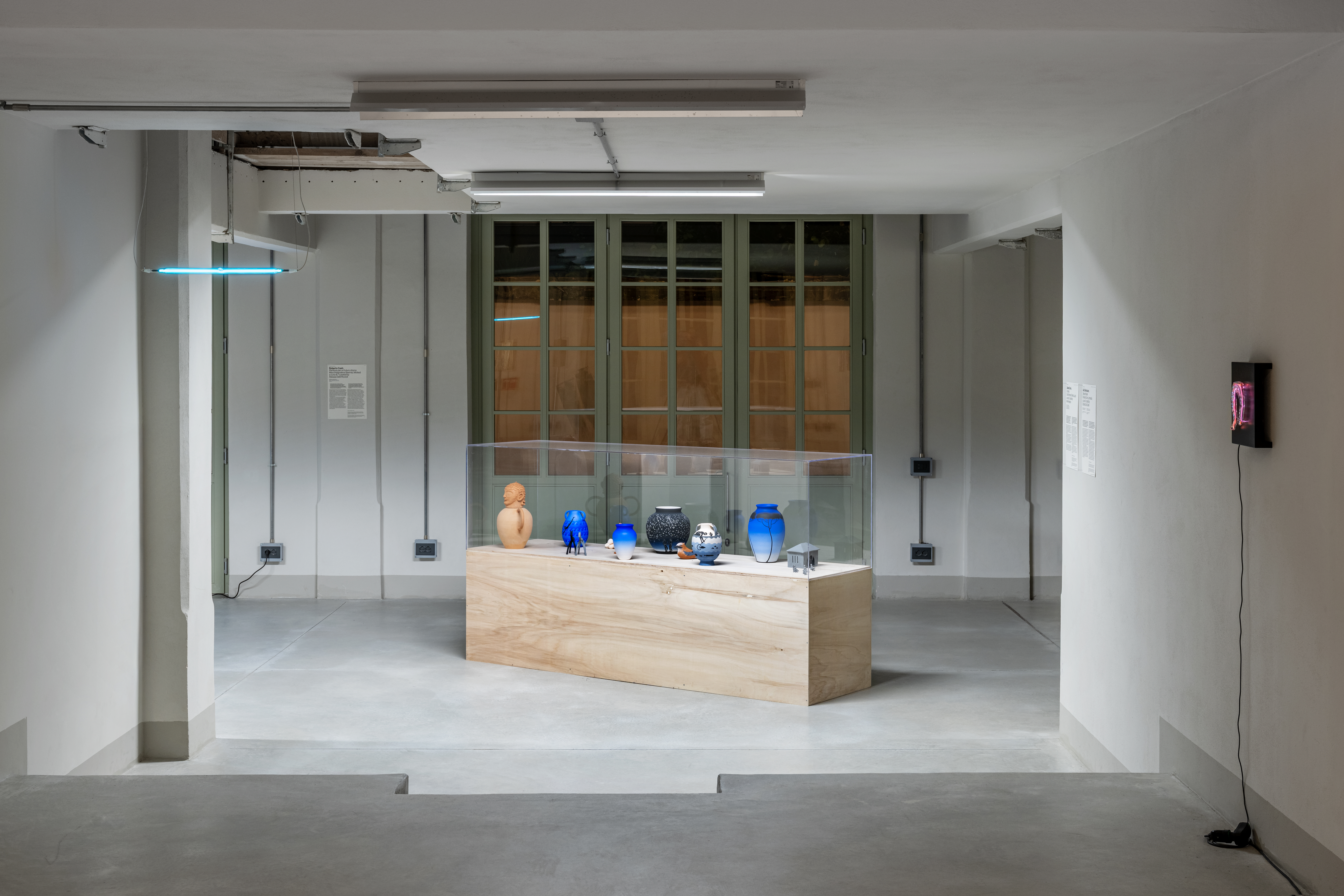
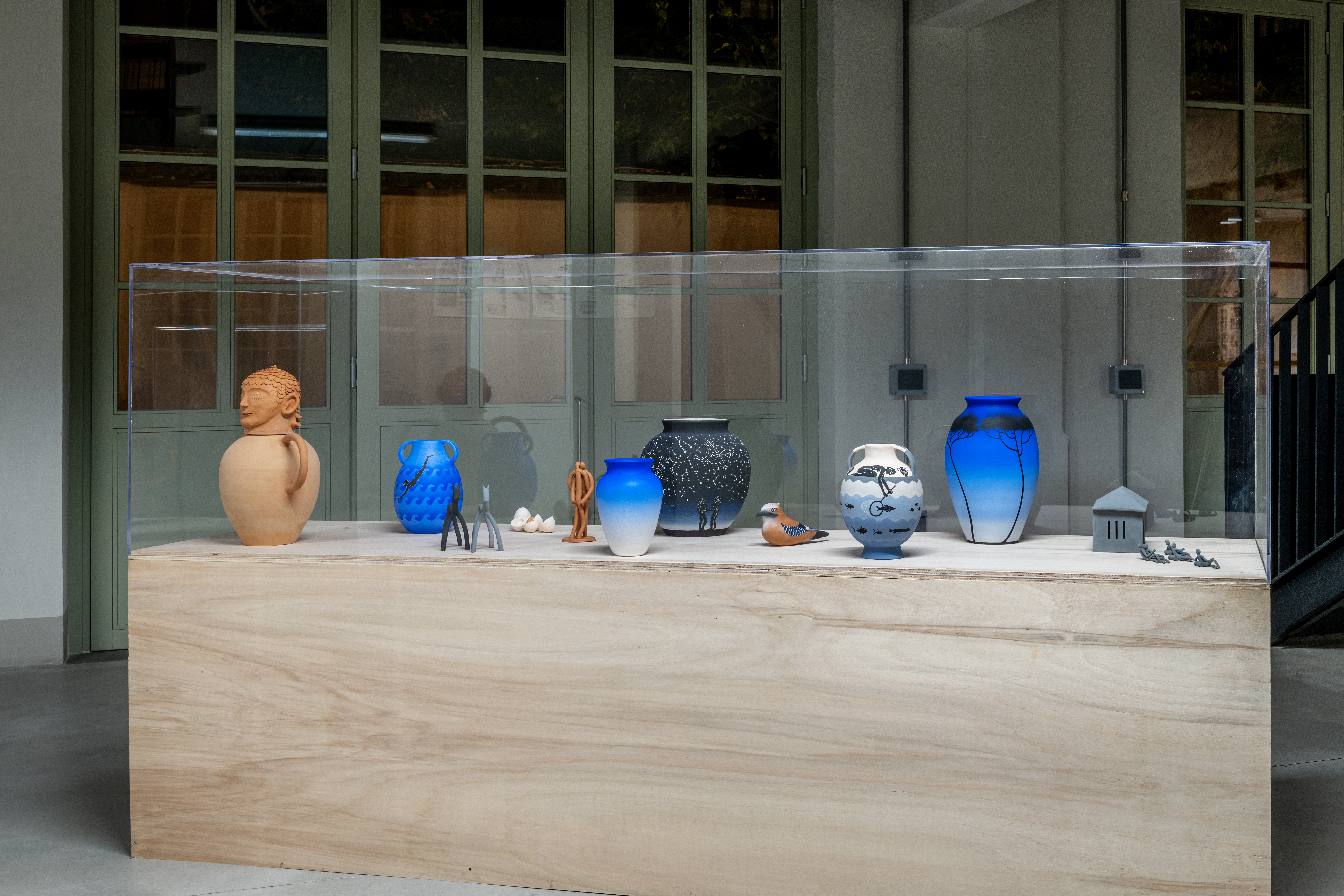
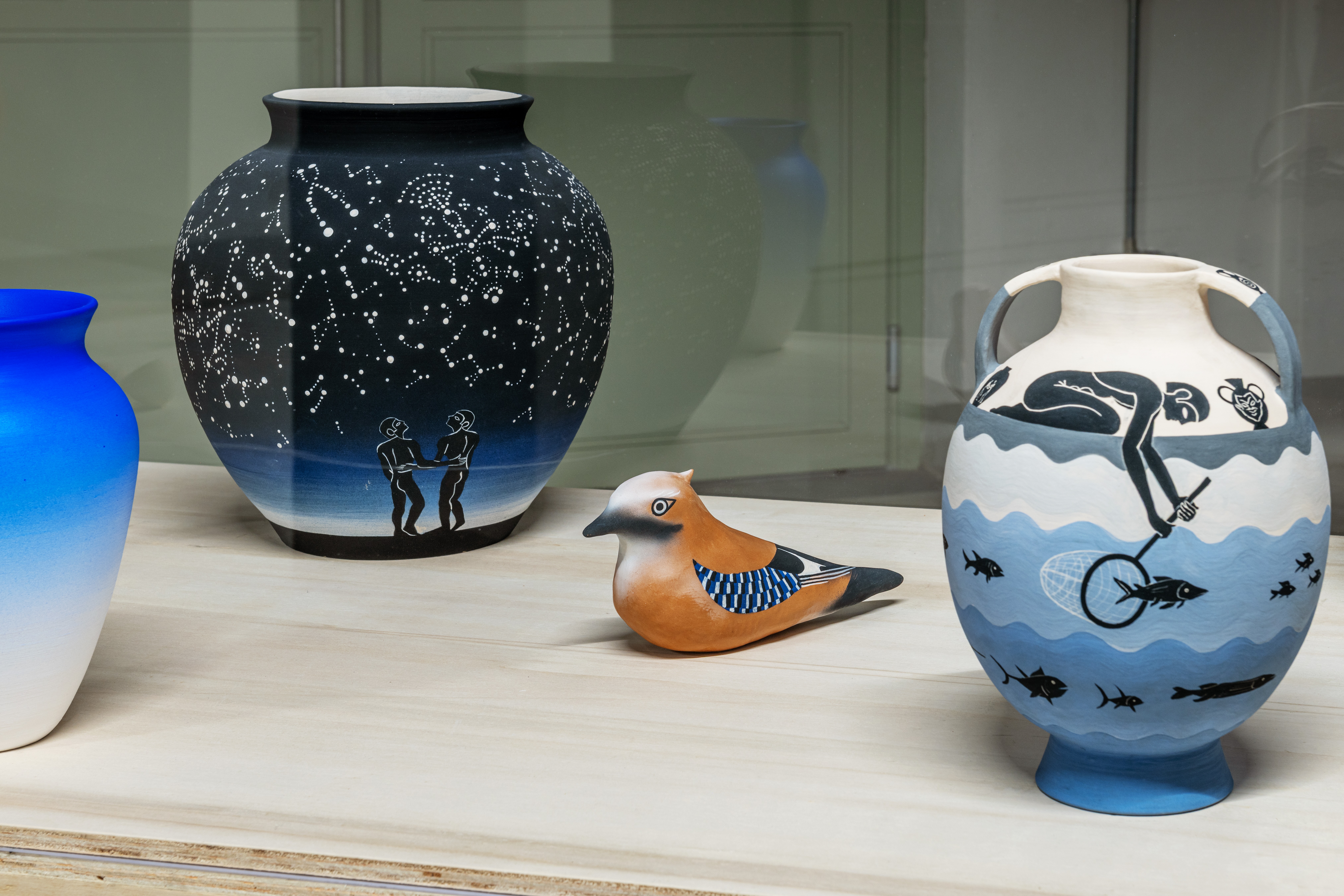
Il corredo, Oriolo Romano (Viterbo, Lazio) curated by Irene Angenica
When I paint, I move like a tomb raider: I explore the surface in the hope of uncovering something precious. I’m fascinated by the idea of searching without knowing exactly what I’m looking for — and what could be more wonderful than discovering a treasure?
The intervention weaves together contemporary art, imagined archaeology, and collective participation. The project stems from a reflection on memory and the latent identity of the territory, taking as its starting point the park of Palazzo Altieri — a symbolic site of the village’s Renaissance foundation — to evoke, through an artistic lens, a hypothetical yet plausible Etruscan past. The project unfolds through the codes of parafiction, an artistic language that constructs believable fictions within real contexts. At its center lies the fabricated discovery of an Etruscan funerary set: a collection of ceramics “unearthed” in the Oriolo area, in fact created by the artist. Ceramics, a medium deeply rooted in Etruscan culture, becomes a vehicle for narration, connection, and rewriting. The work thus takes shape as a collective and dispersed treasure — a shared trace of memory that crosses both time and space. The project invites reflection on what we consider authentic and on how art can generate new forms of storytelling, belonging, and community.
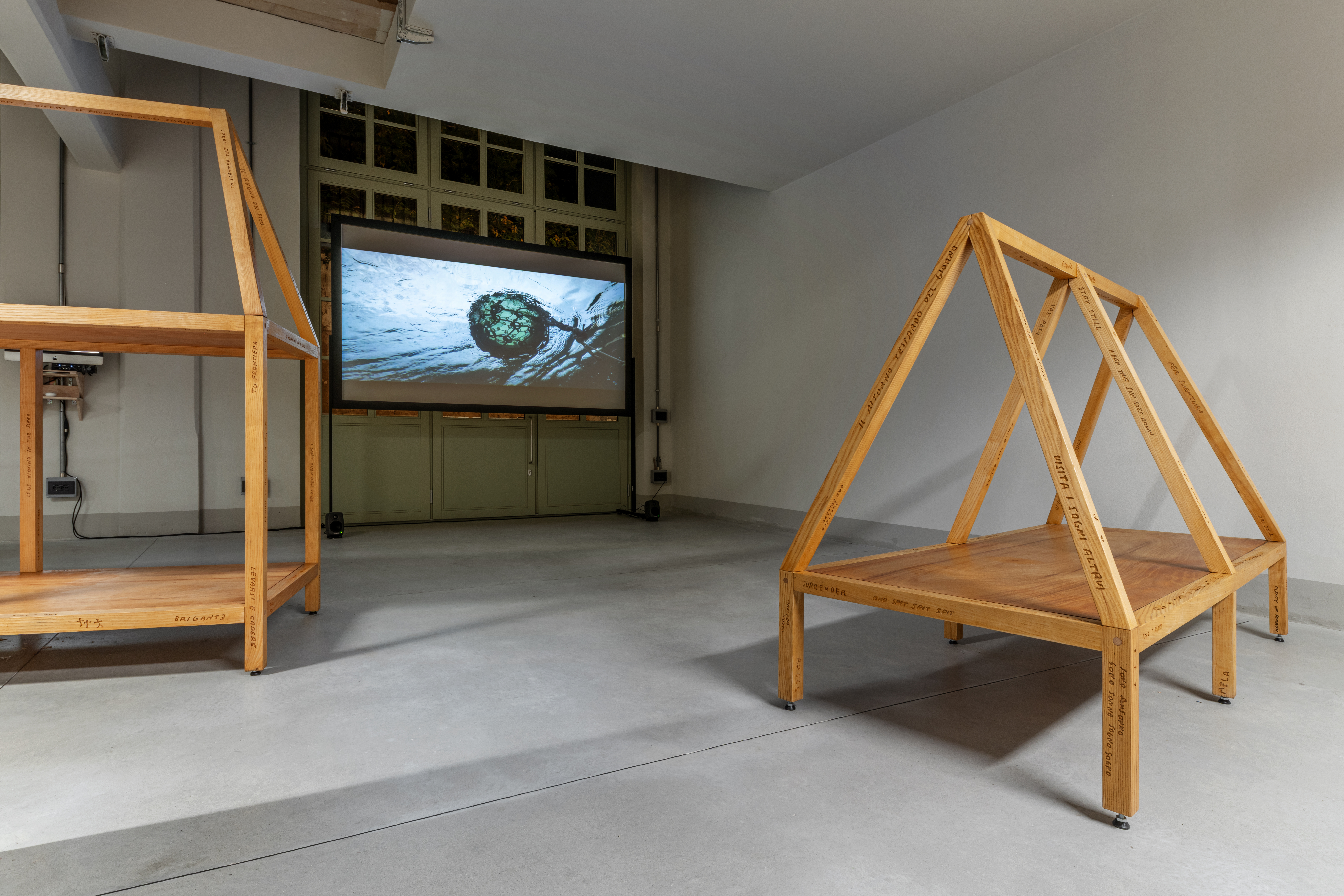
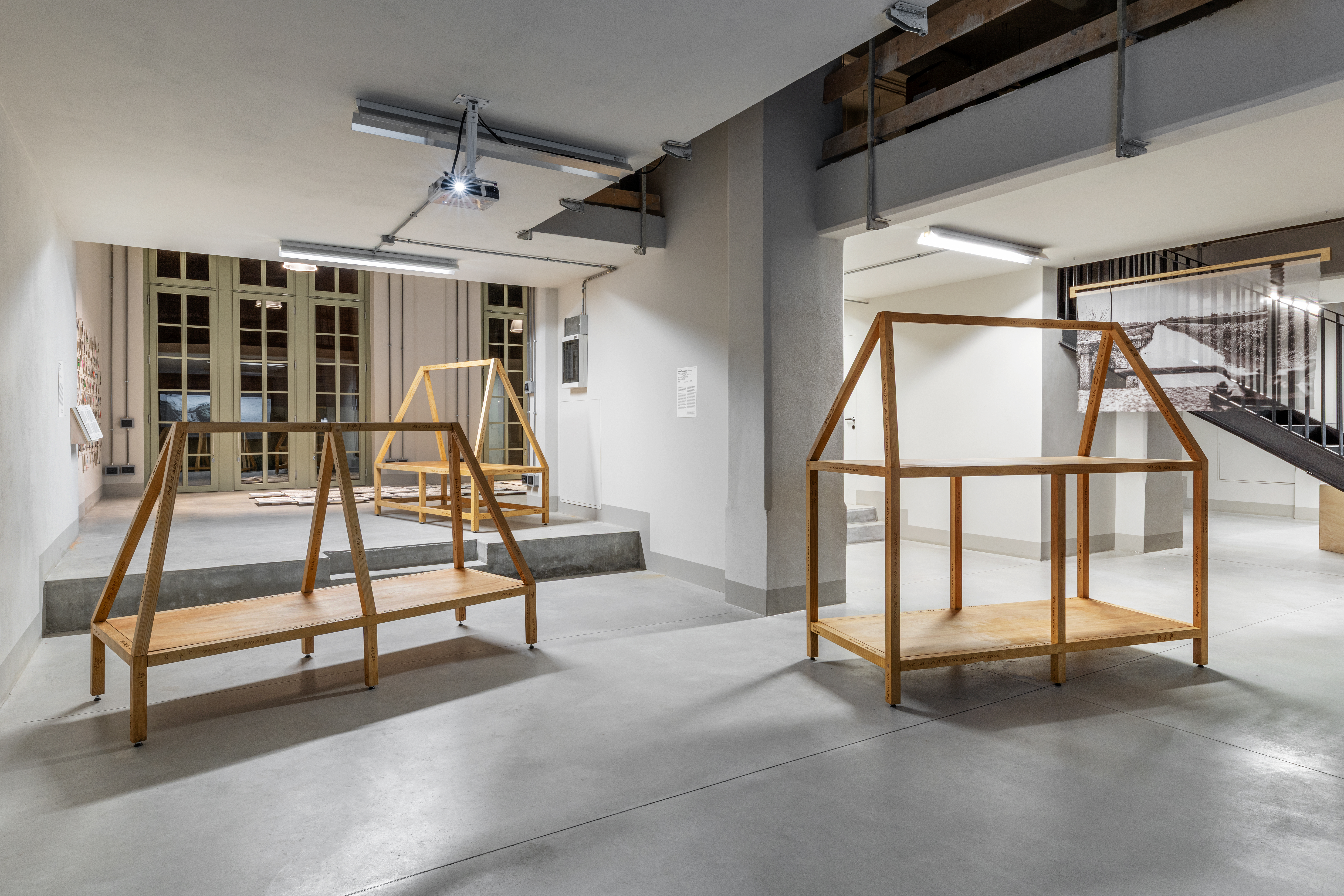
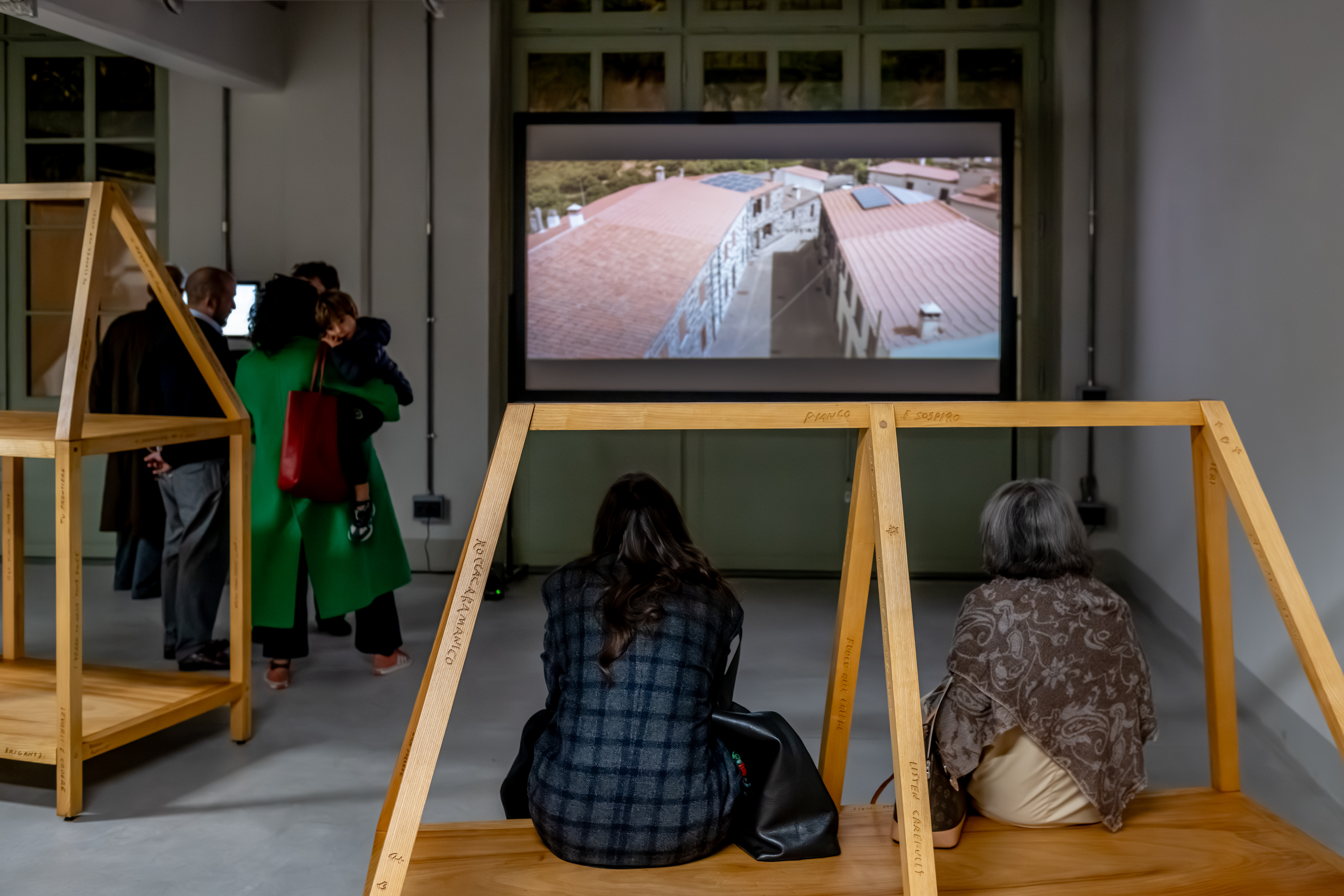
l’infestata, Roccacaramanico fraz. di Sant’Eufemia a Maiella (Pescara, Abruzzo) curated by Andrea Croce
I think of artistic practice as a mediumistic one: through one’s own body, or through the body of the work, it becomes possible to channel someone else’s voice? What does it mean to embody another’s voice? In my recent work, I explore the power of silence and other forms of nonverbal communication used as practices of resistance.
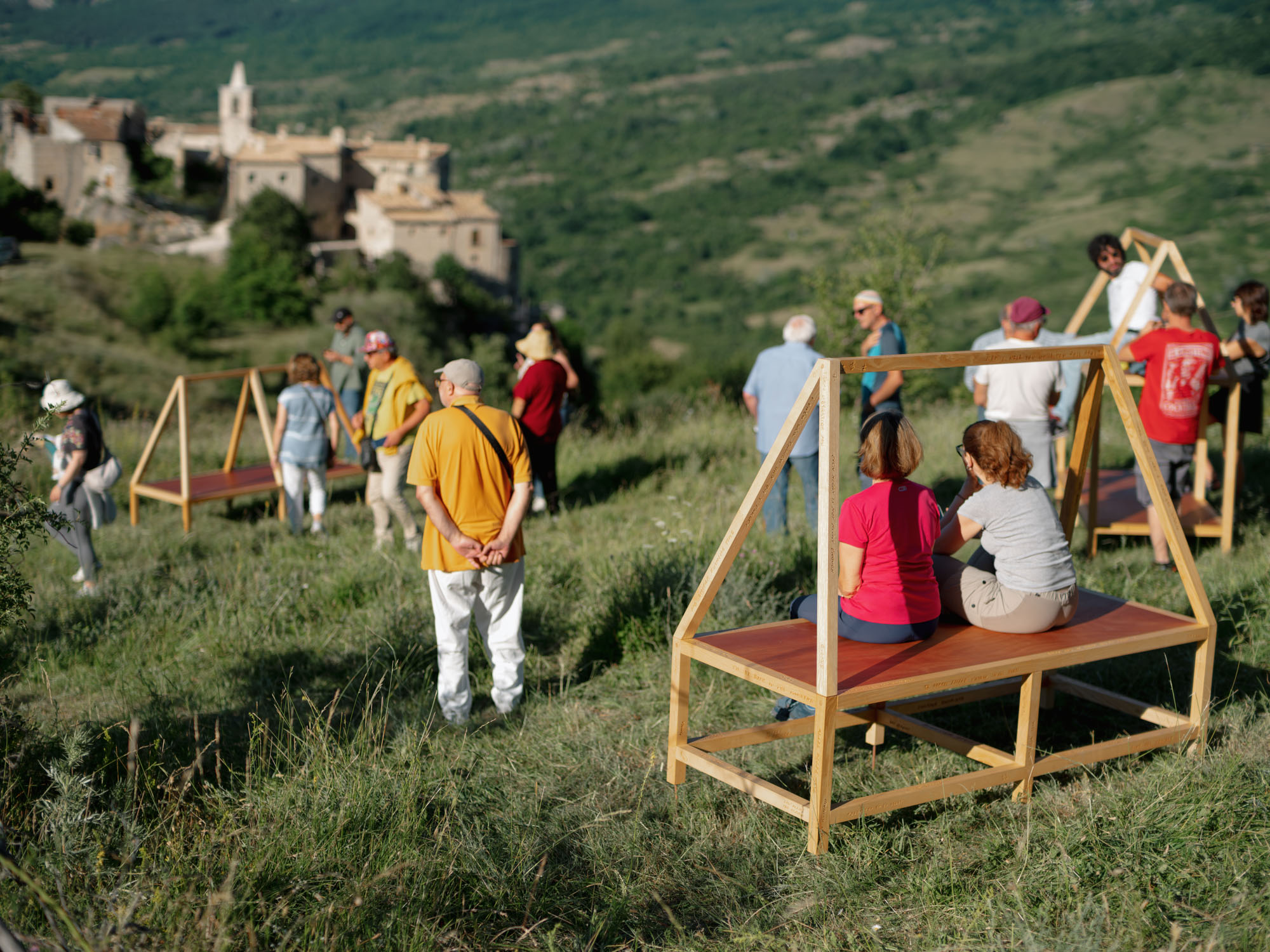
The project takes inspiration from the tradition of mountain bivouac points typical of high-altitude landscapes. The mountainous areas surrounding Roccacaramanico and Sant’Eufemia a Maiella are places steeped in history and marked by a past of brigandage. Even the stones there seem to preserve its traces: the so-called “Tavole dei Briganti”, slabs engraved with messages of revolt, memories, or directions to places of rest and secret feasts. Drawing from these suggestions, the artist created a series of structures, benches, beds, and other elements that define spaces for gathering, designed to welcome those who live in or pass through the village during the summer. The surfaces of this new public furniture are engraved with words, sentences, and notes, turning them into speaking structures, silent presences. Originally, these structures “haunted” the area around the old abandoned cemetery and the dreams of those who rested there. In the exhibition, they now serve as welcoming furniture, a place to pause and watch the video archive of Una Boccata d’Arte, which also includes the video made by the artist as a continuation of the project.
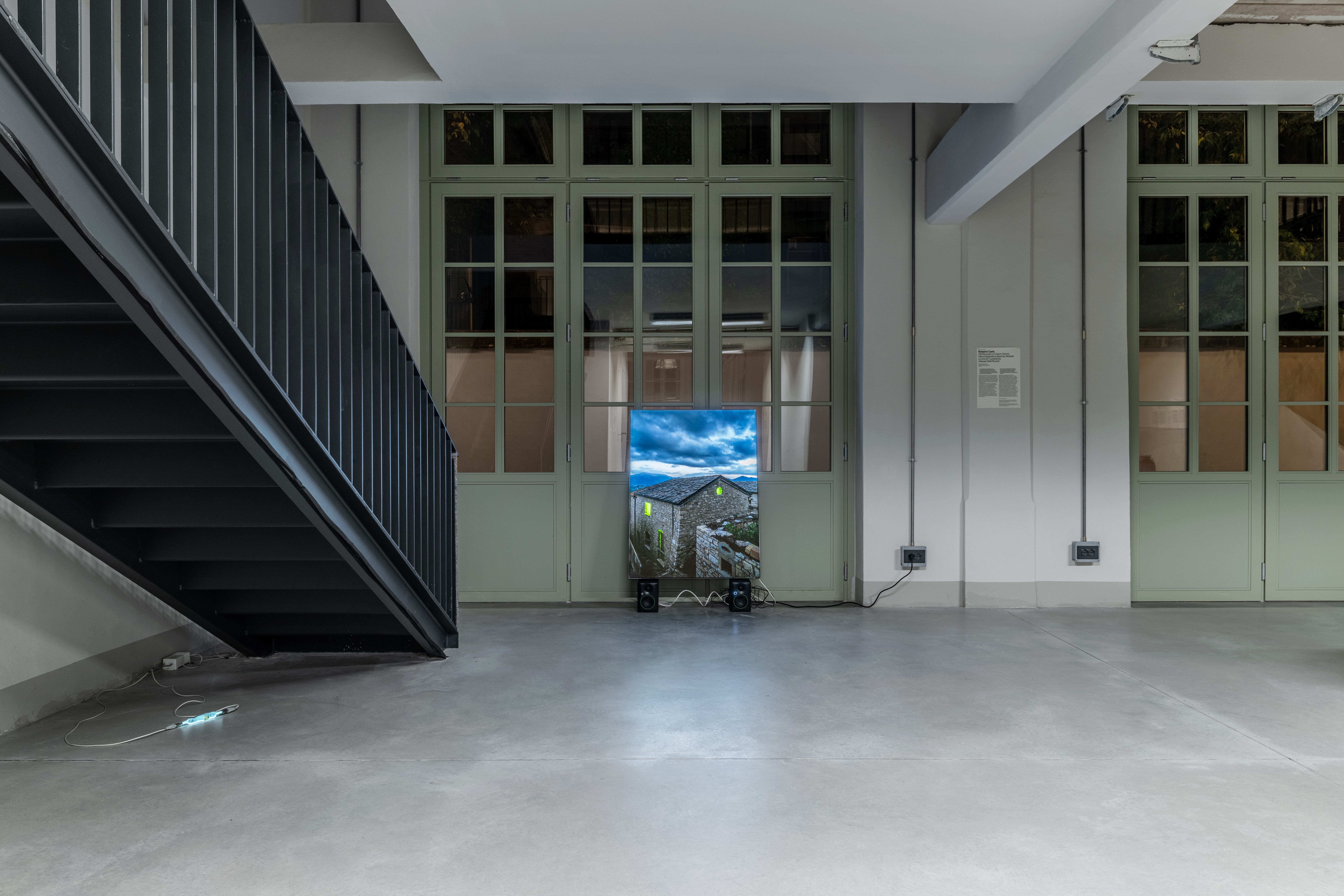
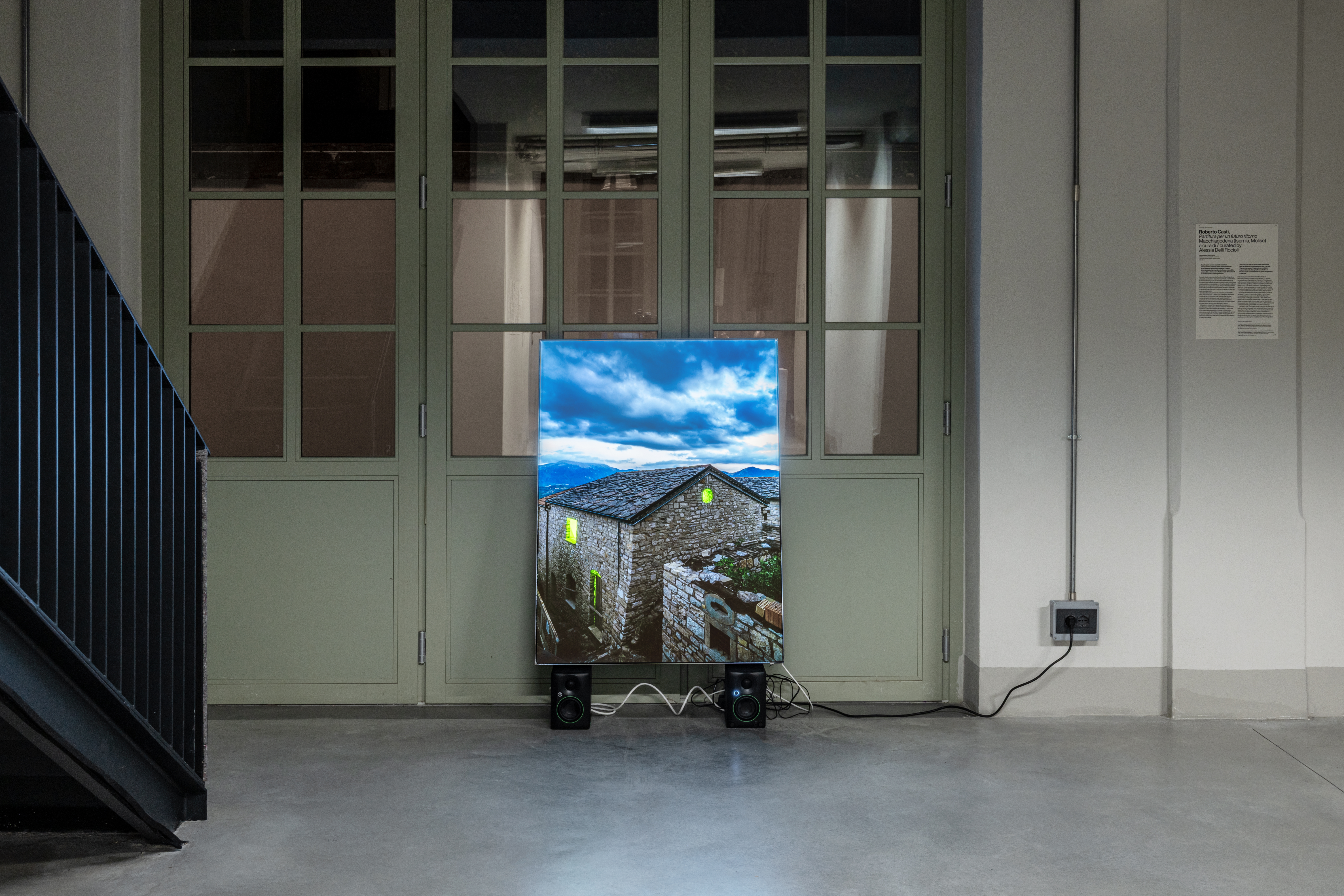
Partitura per un futuro ritorno, Macchiagodena (Isernia, Molise), curated by Alessia Delli Rocioli
The song can only be heard in full when those who recorded it come together to play it as one. The work is made of fragments-an invitation to potential unity. It is up to those who live in the real world to reunite them, to make imagination a practice.
Roberto Casti worked between the center of Macchiagodena and three of its hamlets — Caporio, Incoronata, and Santa Maria in Pantano. The dialogue with the community scattered across these villages was activated through three collective rewriting workshops of the song Lu Molisano in America, composed in the 1960s by the local musician Antonio Perrella. The artist invited participants to imagine a possible return, creating a counter-narrative to the silence left by depopulation. From the workshops emerged three distinct musical sections — rhythm, melody, and voice — which were translated into as many works distributed among the hamlets. In Villaggio San Nicola — the oldest part of the town, now almost uninhabited — the new version of the song was made to resonate, fragmented into its three sections and broadcast from three different houses, each animated by green lights and new furnishings.
The idea is that this broken score can only be heard in its entirety when the people who recorded it come together to perform it. The three houses were photographed and are now part of three different works composed of a lightbox and speakers: each installation is a visible trace of the project and at the same time gives voice to the sections recorded by the inhabitants of Macchiagodena.
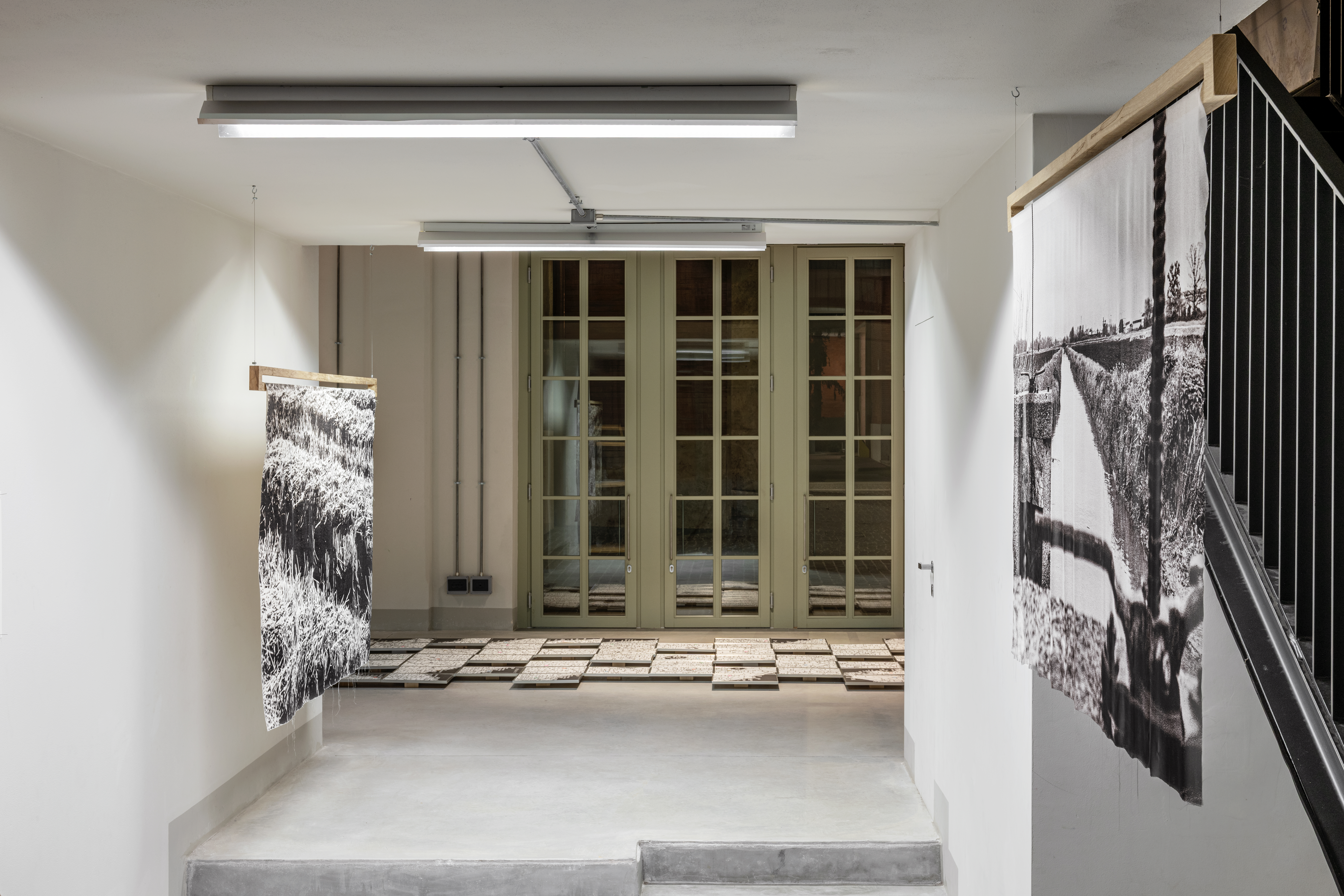
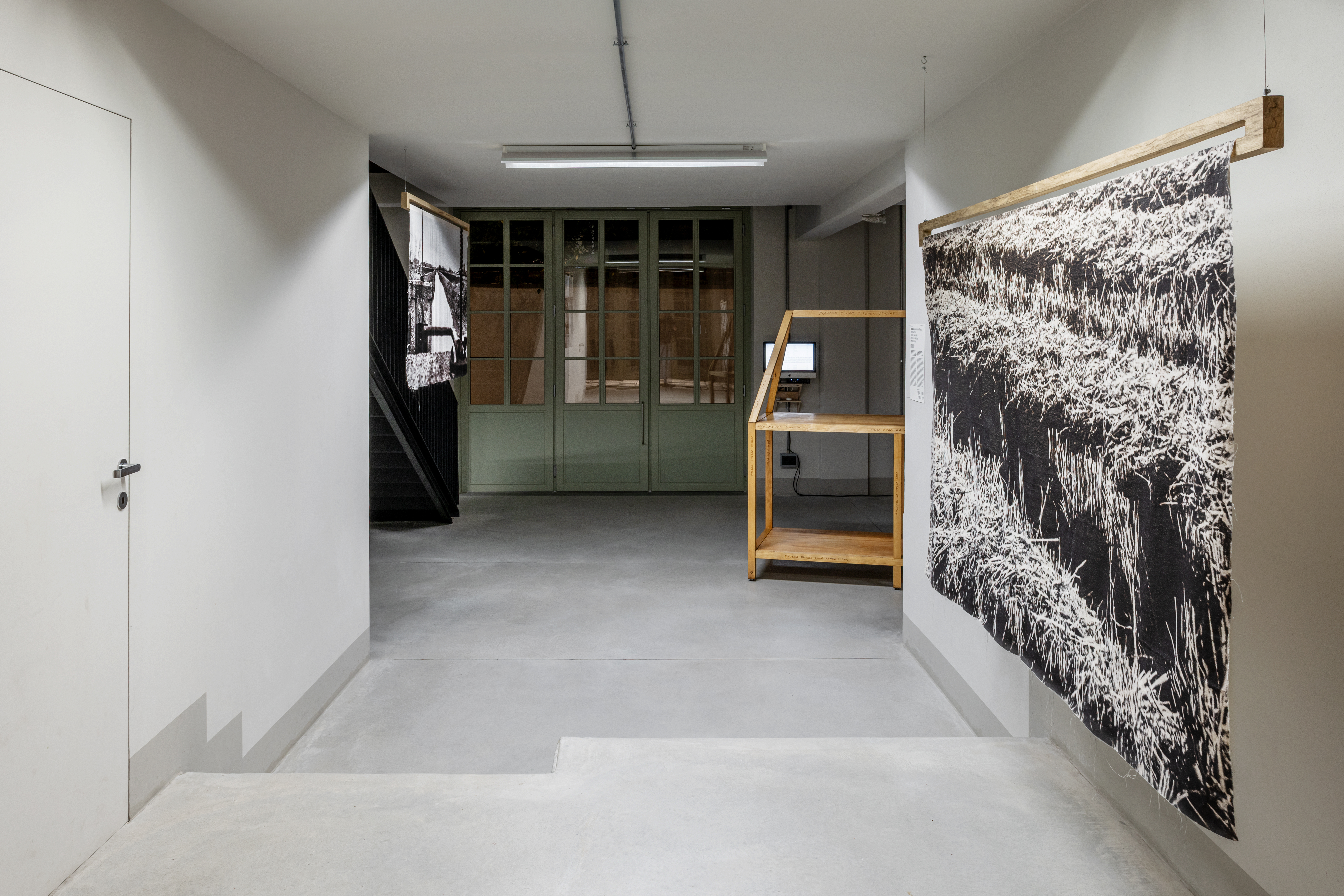
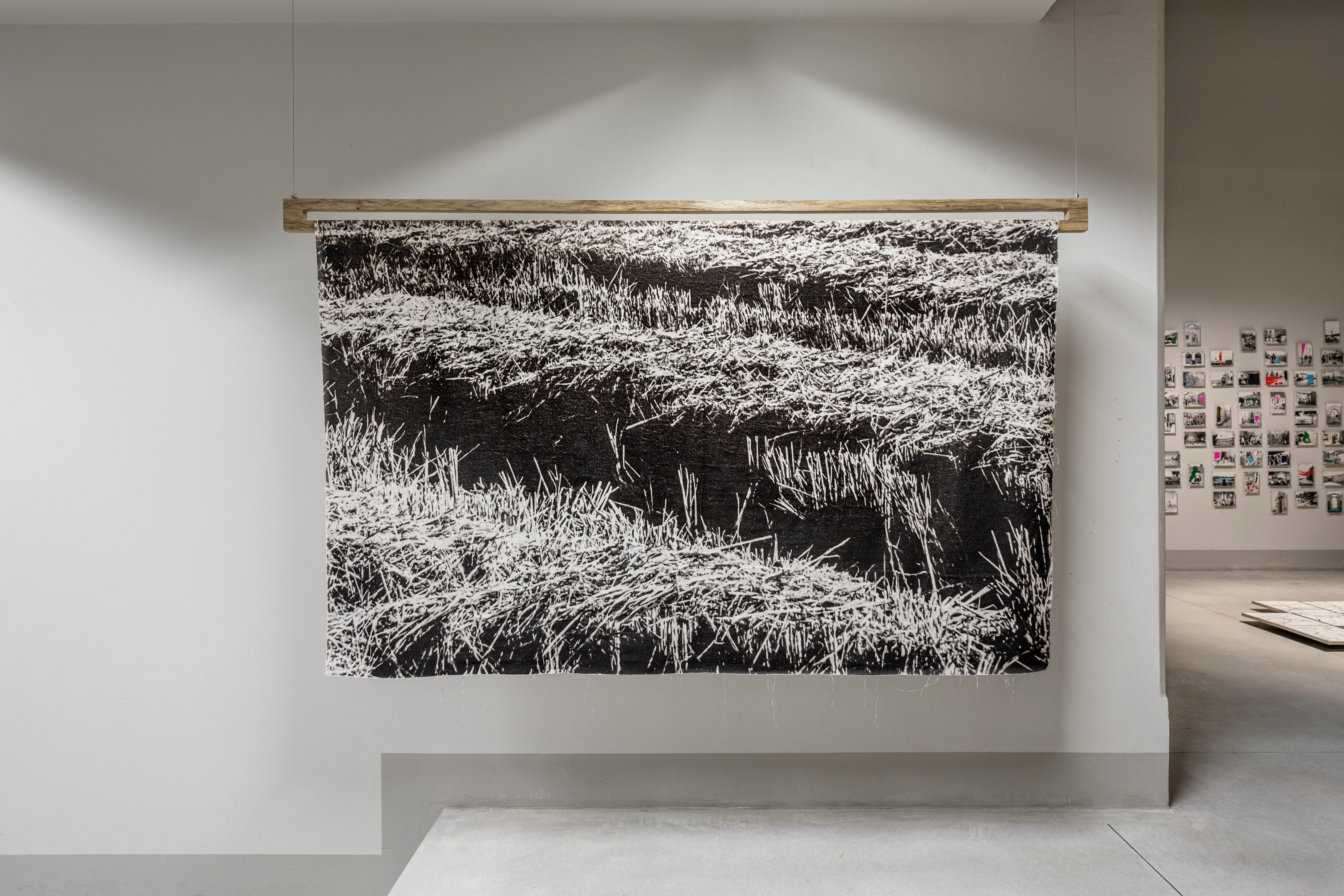
Flessione Riflesso, Borgolavezzaro (Novara, Piemonte), curated by Veronica Botta
I’m drawn to what lingers at the edge of disappearance, traces left in water, in soil, in gestures. This installation is a way of tracing these fading imprints and making them visible again, even if only briefly.
In the heart of the Bassa Novarese — a territory deeply shaped by its rice-growing tradition — a site-specific intervention took shape inside the Dormitorio delle Mondine at Cascina Caccia. The installation unfolds as a suspended textile landscape, where images drawn from hydraulic and rural archives evoke gestures, tools, maps, and practices in transformation. Water runs through the work as a living element, weaving together the threads of the landscape — from irrigation channels seen from above to plant structures observed under the microscope. The images, at times sharp and at times elusive, overlap across fabrics of varying transparency, creating visual layers that reflect the interdependence between environment and human action. The artist intercepts traces — often imperceptible ones — and transforms them into image. Her works explore not only the territory but also the memory of the bodies that inhabit it: hands that sow, dig, measure, observe. Repeated, transmitted, and reinvented gestures that recount labor as a form of relationship with the environment. The title evokes this dual movement: flexion as gesture, reflection as image and resonance. The work becomes part of a community whose identity is rooted in water and labor, offering a space for listening, suspension, and shared imagination.
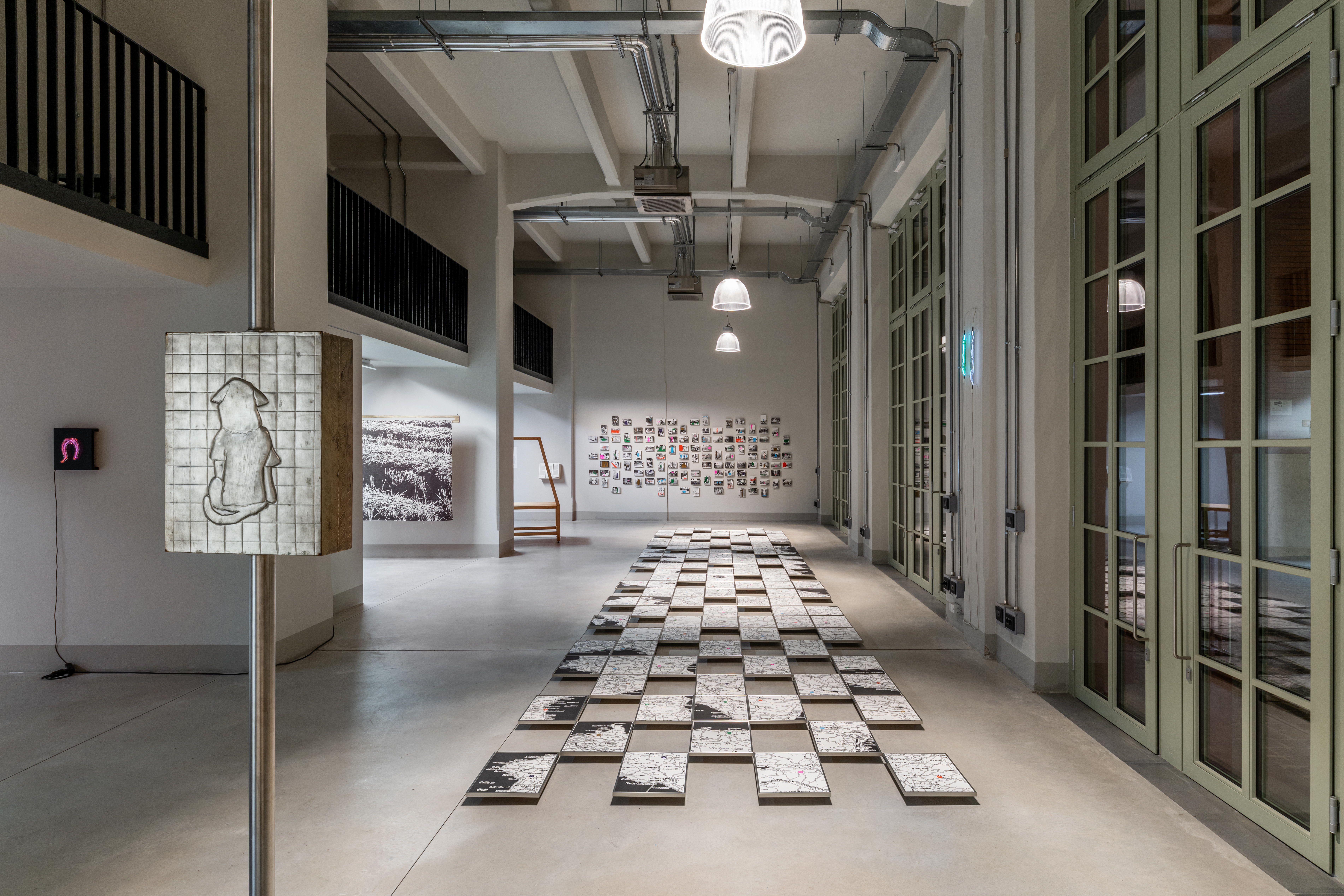
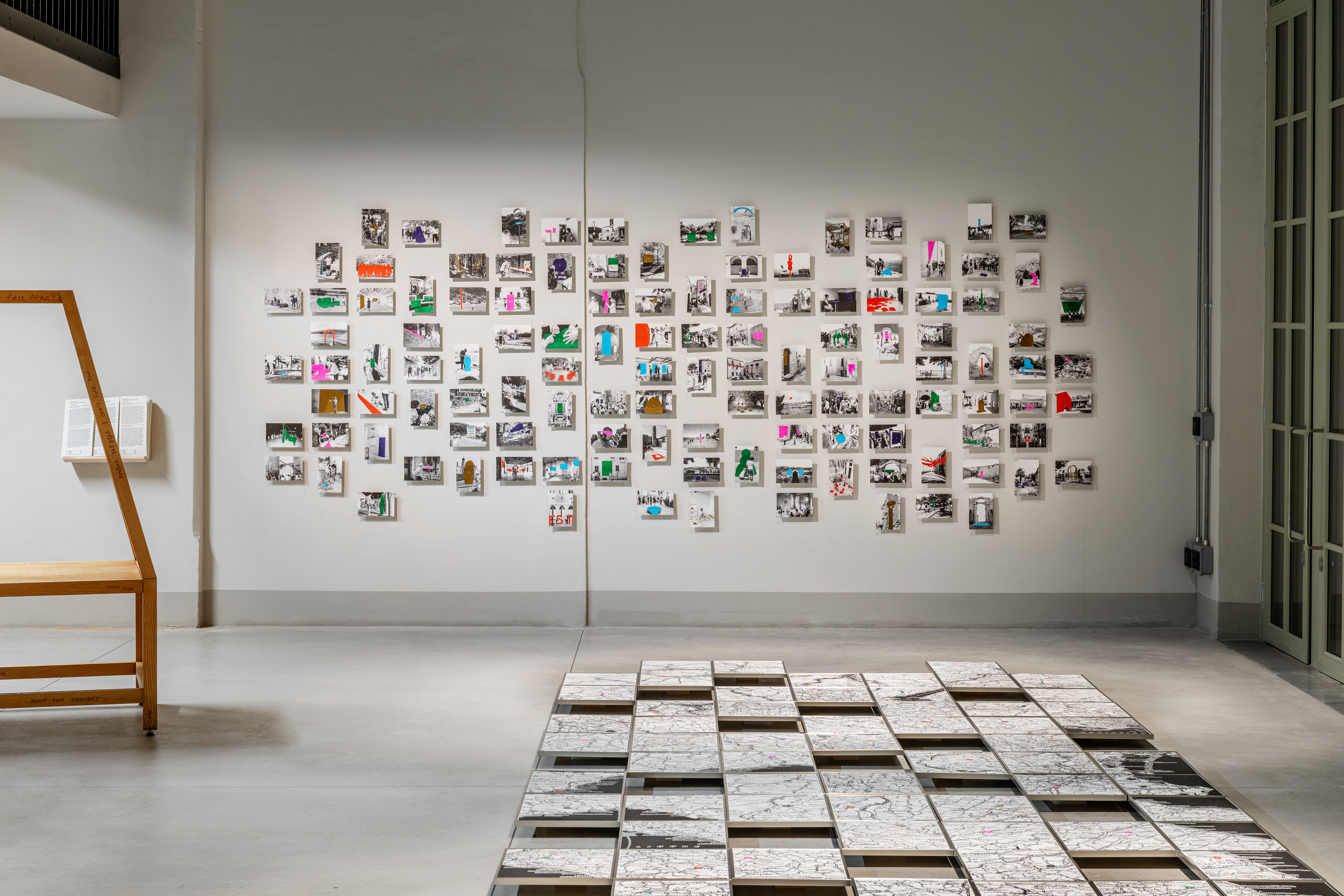
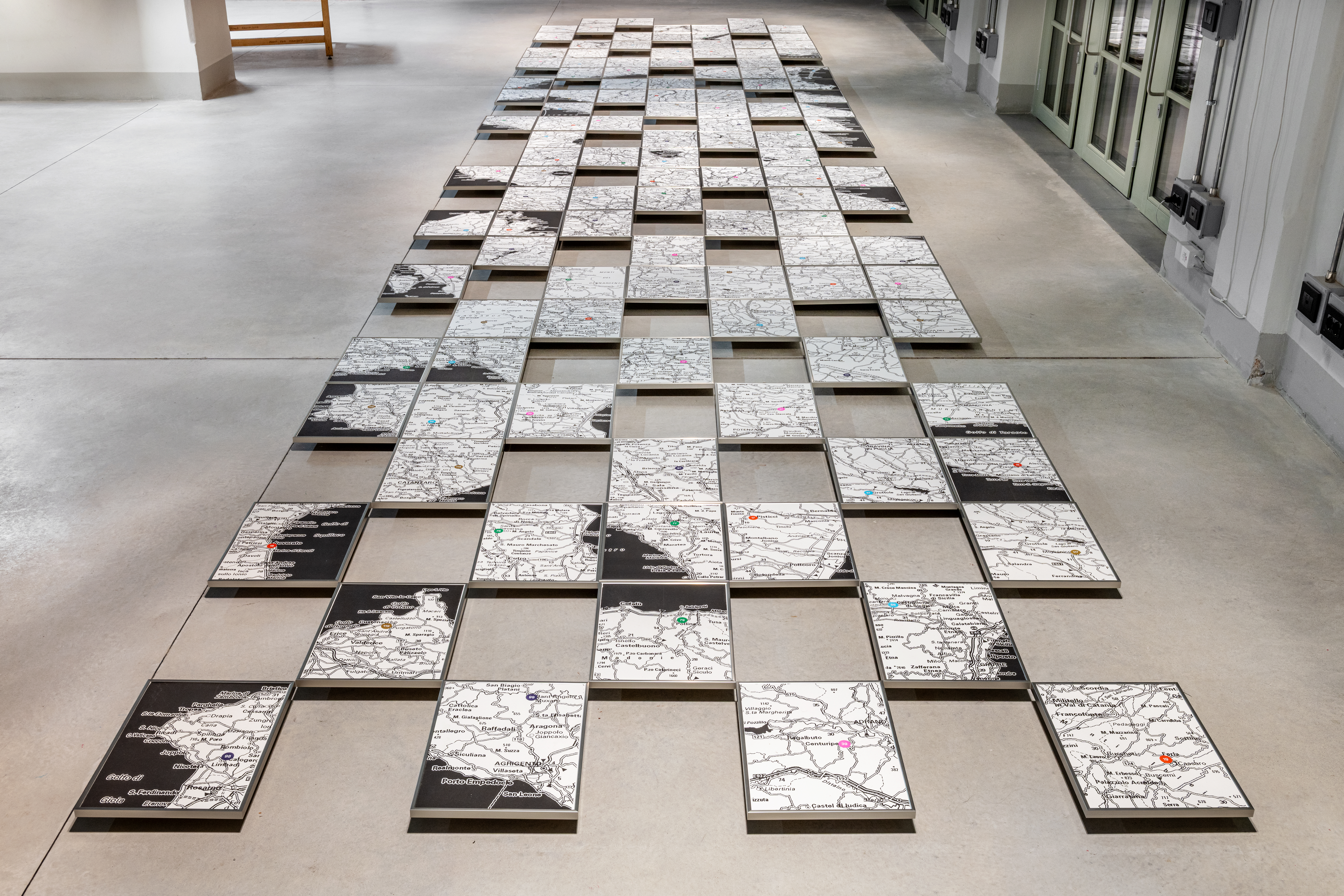
Atlas Archive, Una Boccata d’Arte, 2020–2025
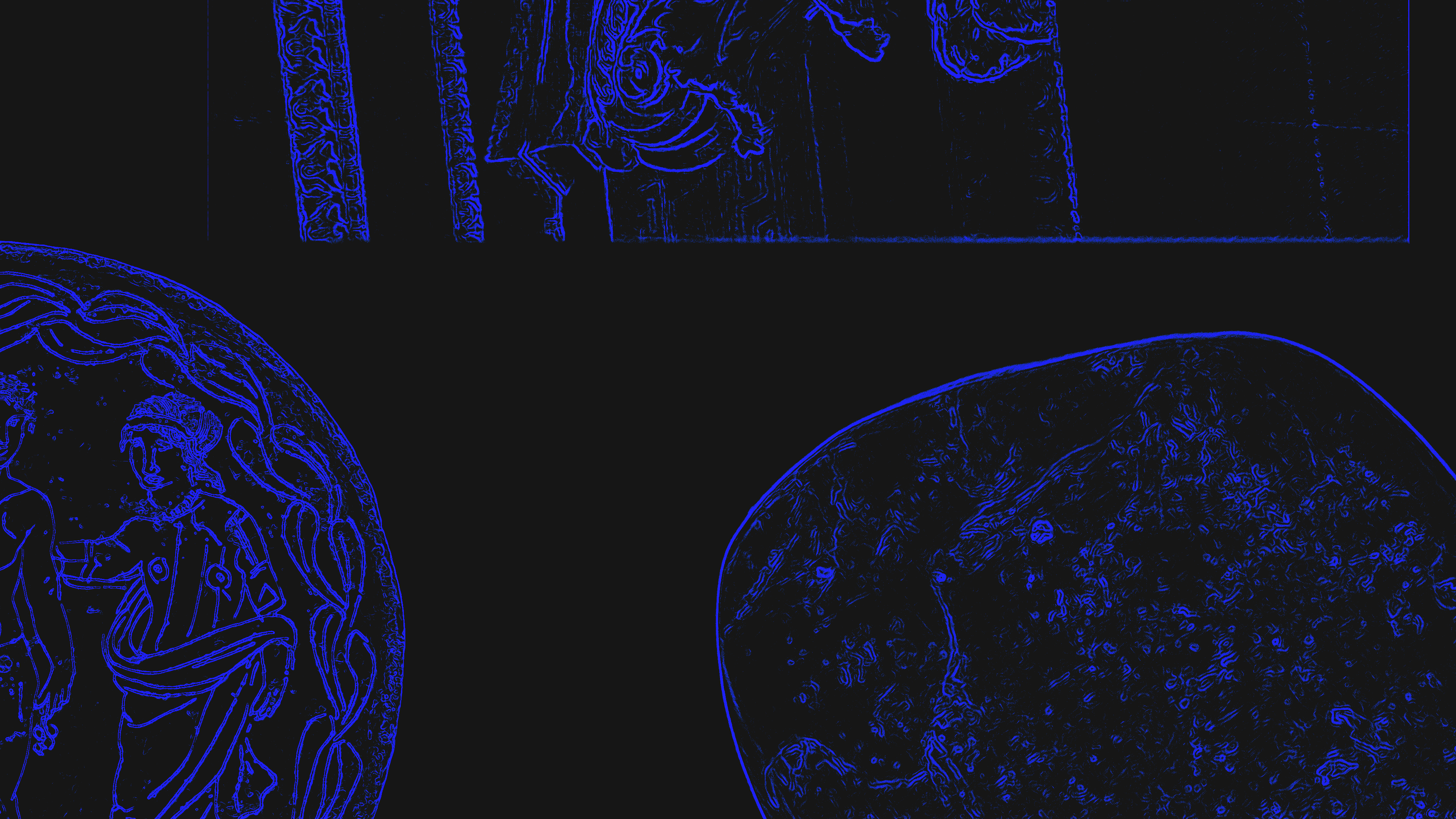
The installation is the result of an in-depth exploration of the communication archive of Una Boccata d’Arte — which contains thousands of images, texts, and information related to the six editions and 120 projects realized between 2020 and 2025 — and the subsequent processes of analysis, selection, and synthesis carried out by the studio. The archival transposition process aims to narrate the experience of Una Boccata d’Arte through the theme of territory, understood both as the physical location of the works and as the anthropological landscape of the villages that host them. From this perspective, the installation occupies the space of the room by unfolding on both a horizontal and a vertical plane: the horizontal dimension presents a geographic mapping of the distribution of the artworks, through a mosaic of maps that evokes the shape of the Italian territory; the vertical dimension features a selection of 120 photographs — whose graphic treatment simultaneously conceals and highlights the artworks — depicting the interaction between art, villages, and the public. This analytical operation on the archive brings to light the material outcomes generated by the artistic interventions, effectively measuring, in a way, the visual impact of the entire project. Working together as a system, the two sets of images give form to one of the many possible atlases of Una Boccata d’Arte.