
A te non resta che abitare questo desiderio
curated by Sofia Schubert
Ornella Cardillo
Natalya Marconini Falconer
Giuseppe Lo Cascio
Stella Rochetich
Lavanderia
Via Lamarmora 26, Milan
The exhibition A te non resta che abitare questo desiderio is the outcome of the first edition of Atelier Elpis, a new artist residency program promoted by Fondazione Elpis in Milan.
Through the works of Ornella Cardillo, Giuseppe Lo Cascio, Natalya Marconini Falconer, and Stella Rochetich, the project explores the theme of dwelling as a form of relationship with the city—an invitation to read Milan through its transformations, its absences, and its memories.
Atelier Elpis invites young Italian and international artists to spend a period of time working and creating in Milan, at its newly built spaces, designed specifically for this purpose.
During the residency, the artists immerse themselves in and gain a deeper understanding of the city, and—just as they do when preparing for the Una Boccata d’Arte projects—they are encouraged to explore the stories and unique characteristics that define Milan.
Atelier Elpis aims to contextualize this approach to the local area—developed and consolidated through Una Boccata d’Arte—within the city of Milan, the Foundation’s “home base,” to offer a fresh interpretation of its city, which is undergoing rapid transformation, through the kaleidoscope of contemporary art.
- Opening
Thursday 13th November
18.00 - 21.00
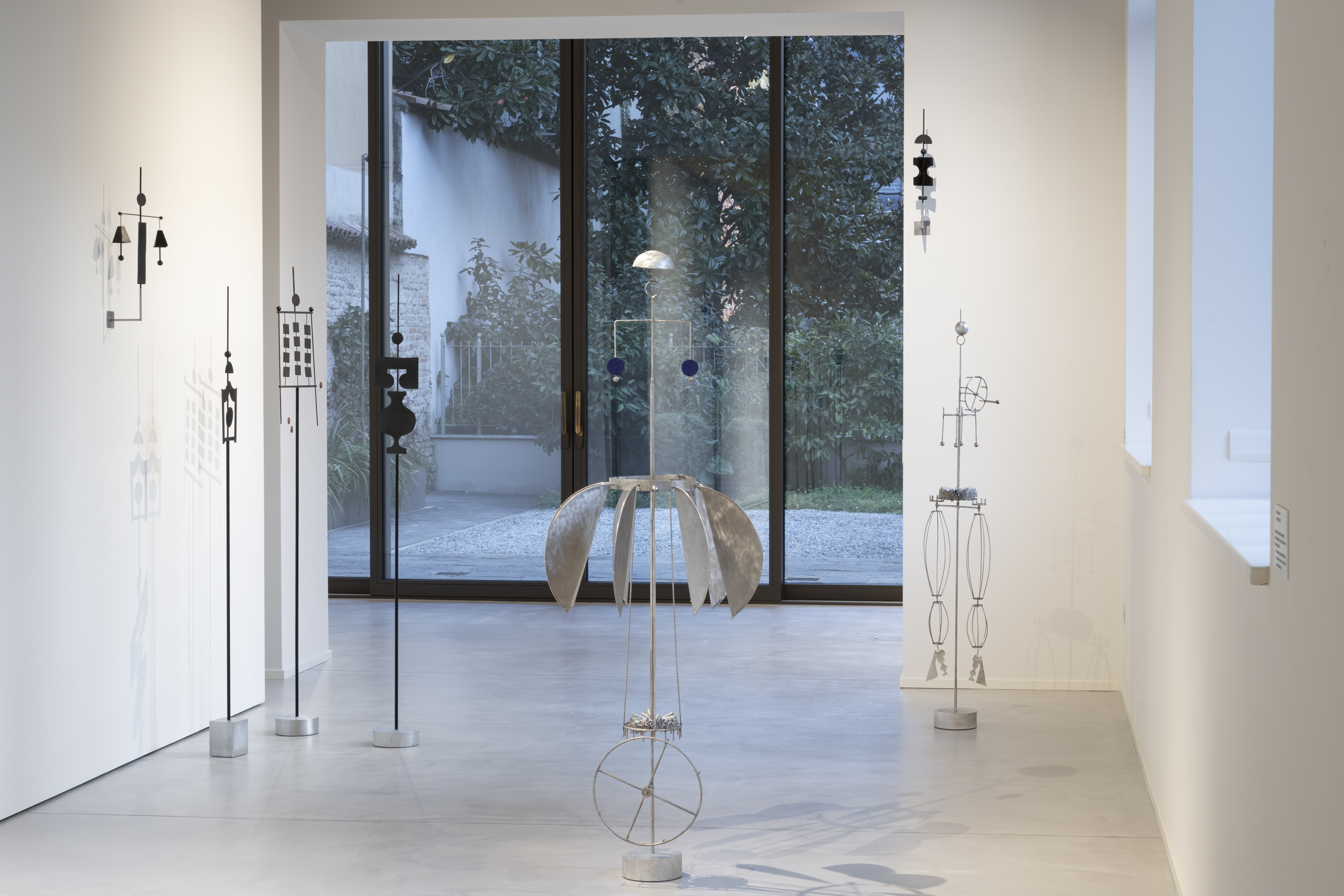
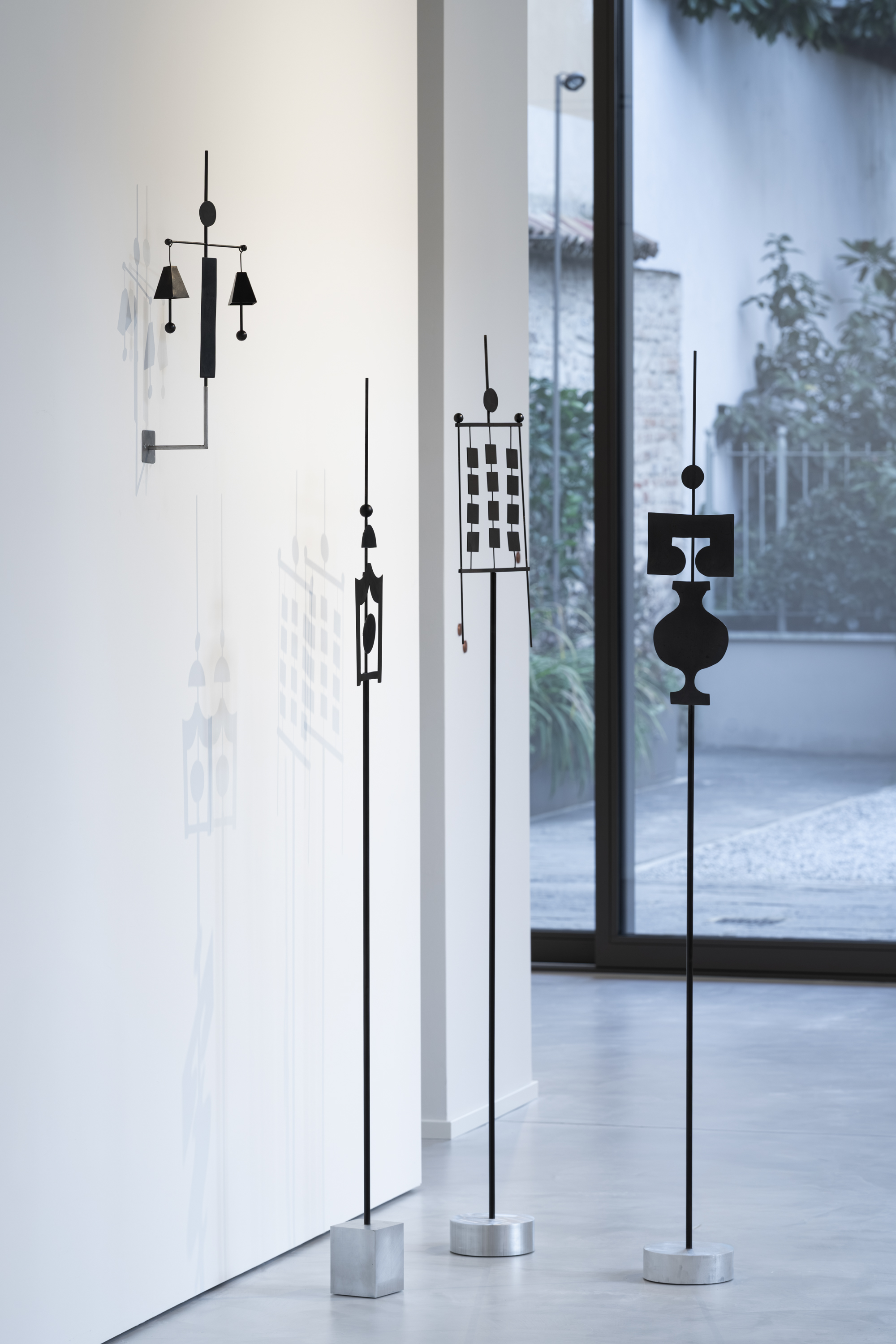
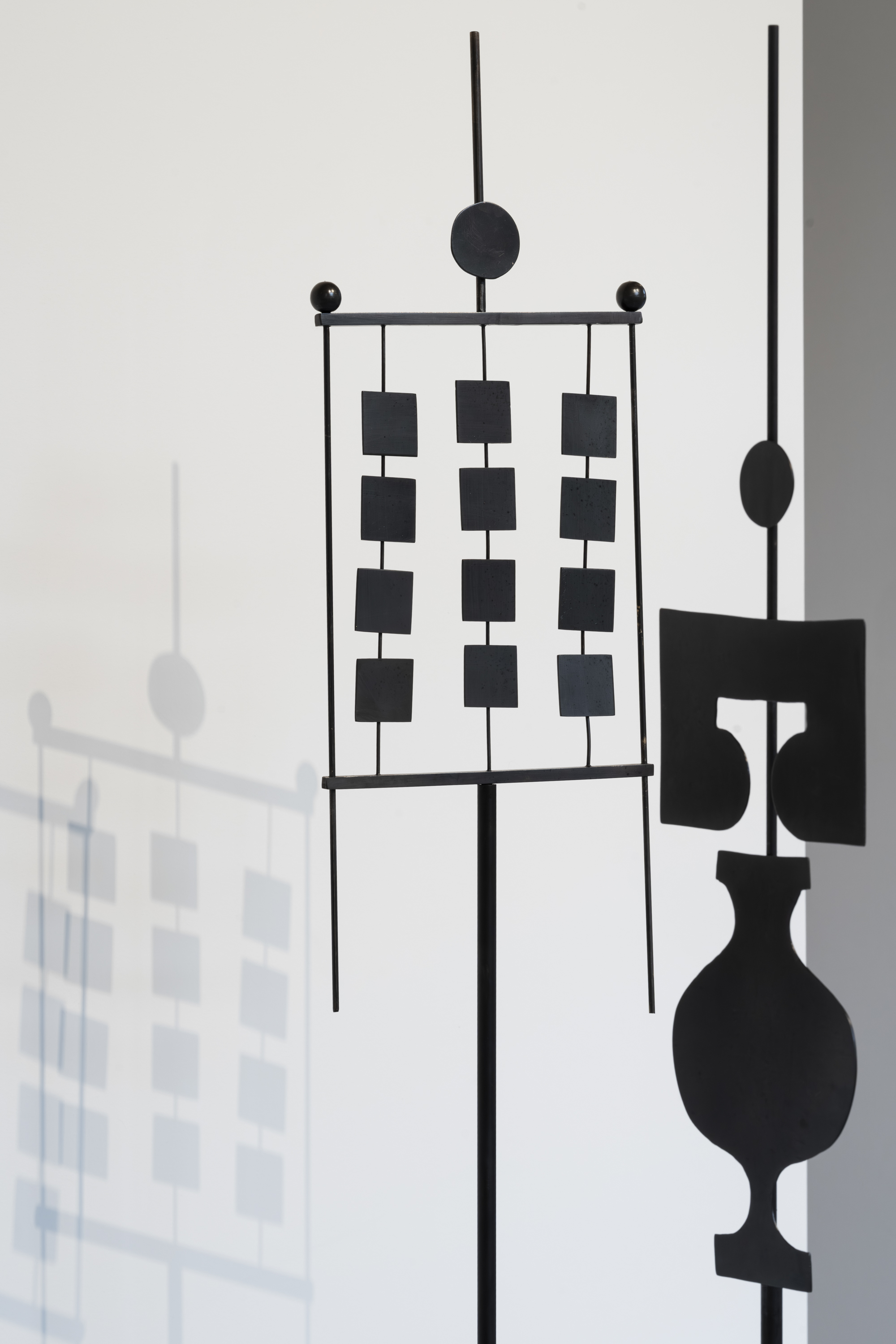
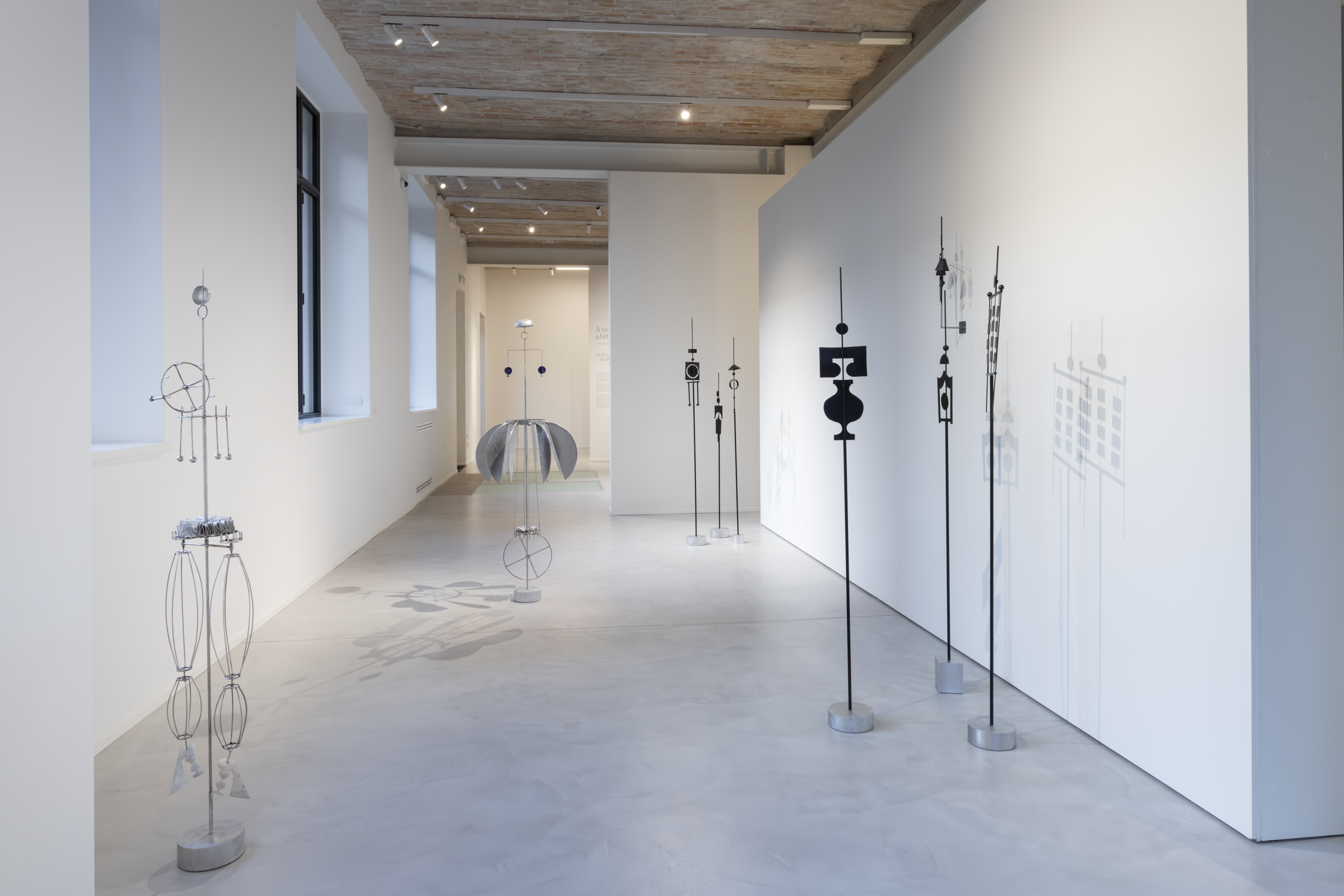
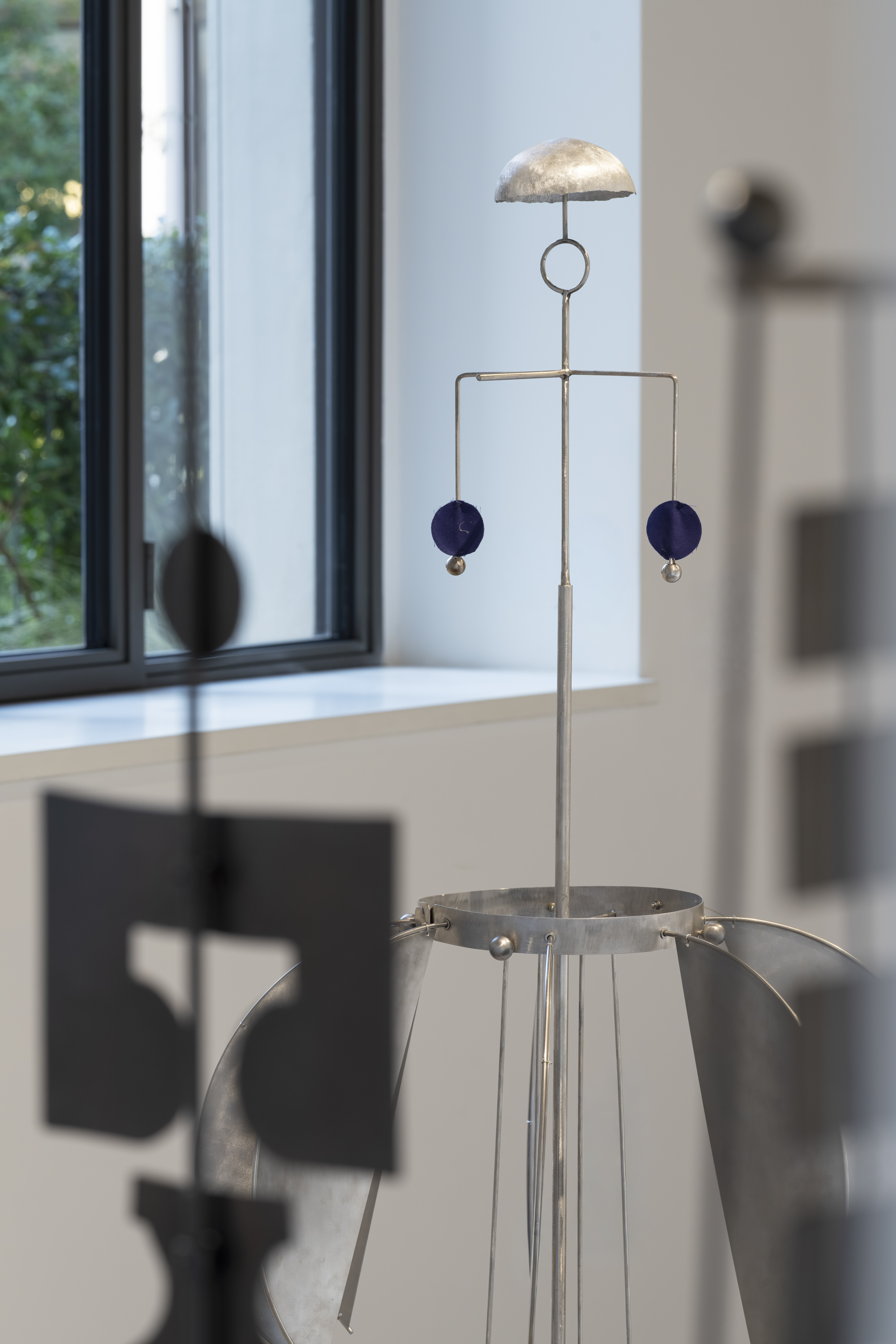
Ornella Cardillo’s sculptures arise from a reflection on the body and the city as mobile archives of time and identity. They are scenic machines and theaters of time that embody a ritual, circular movement: Feste Mobili is a rite of the present that surfaces from the past, an act of listening to the city as a plural organism, where metal and fabric, technique and hand coexist in unstable equilibrium.
In liturgical language, “moveable feasts” are celebrations without a fixed date, shifting in the calendar according to the rhythm of the Sun, the Moon, and other religious festivities. Likewise, Cardillo’s works move through time and space, unanchored to any single place or moment: they carry the rite wherever it is needed, transforming the city into a living, everchanging body. They are mobile ritual devices, signs of an ancient alphabet, a score the artist disseminates through the spaces of the Foundation.
They change skin, move, activate, and through their movement make
visible the city’s pulse and its collective dimension. Each metal element suggests an urban structure, facades, portals, mechanisms, while the fabrics wrapping them retain traces of life: fragments of clothing, past celebrations, everyday gestures.
Cardillo’s research moves between performance, visual art, and design,
taking inspiration from the concept of the edicola, a small shrine or niche, as a threshold space between the ancient and the present: architectural forms that preserve the spirit of an era, the habitus that shapes thought, gesture, and behavior. When activated in performance, her sculptures become instruments in an orchestra of bodies and materials. Here the artist undresses and redresses the sculptures with her own garments, a gesture evoking care and warmth, recalling the idea of the hearth and the rite of Vesta, whose fire burned day and night as a symbol of the life and safety of the city.
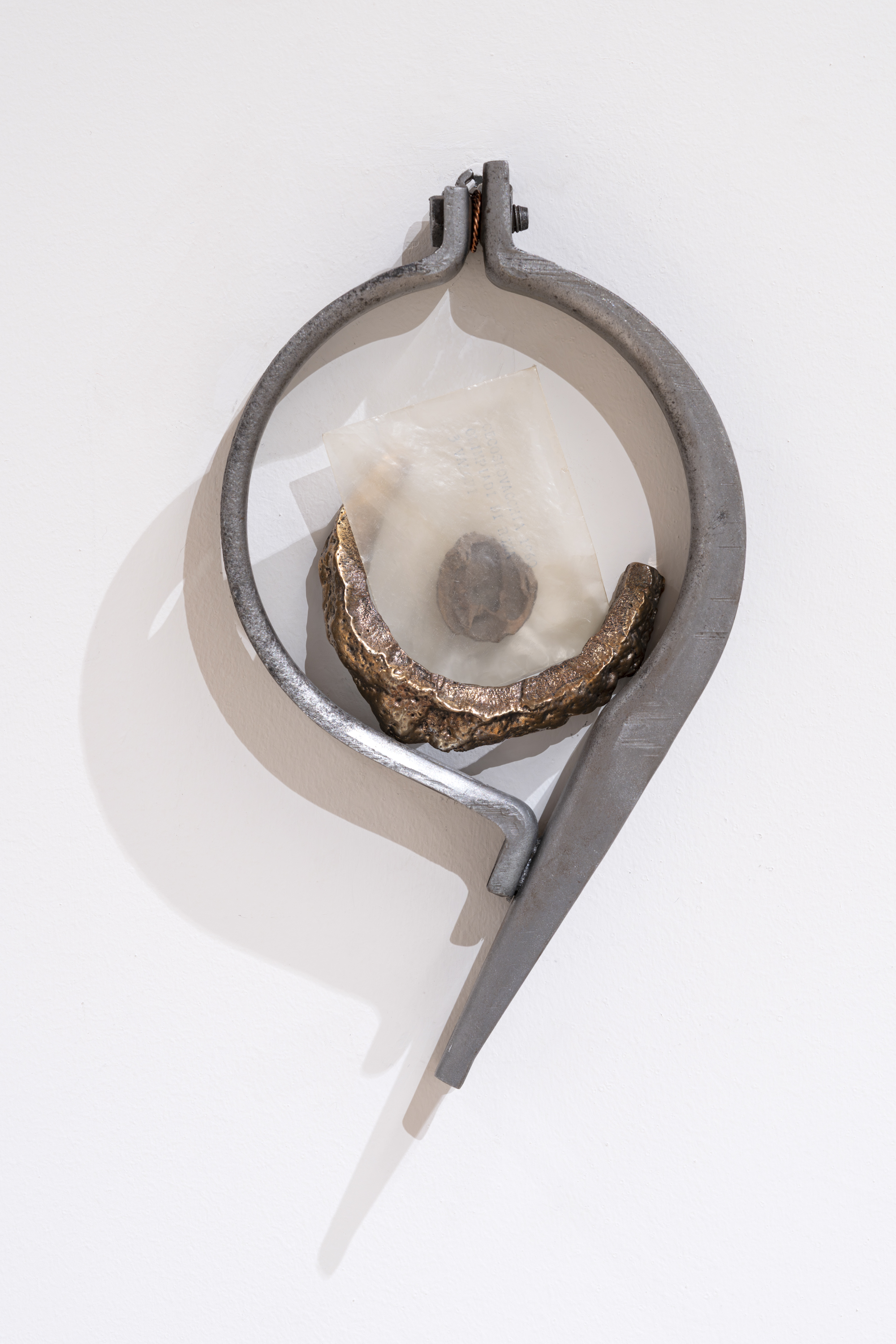
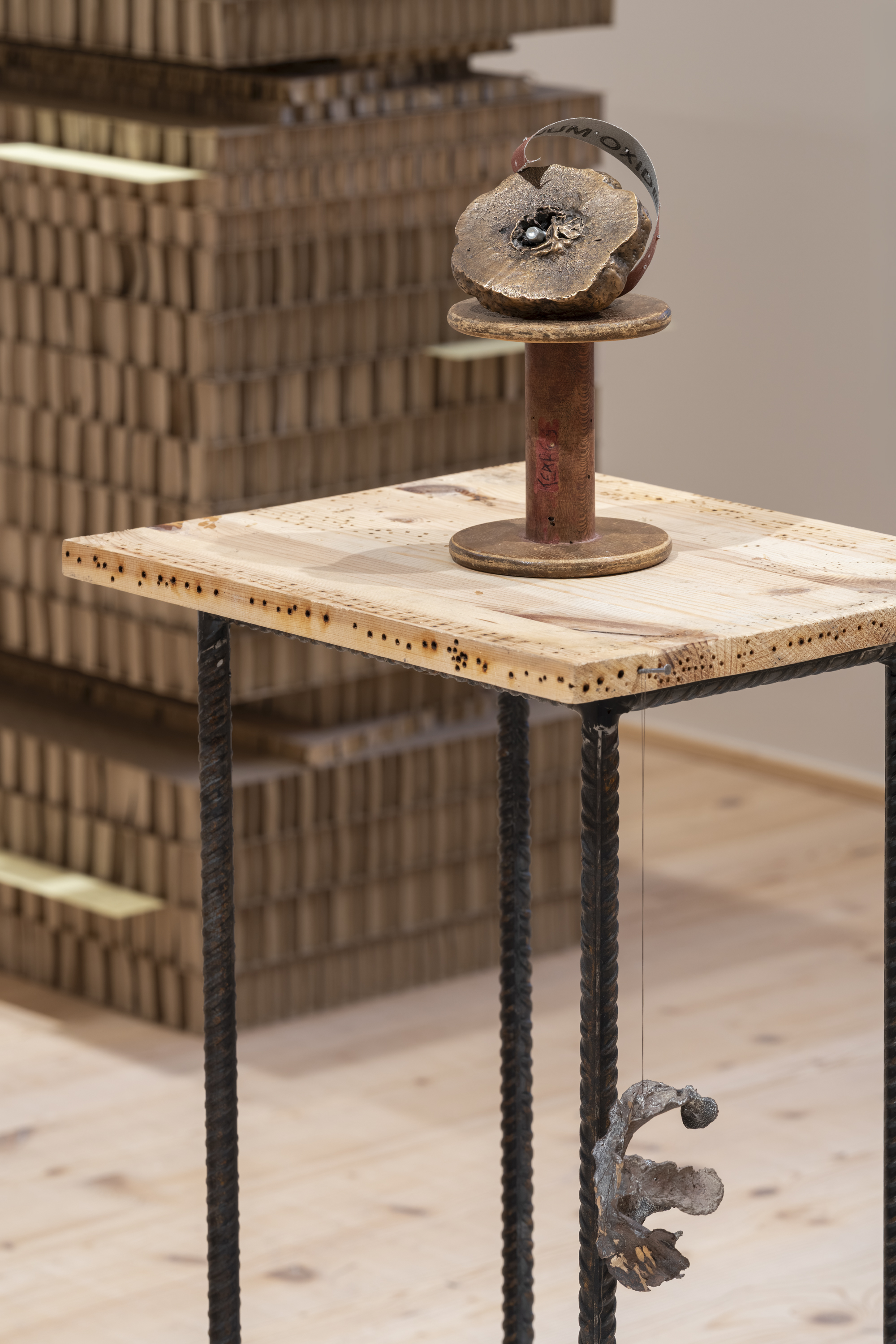
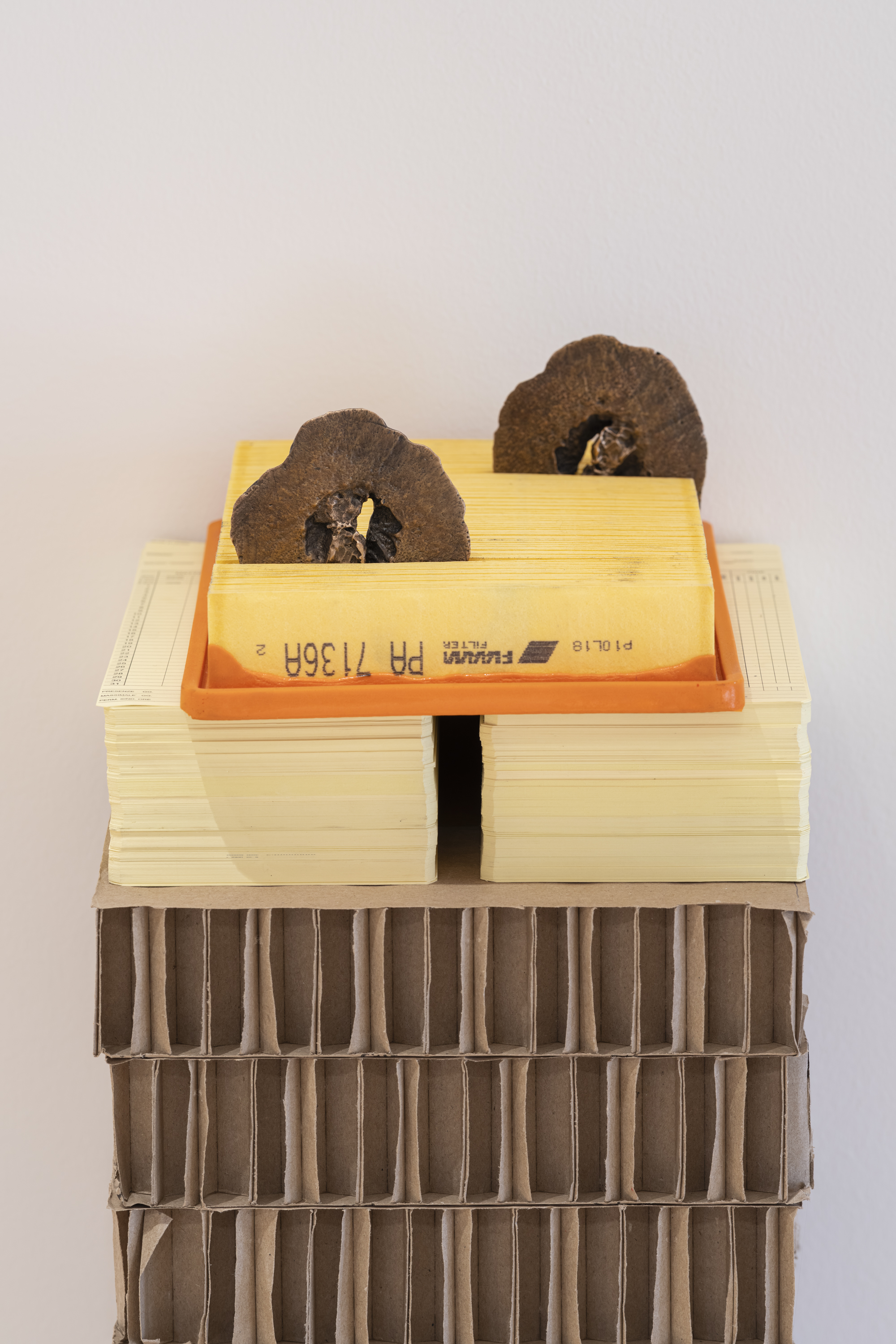
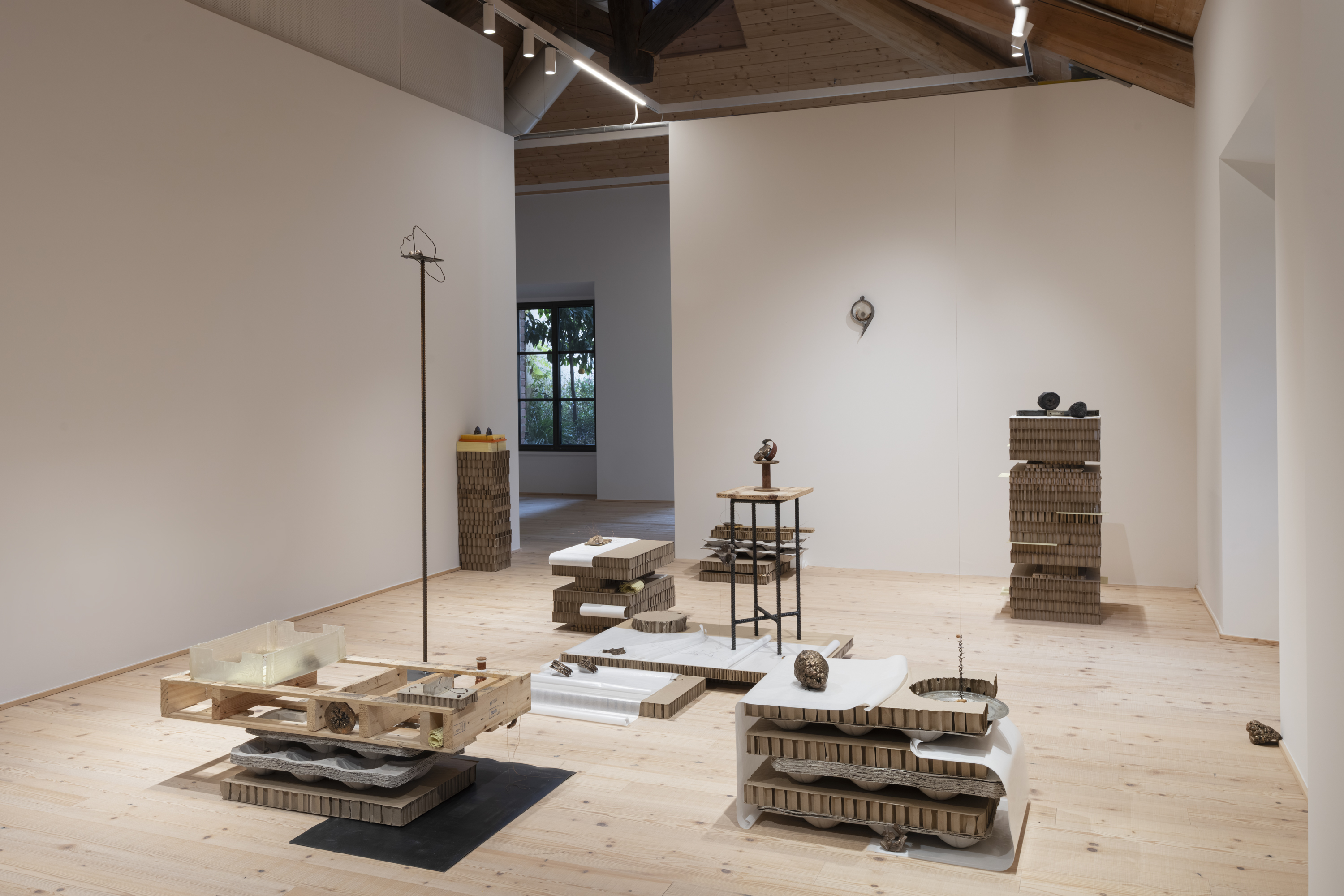
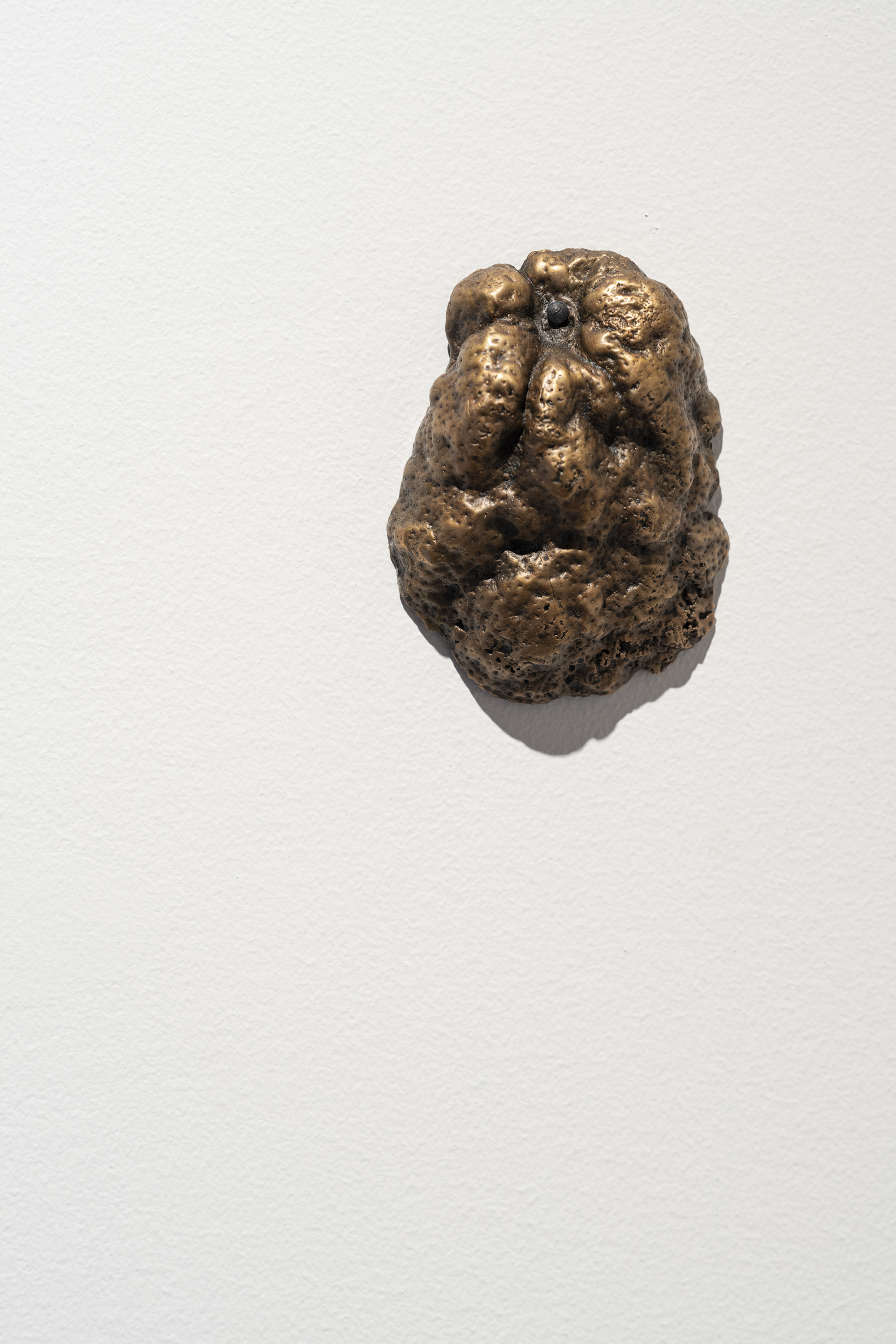
Natalya Marconini Falconer builds their narrative upon the gaps in family memory: a story of migration from southern to northern Italy linked to the great metalworking factories and industrial cycles. Their work arises from observing the material remnants left by these processes, industrial, laborelated, and migratory, as from the intertwining testimonies they contain. It is an investigation into how such experiences have transformed Milan, redefining its human and productive geography.
Starting in the 1950s, the city became one of the main destinations for labor migrating from the South: the large metalworking industries, especially Pirelli, were the stage for a massive migration phenomenon that shaped not only the economy but also the collective imagination. At the same time, the city’s wholesale fruit and vegetable market became a crossroads of another kind of flow, of labor and goods from southern Italy.
The starting point for the artist’s research was a visual intuition discovered precisely among the market stalls: the surprising resemblance between a slice of a citron fruit, the crosssection of a Pirelli electric cable, and the pattern of a car wheel. The citron, a fruit deeply tied to southern Italy, becomes a metaphor for the worker’s body: its peel, precious yet ephemeral, represents what is consumed and expelled from the productive cycle. The Pirelli copper cables, tightly wound in spirals, tell another side of this story. The company, commissioned by the Italian state to electrify the South, quite literally connected North and South through a network of terrestrial and submarine cables. Copper thus becomes a conductive material not only for electricity but also for relations of power and economic dependence, since it was southern labor that sustained the industrial growth of the North.
Marconini Falconer’s research feeds on these tensions: the dynamics of repetitive production, the hybridization of human bodies and objects, the ideologies of efficiency and waste. Residual stage (Residuale) takes shape from these suggestions, becoming a device of memory and reconstruction. The bronze casts of citron fruit peels and slices merge with materials drawn from places of production and exchange: wooden and cardboard market crates, copper from circuits and spools, steel machine components. What is left behind, or separated, both in the assembly line and in migratory processes?
If in industry waste is seen as inefficiency, here it becomes a generative potential. In the stories of strikes at Alfa Romeo Arese and Pirelli Bicocca, for example, the interruption of production, the suspension of metal casting, or the accumulation of copper wires turn into strategies of resistance and nego- tiation to obtain better working conditions.
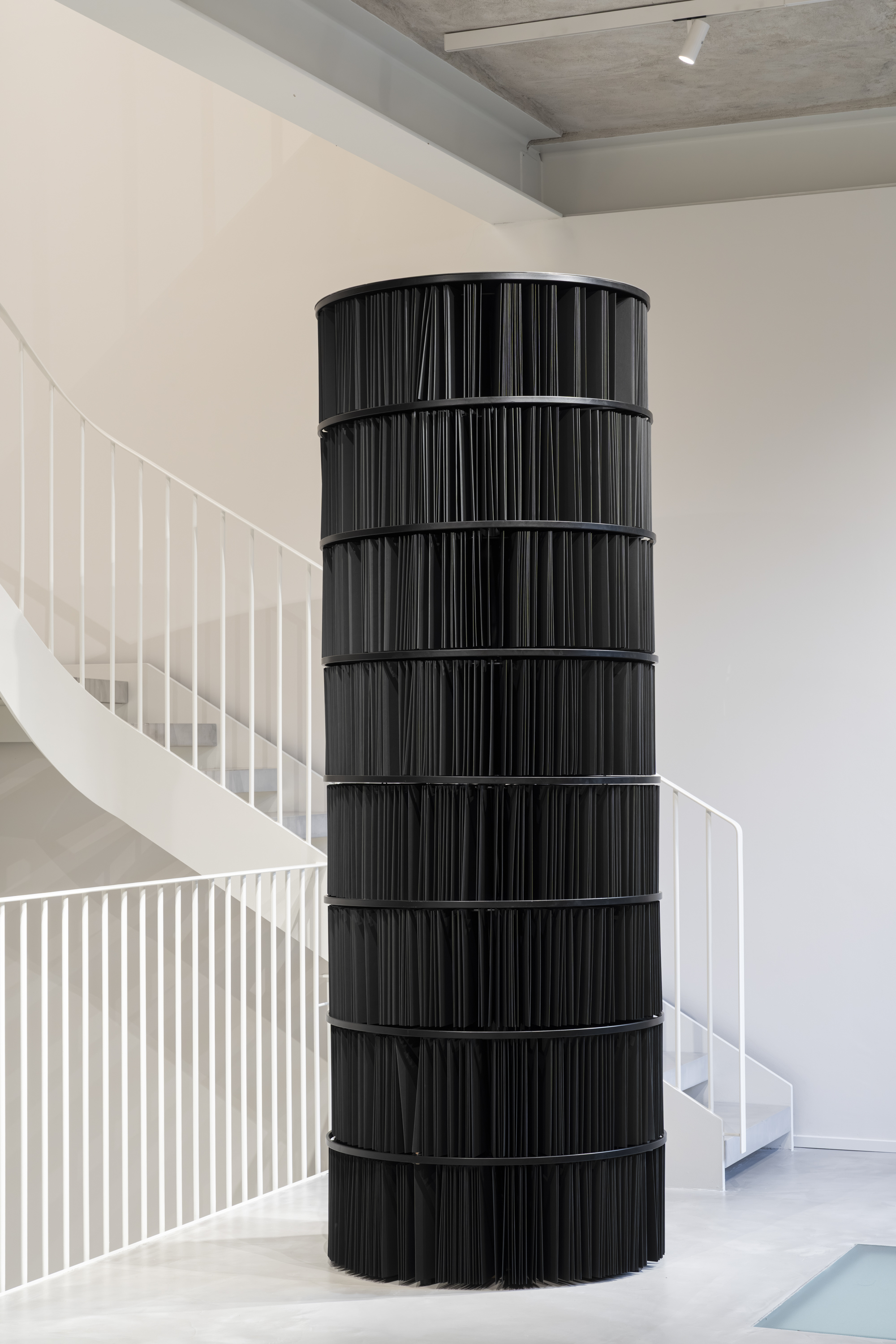
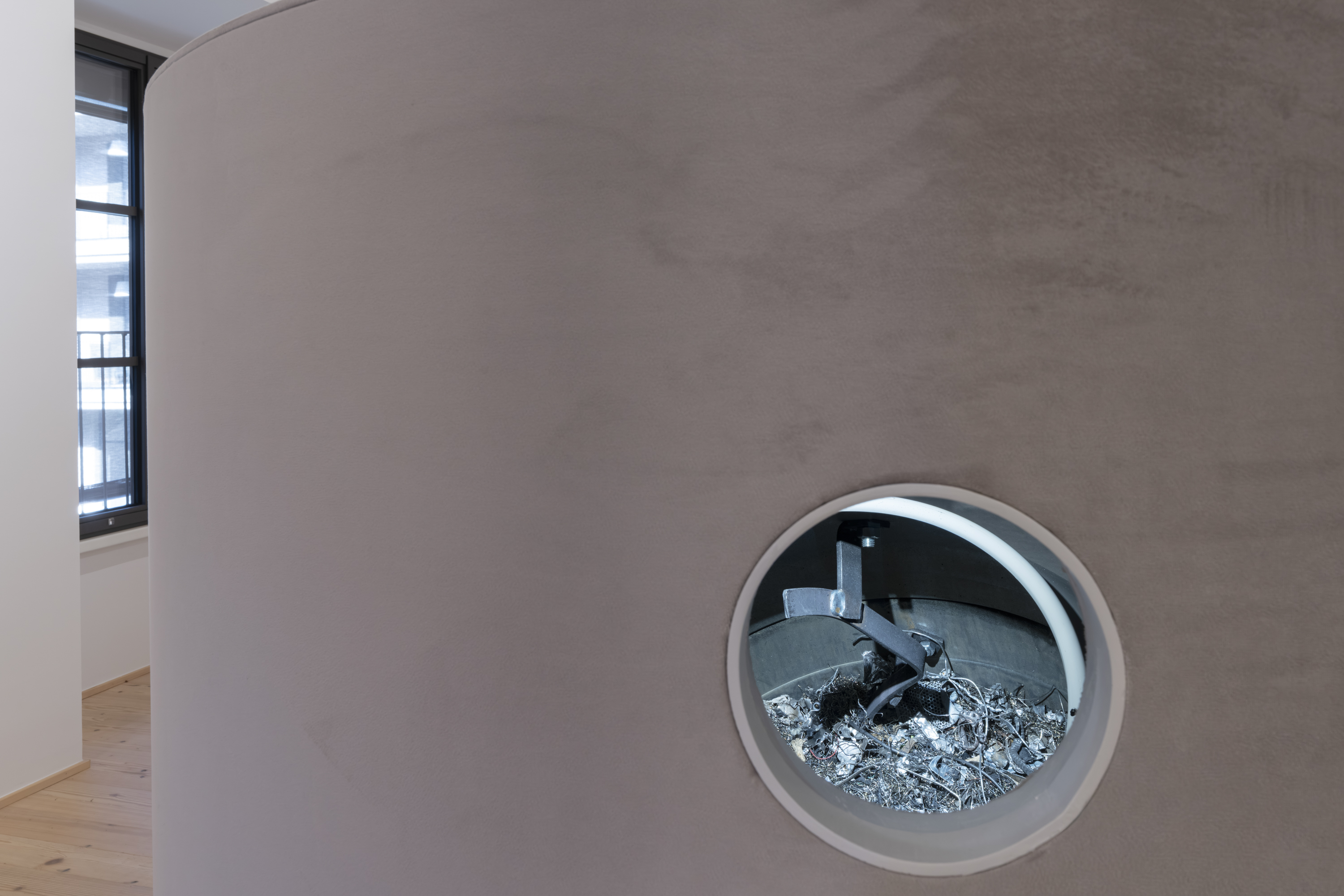
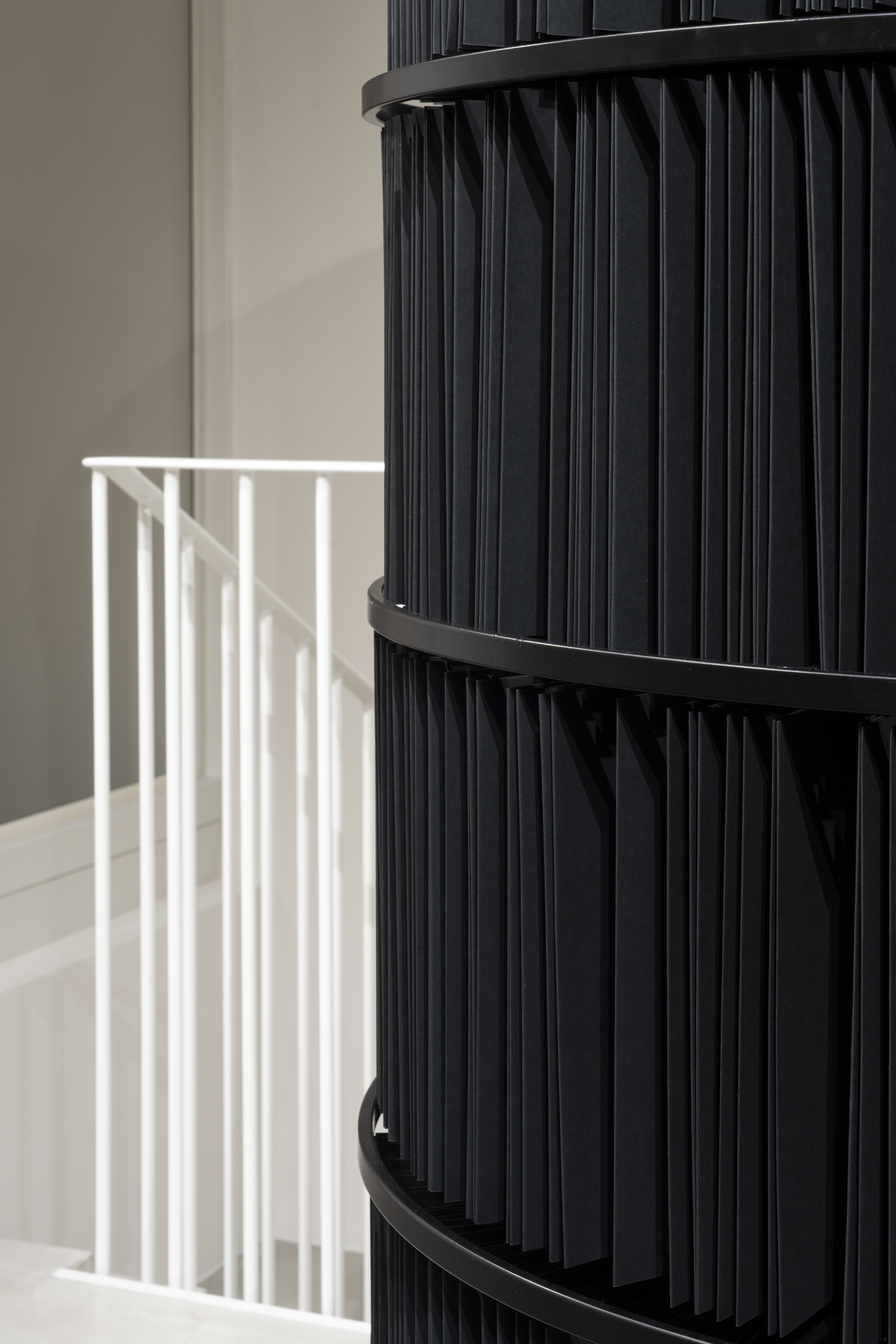
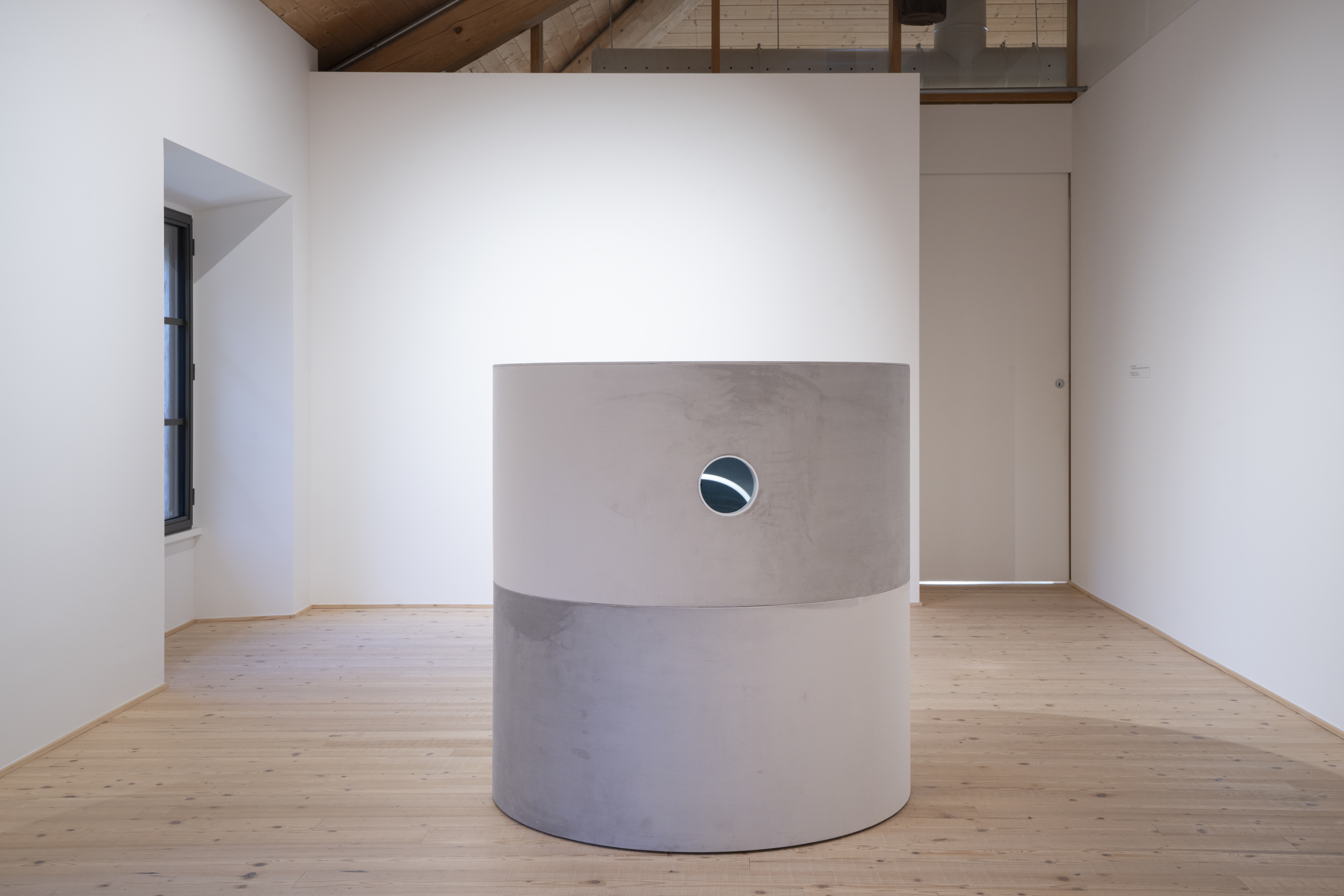
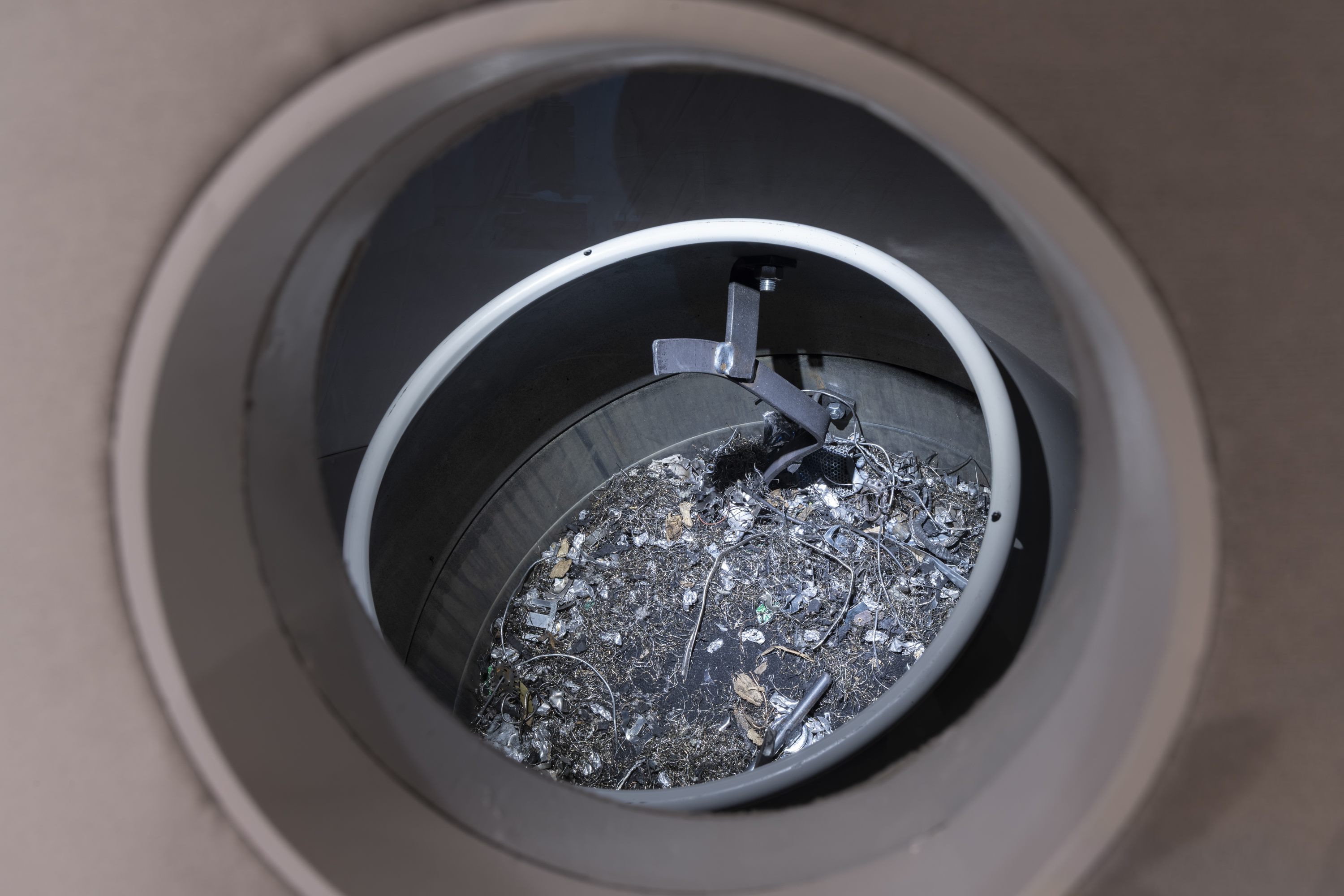
Ina context dominated by spatial saturation, Giuseppe Lo Cascio turns his gaze toward what is expelled and what expels, what forgets and what is forgotten. His research explores the rhetoric of attractiveness, by now a cornerstone of the logic of progress that allows cities to become marketable products, but which often coexists with a latent sense of collapse. He does so by focusing on dis- carded materials, particularly construction waste, which assume strong symbolic value: debris of a time marked by the separation between those who, from a privileged position, profit from it, and those forced to bear its consequences. Milan thus appears as a permanent construction site, a place of promises and illusions that both attracts and crushes, an organism that produces and organizes waste: elements seemingly marginal but full of lived experience, deserving attention and reflection. For the rubble scattered through the city can testify both to destruction and to imminent reconstruction.
Schedario N, on the ground floor, is a filing cabinet only in appearance. Its original function is preserved only in the title, as the black folders that compose it strip it of any possible use. The work thus becomes a mute and inaccessible archive, a sealed container that denies consultation, plays with our perception, and offers itself instead as a visual enigma. Upstairs, Tool #4 Nigredo o M è sempre quella perché non è mai la stessa rises like a monolith, a disquieting presence that does not communicate but causes something to happen. An object out of time, evoking unease, as if it be- longed to another era or an unrecognizable elsewhere. Inside, a concrete mixer switches on at intervals: the turbine enacts the nigredo, the alchemical black of transformation, suggesting the eternal oscillation between creation and ruin. Both works allude to the concept of the “bachelor machine,” that symbolic mechanism of desire that reproduces itself without the other, self referential, closed upon itself. A machine that generates desire but neither consumes nor fulfills it, reminding us that often movements, like the changes around us, are merely illusions.

Every body leaves invisible traces: chemical signs, odors, epidermal residues that tell silent stories. To inhabit is also to touch, to contaminate, to sediment memory.
Stella Rochetich’s practice explores smell, its perceptive and historical dimensions. Recently, she has focused on the phenomenon of deodorization, that cultural and political process established in Europe from the eighteenth century onward, which promoted the neutralization of human scent as a form of control, hygiene, and social discipline.
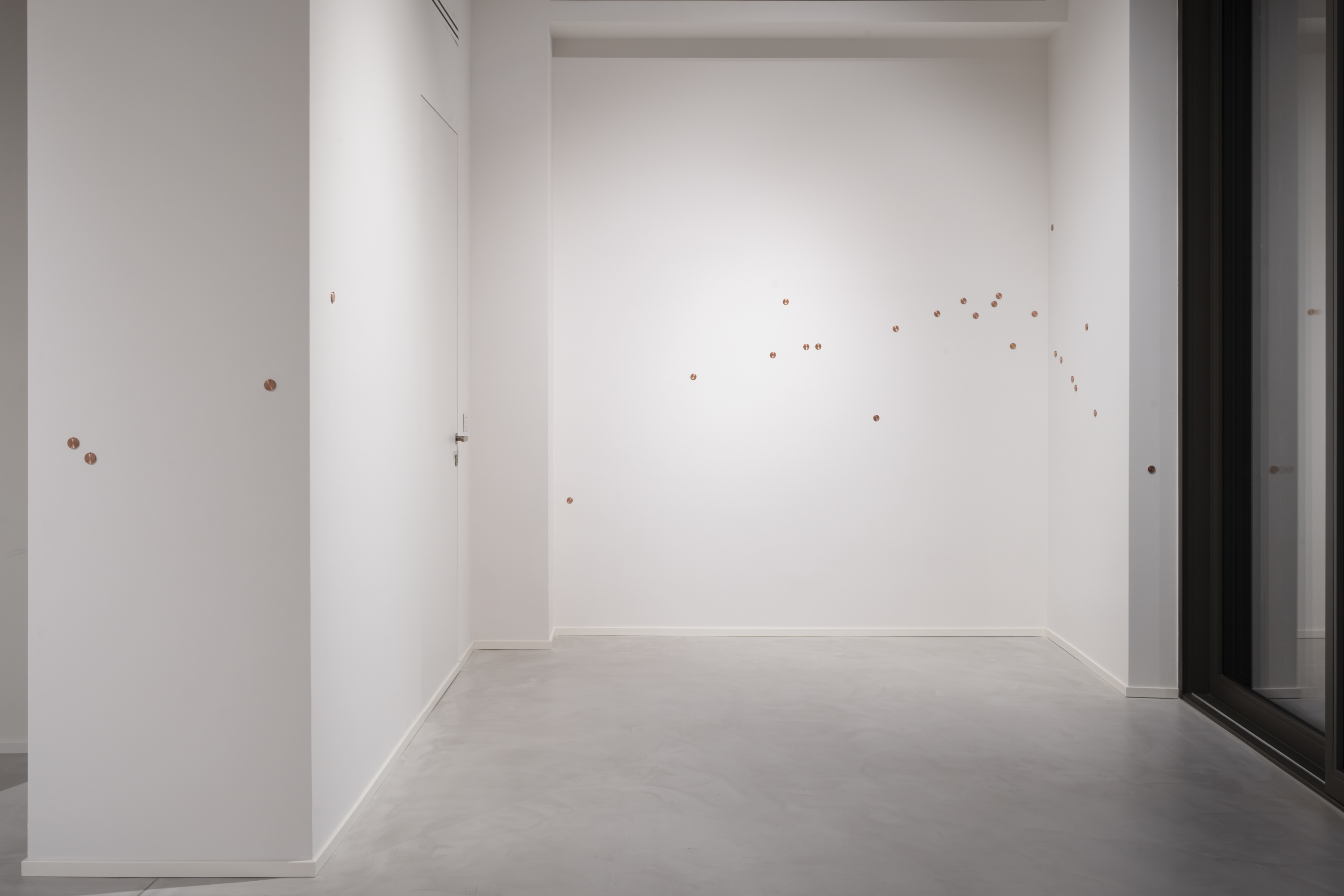
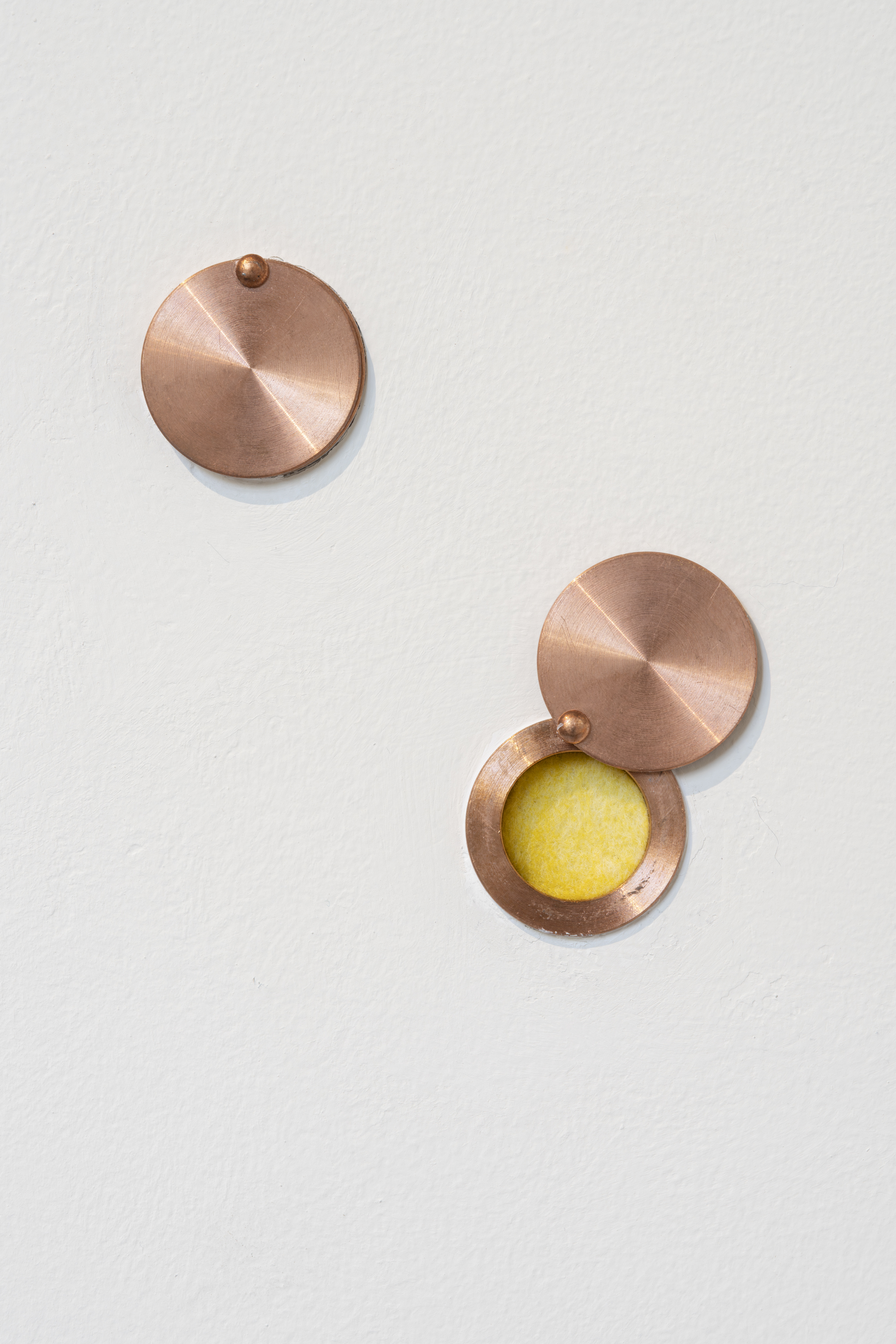
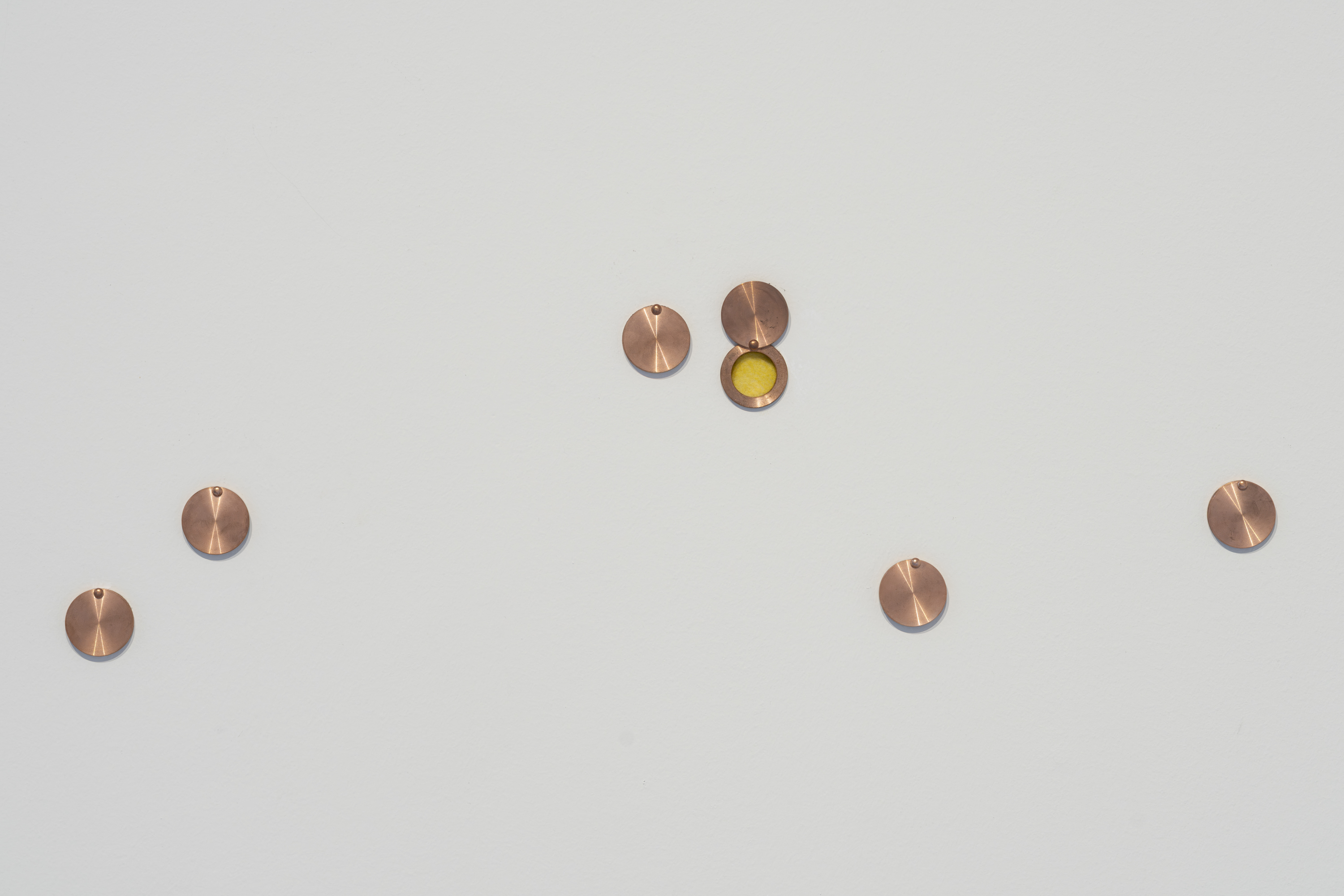
Some thirty inches from my nose / The frontier of my Person goes takes its title from a poem by W. H. Auden and proposes a return to the body as an archive of meaning and presence. Drawing on the scientific concept of the odortype, the unique combination of odor compounds secreted by each human body that forms a personal chemical identity leaving invisible traces in the environment, the work seeks to close the distance we have built from the body, reactivating sensory presence as a form of knowledge and relation. The constellation of peepholes scattered across the walls of Fondazione Elpis evokes the threshold that exists in every inhabited space: that subtle line between the private and the shared. It is a boundary that separates us from others only formally, since in public space physical contact occurs far more often than we realize. We touch the same surfaces, leaving intertwined fingerprints; we absorb the traces and presences of others, revealing the secrets our skin cannot hide.
Our fingertips are among the body parts that most retain scent, due to their oily, fatty composition. Handles, switches, and railings we touch daily are nearly invisible elements of the spaces we inhabit, yet they narrate our pas- sage and hold within them a multiplicity of traces and identities impressed upon their surfaces.
The peepholes that compose the work are made of copper, a material particularly sensitive to human touch: it oxidizes upon contact with skin oils, recording the memory of whoever brushes against it. Inside each one, a collection of scents evokes an imagined composition of those inhabiting our shared public spaces, odors left by those who dwell there, sometimes unpleasant, sometimes rooted in memory, yet often familiar, creating an ensemble of ur- ban and collective references.