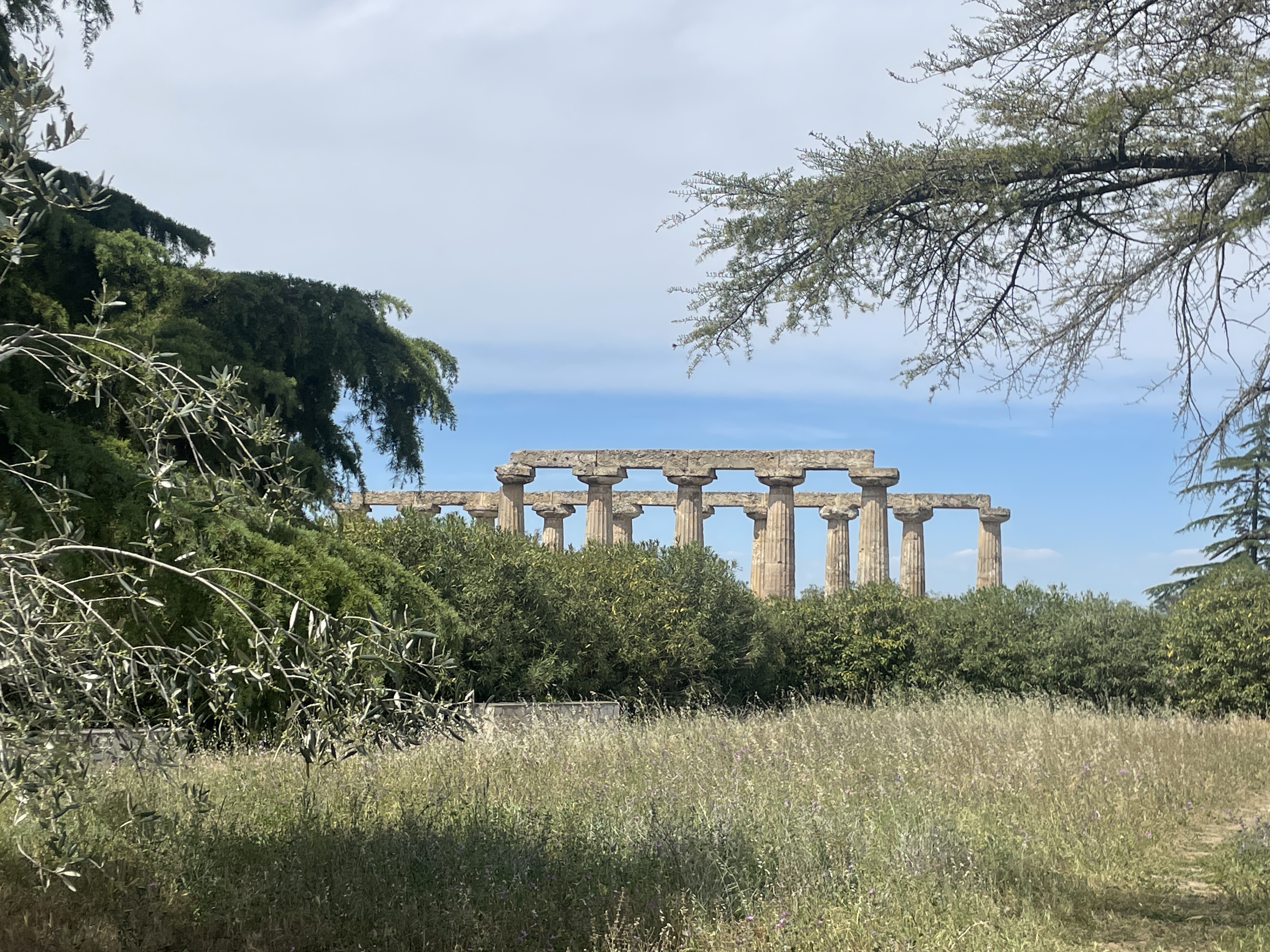
Organized by the Associazione Archeofuturo since 2018, In-ruins is a residency program dedicated to exploring the potential of the intersection between contemporary art and archaeology through the temporary placement of artists, curators, and researchers near monumental sites in Calabria and Southern Italy. In-ruins reimagines the territory through its past, transforms ancient ruins into meeting places, and brings the urgent and contemporary experimentation of international creatives to the heart of marginal territories. Rooted in a southern and Mediterranean mindset, the project aims to highlight not only the archaeological heritage but also the traditions, myths, and stories of the very communities that have always safeguarded it.
This year we will follow routes suggested by ancient geographies rather than modern maps. The program will take place for the first time outside the borders of Calabria and will arrive in Basilicata, which shares past and present destinies with the former.
In collaboration with the National Museums of Matera - Regional Directorate of National Museums of Basilicata, we will explore the National Museums and the Metaponto Archaeological Park. The residency will last over a month, from September 9 to October 13, and the residents will be hosted at the family-run farmhouse “Oasi Rupestre” in the town of Montescaglioso.
Continuing the partnership launched last year, the In-ruins 2024 residency is organized in collaboration with the Elpis Foundation. The program is also sponsored by the Matera-Basilicata 2019 Foundation.
ㅤ
The five artists selected for the In-ruins 2024 residency:
Danila Gambettola is a dancer, performer, and researcher engaged in a transdisciplinary investigation that overlays dramaturgical fragments of movement, voice, writing, and installation components.
Nabil Aniss employs a combination of moving images and monologues to examine the intricate interconnections between political institutions, diasporic bodies, affect, and intimacy.
Savannah Sather Marquardt is an art historian, archaeologist, and writer at Yale University. Her research on the ancient colonial poleis of southern Italy explores how funerary art connected the world of the living, the earth, and the dead in the 5th and 4th centuries BCE.
Iasonas Kampanis focuses his work on the connection with the natural world and the animistic origins of Mediterranean culture, challenging the anthropocentric views that have distanced us from our sense of universality.
Fanny Souade Sow examines how monuments, memorials, and statues, as well as other cultural assets intended for commemoration or remembrance, become vehicles for a controlled and legitimized narrative of history.
Sahil Naik examines political scenarios, built environments, and ancient histories, and challenges colonial pasts, memory, and public narratives.