HAZE
curated by HH Art Space
Lavanderia
Via Lamarmora 26, Milan
Bani Abidi, Nikhil Chopra, Madhu Das, Kedar Dhondu, Pranay Dutta, Avian D’Souza, Madhavi Gore, Shivani Gupta, Munir Kabani, Romain Loustau, Sahil Naik, Yasmin Jahan Nupur, Soumitrimayee Paital, Amol Patil, Pala Pothupitiye, Fazal Rizvi, Joydeb Roaja, Lala Rukh, Vineha Sharma, Divyesh Undaviya, Diptej Vernekar
Through the works of 21 South Asian artists, HAZE explores new perspectives of ecological, political and socio-cultural narratives of a global crisis that affects the region, the people and their stories. The exhibition, curated by HH Art Spaces collective and Mario D’Souza, is hosted in Fondazione Elpis’ new spaces.
The exhibition, curated by the HH Art Spaces collective and Mario D’Souza, is on view in the new spaces of the Elpis Foundation. Through the work of 21 artists, HAZE explores new artistic perspectives from South Asia and examines the role of the visual arts in narrating a global crisis that affects multiple levels: ecological, political, and socio-cultural. Mist, in its form and density, presents both a reality we must confront and a reminder of our collective past and possible future. Mist can be fog, smog, smoke, toxicity, and magic: it swallows distance to remind us of the fragility of the present.
Through 20 practices from South Asia, the exhibition attempts to create a ‘region’ by following stories and legends, bringing together spirits and energies in a time marked by extremism and majoritarianism. The mist does not prevent us from looking to the future; rather, it offers a keen awareness of the present which, like the act of living itself, has become a form of resistance.
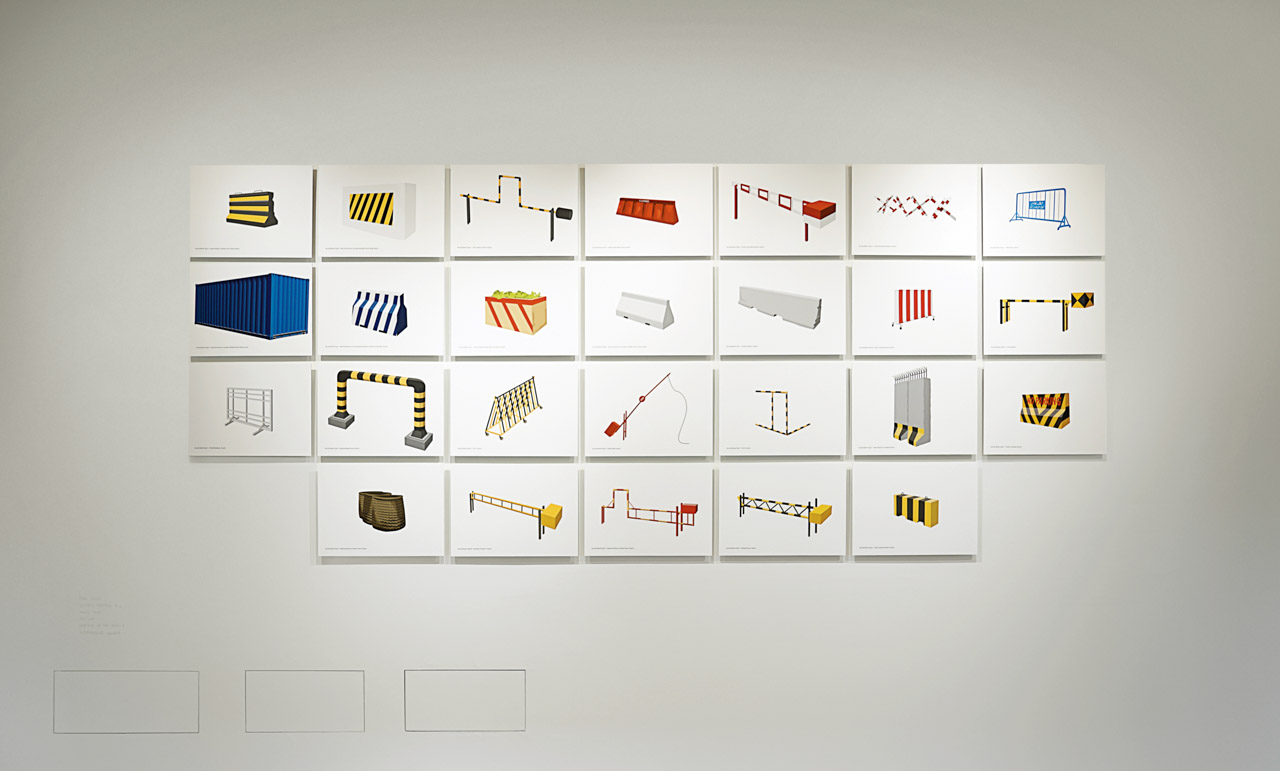
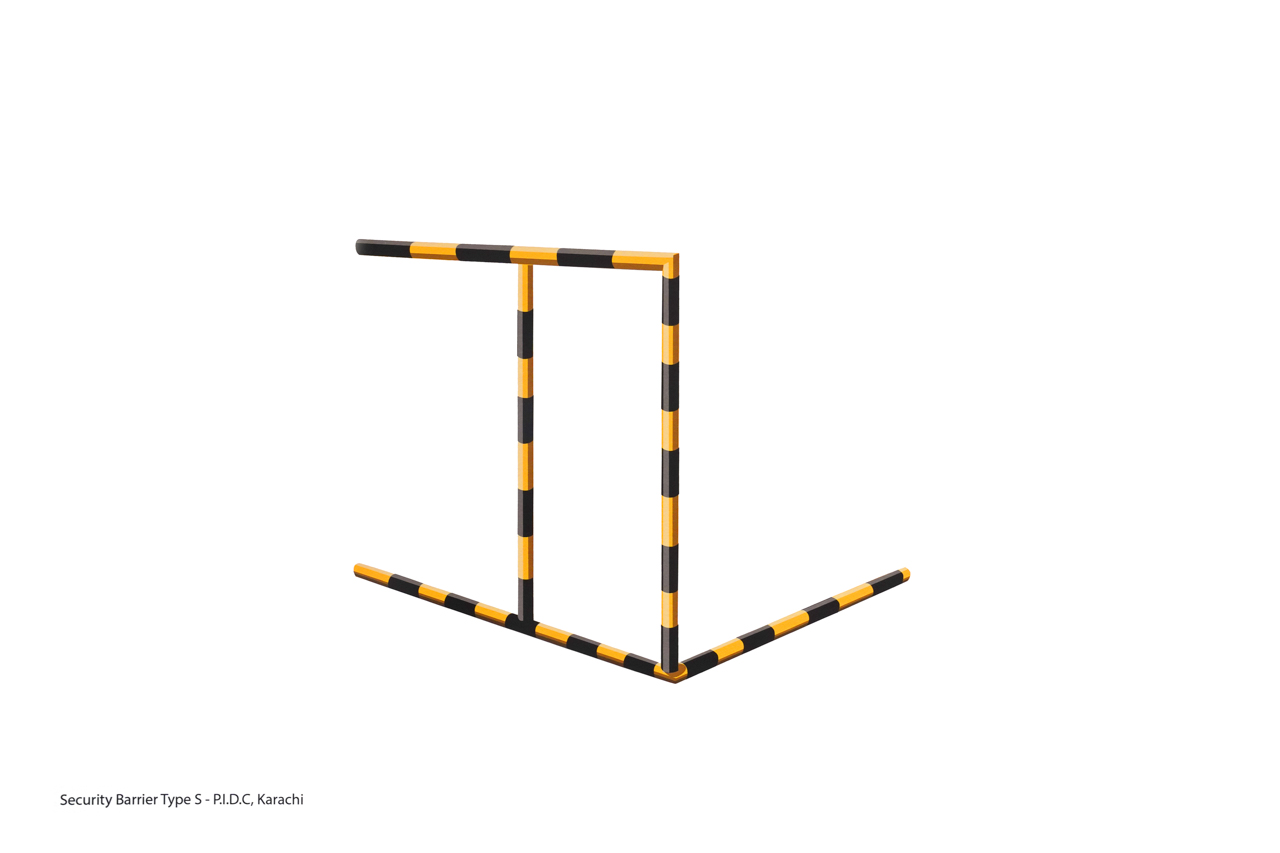
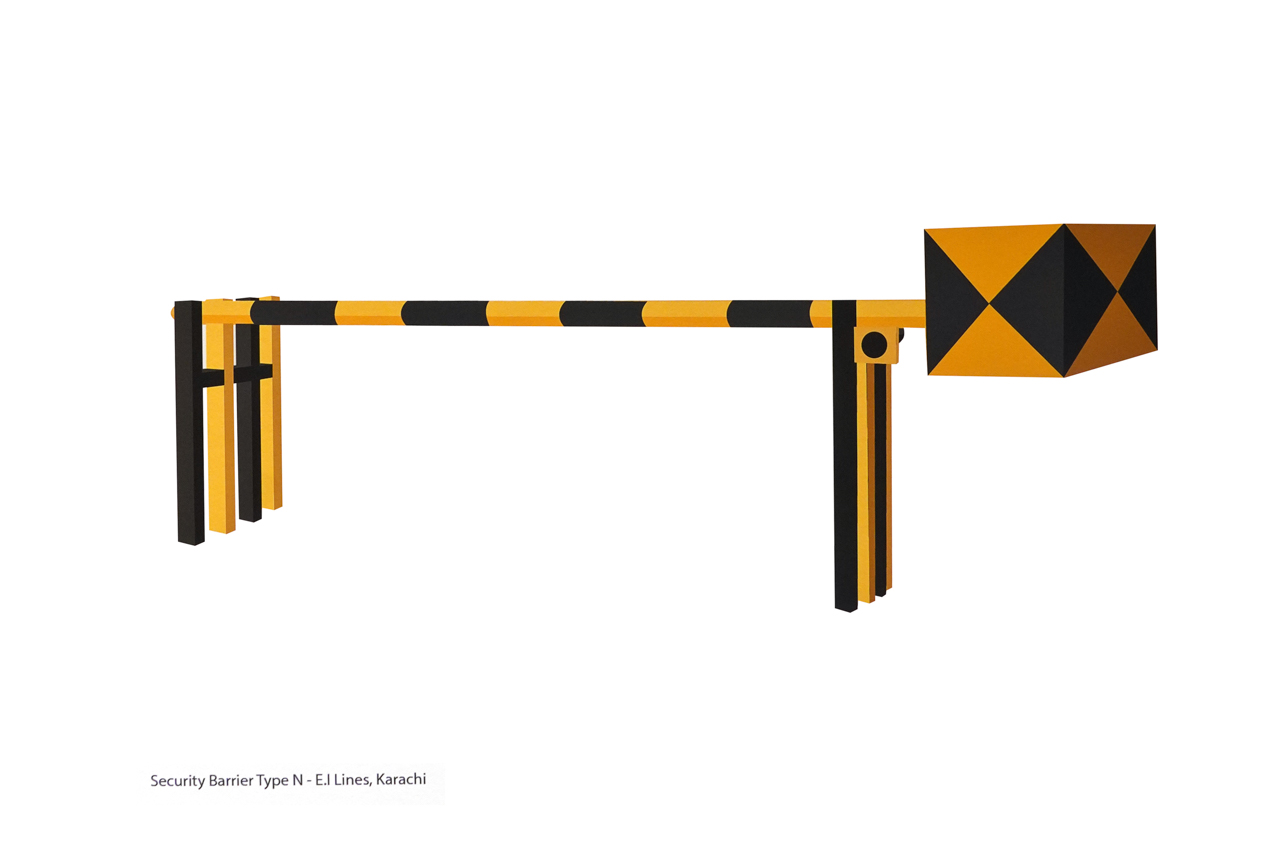
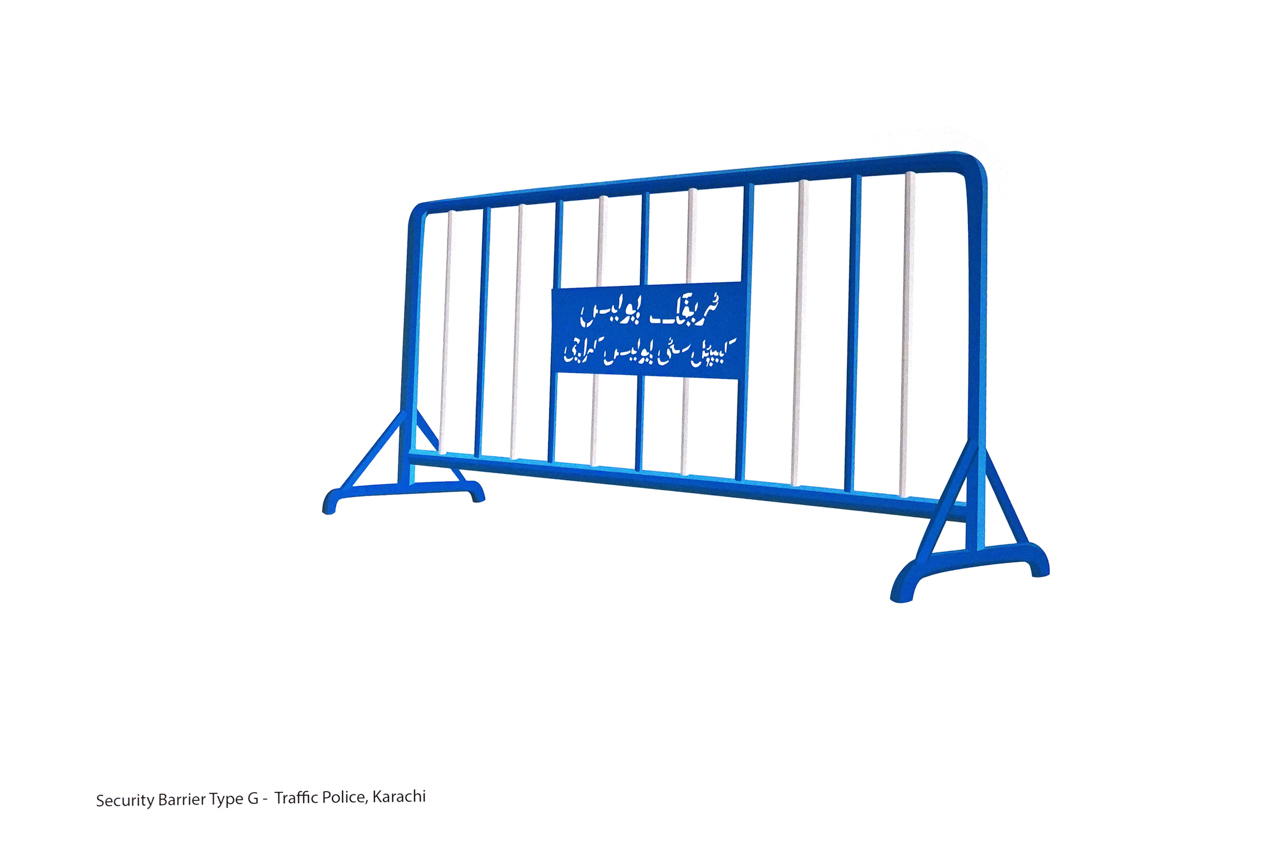
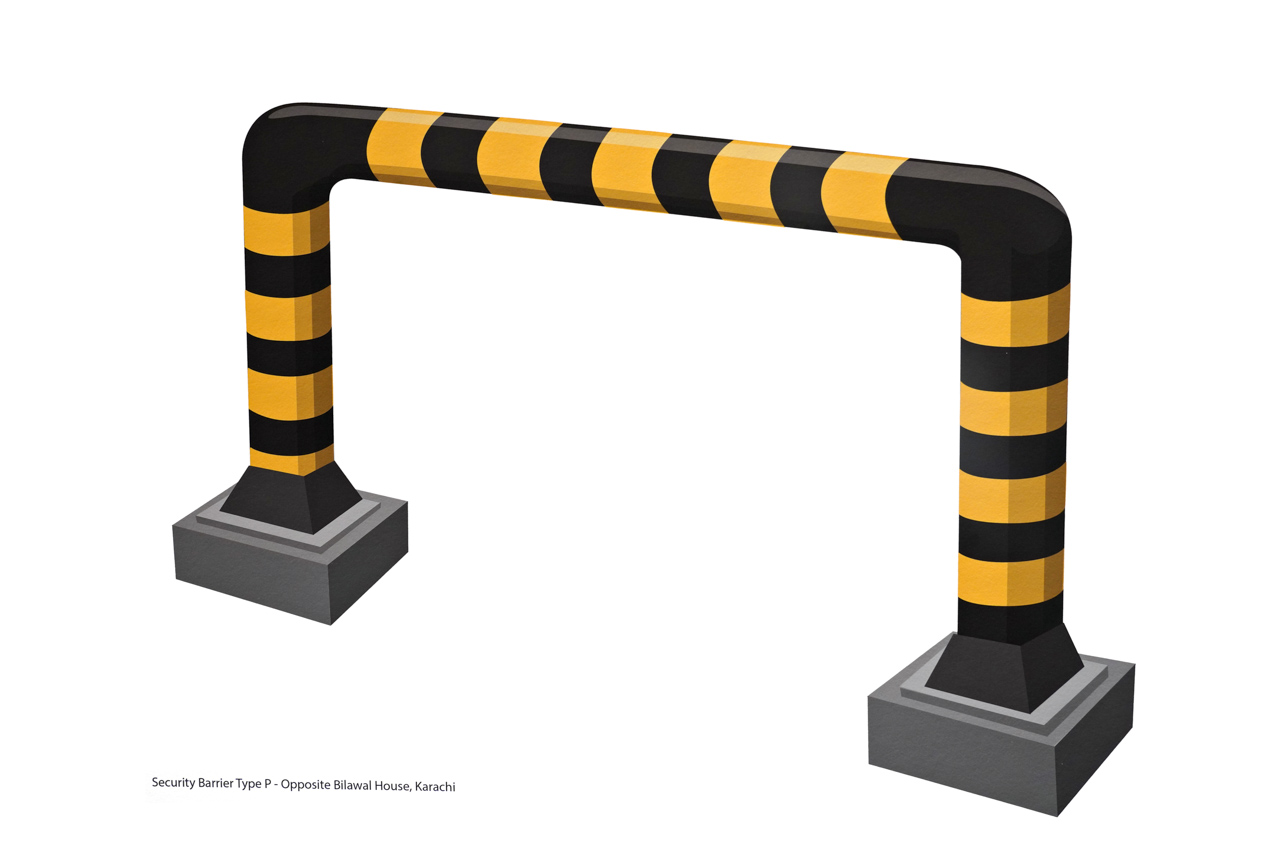
Bani Abidi's work (1971, Karachi, Pakistan) takes the form of an inventory, or alphabet in images, of the security barriers imported and deployed in Karachi, Pakistan's main city, in the aftermath of the attack on the Twin Towers. Interested in investigating the power dynamics of her home country, where the myth of the "American dream" is still alive, Bani Abidi studies the barriers, photographs them on site, and works on them digitally afterwards. The artist also decides to modify some of them, opening possible gaps that would allow pedestrian passage, thus failing their security function. Such a sarcastic and ironic approach alludes to the distortion that the American dream undergoes in Karachi, turning almost into a parody. Depotentiated and decontextualized on white backgrounds, the security barriers are finally presented as pieces of furniture to be chosen, as if they were on the pages of a glossy catalog.
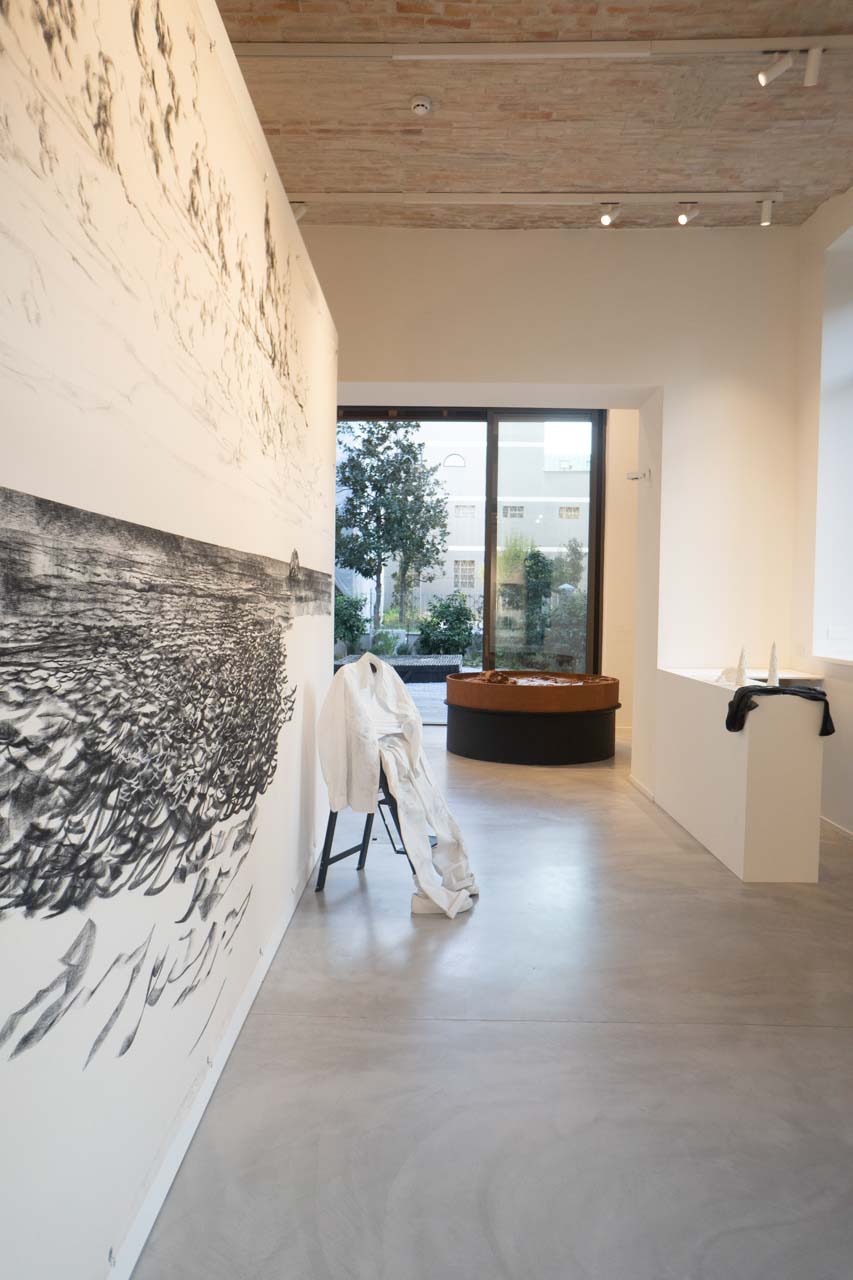
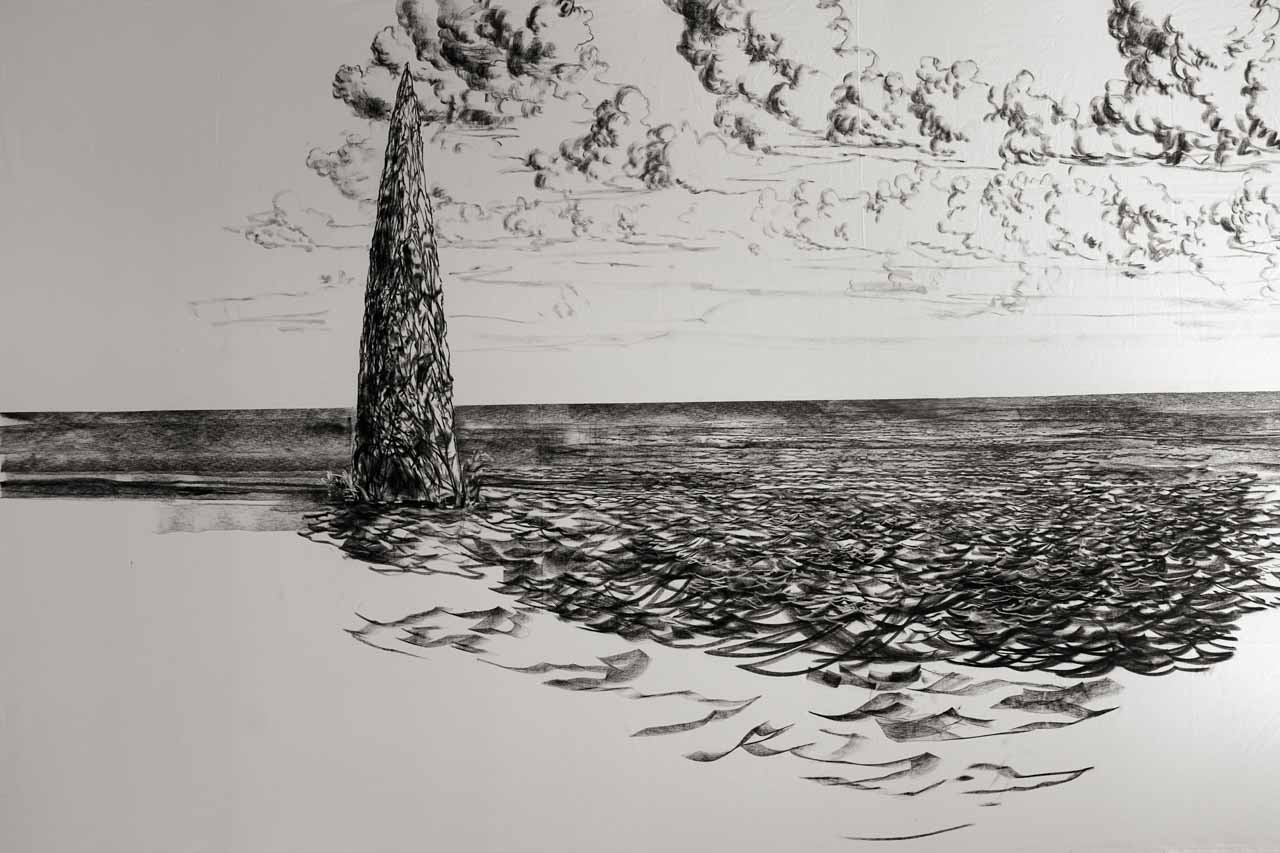
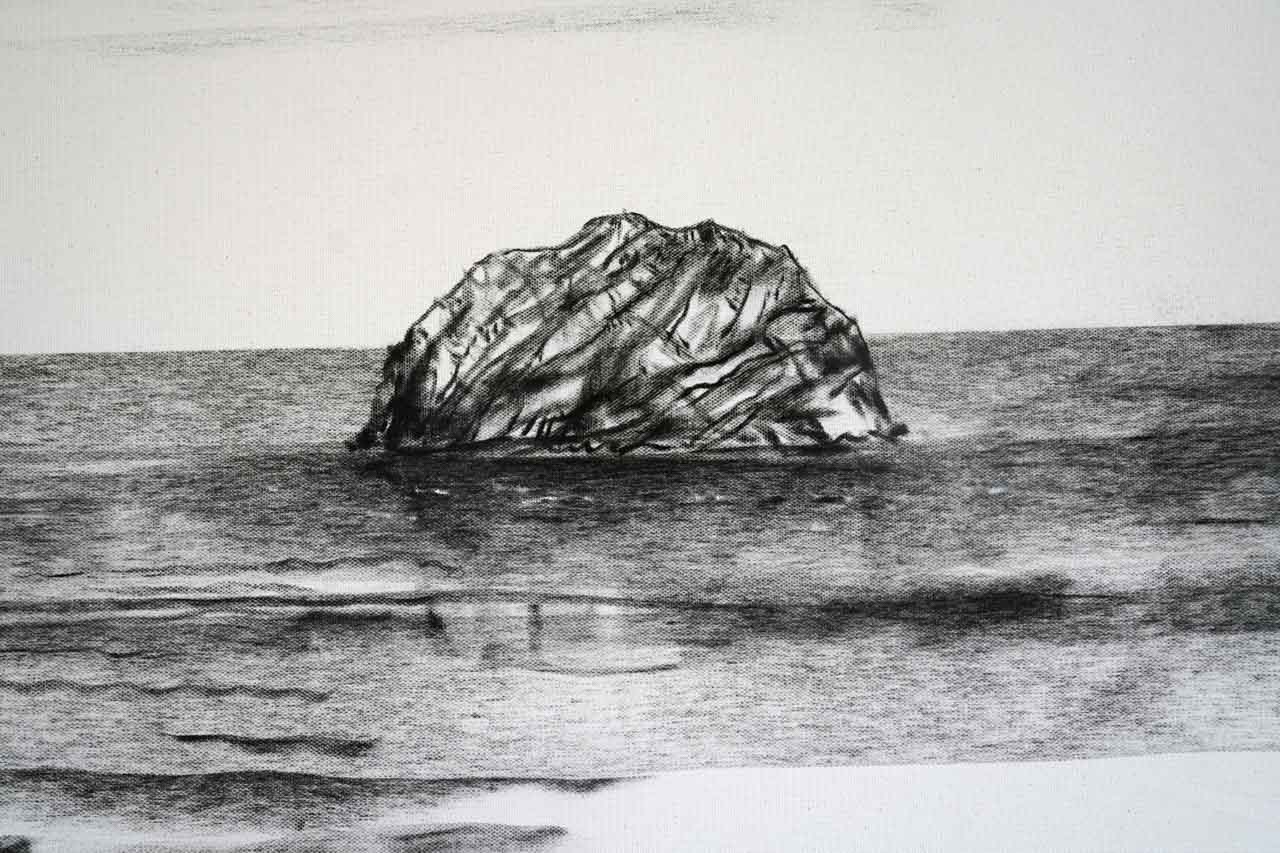
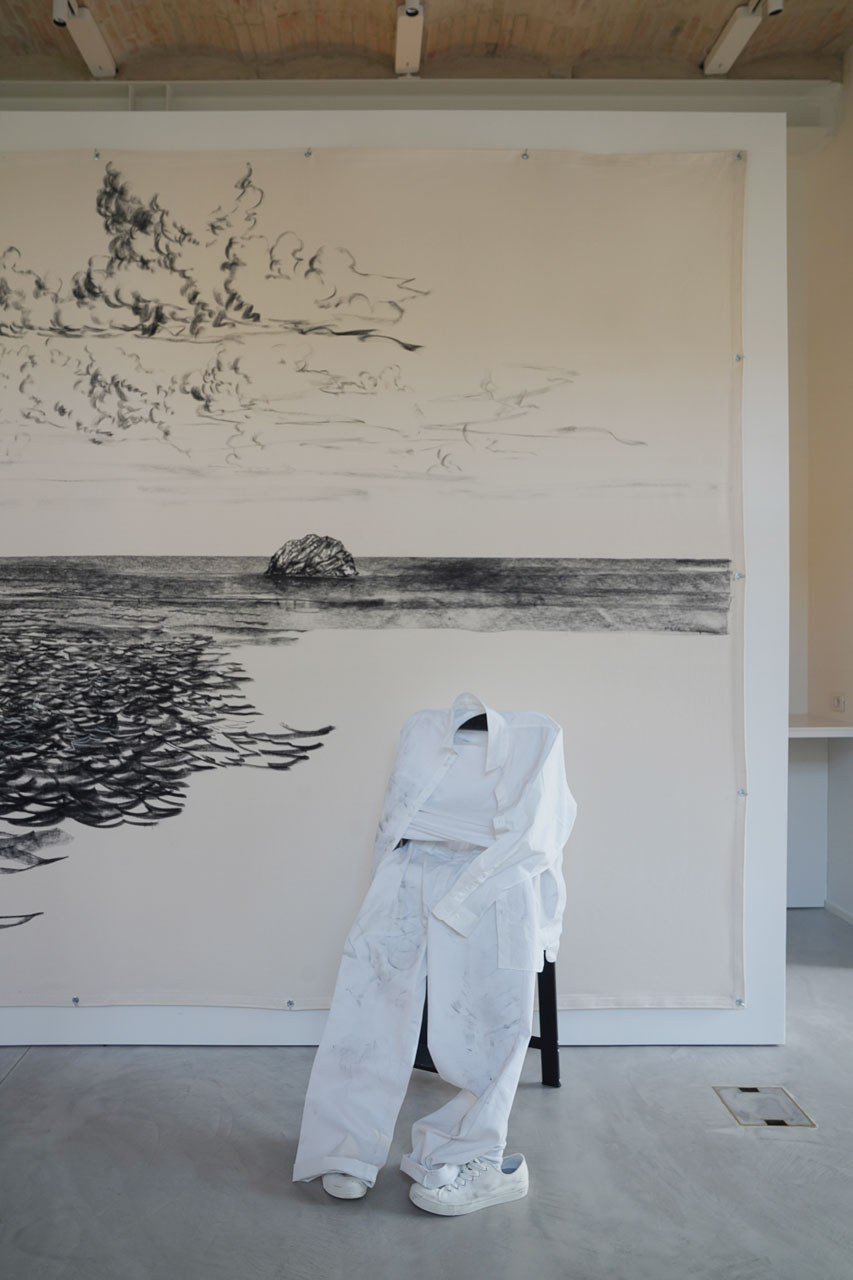
In the simultaneous acting of Nikhil Chopra (1974, Kolkata, India) and Romain Loustau (1982, Cannes, France), a rippling sea drawn in charcoal strokes and a small group of porcelain sculptures come to life in front of each other. In a two-person performance, the artists stage their bodies as an integral part of the creative process. In fact, what remains with the works are the clothes worn by Chopra and Loustau during the action. The protagonist is once again the sea, agitated and stormy, toward which clouds loom menacingly. A pointed rock stands looming from the surface of the canvas; it is the same one that placidly rises from a sandy mound, born of Loustau's stonemasonry. In his artistic practice Nikhil Chopra combines drawing and performance. If the latter lives from the here and now, and is therefore destined to live only in the memory of the audience, drawing becomes an object residue of its action.
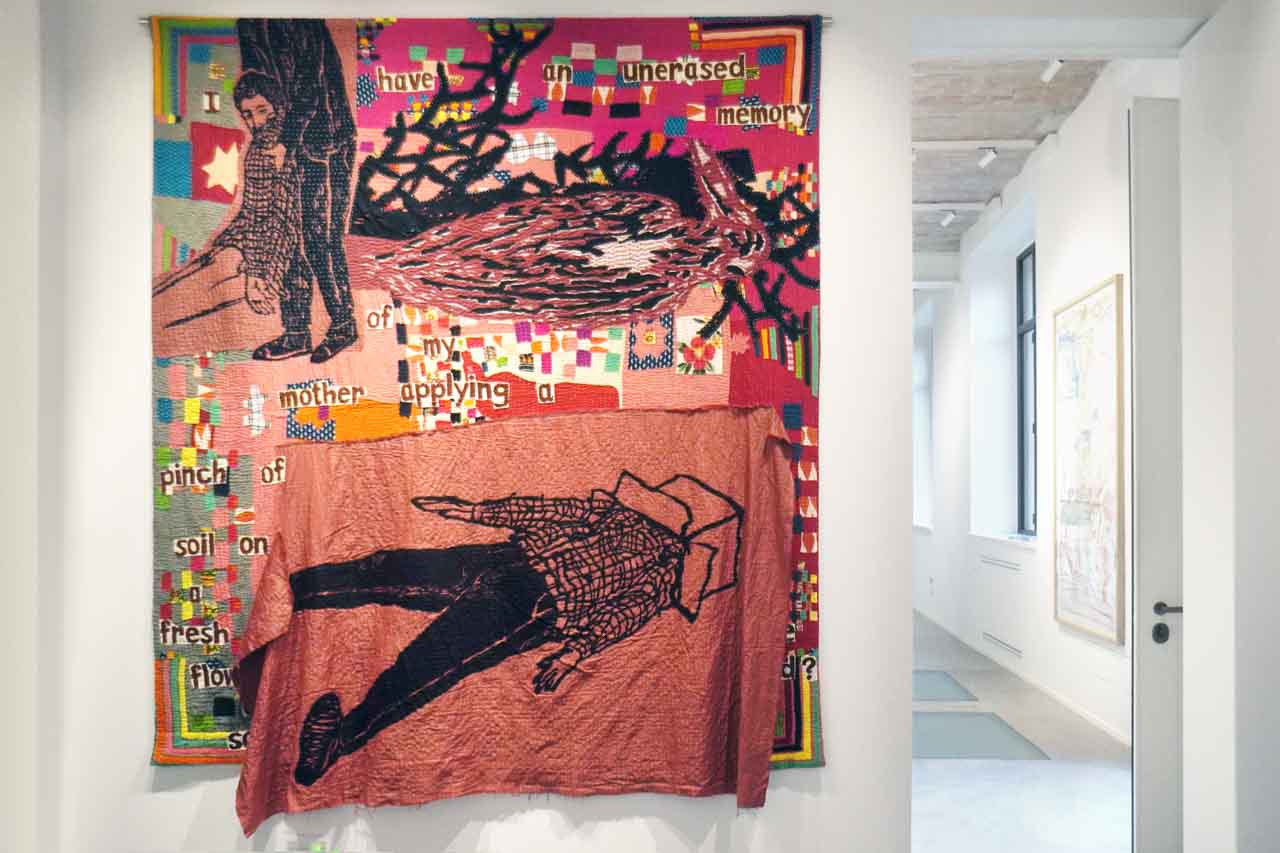
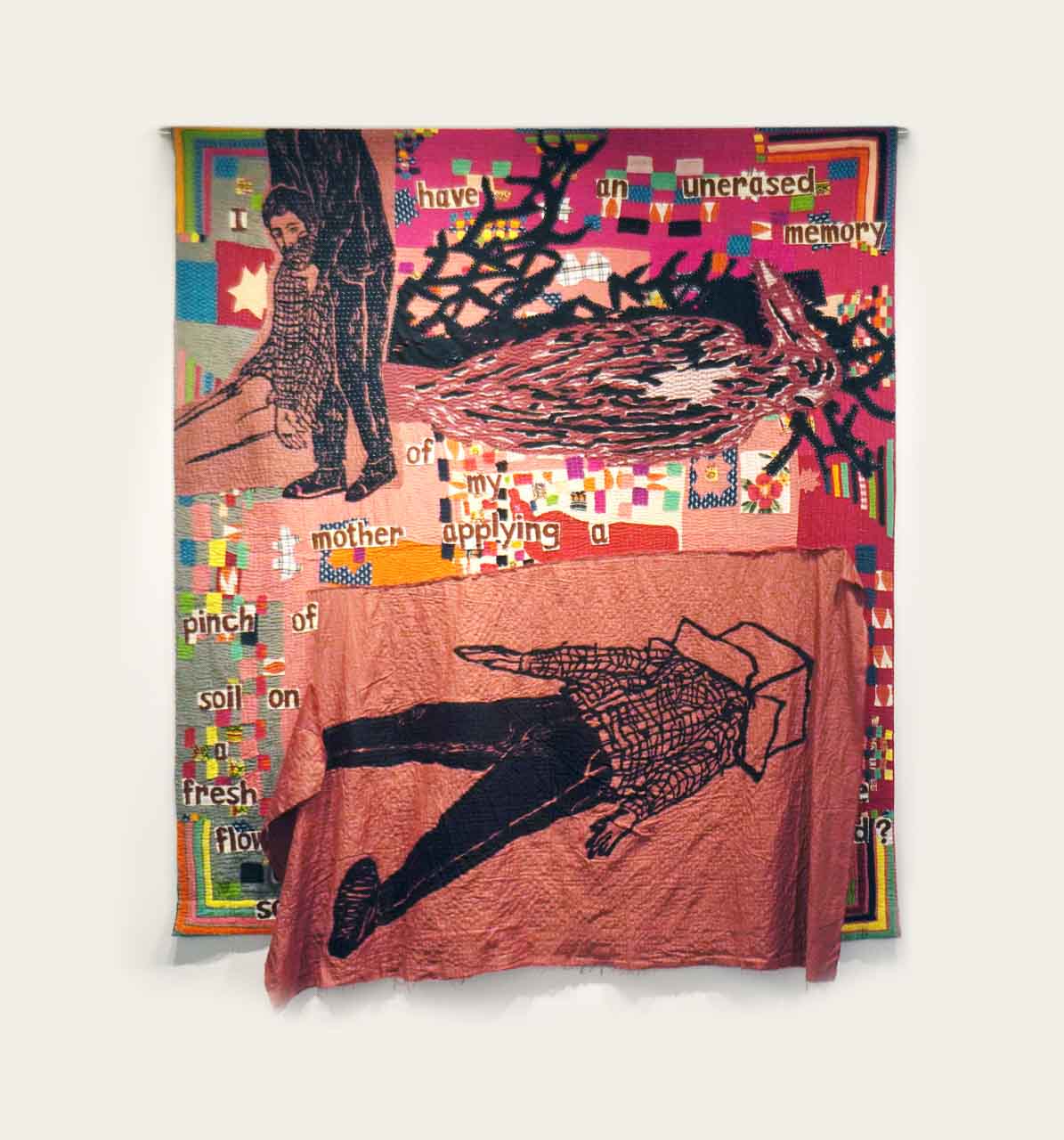
On a large surface of fabric, a distant but still vivid memory of Madhu Das (1987, India) takes shape. In a collage of fabric fragments, the artist gives form to a childhood memory of when his mother used to heal a wound by applying a pinch of earth to block the flow of blood. The episode is a pretext to raise poetic questions about the relationship between earth, blood and the passage of time. The Indian artist reflects on the sweetness that memories take on when you are far away from someone or something you care about
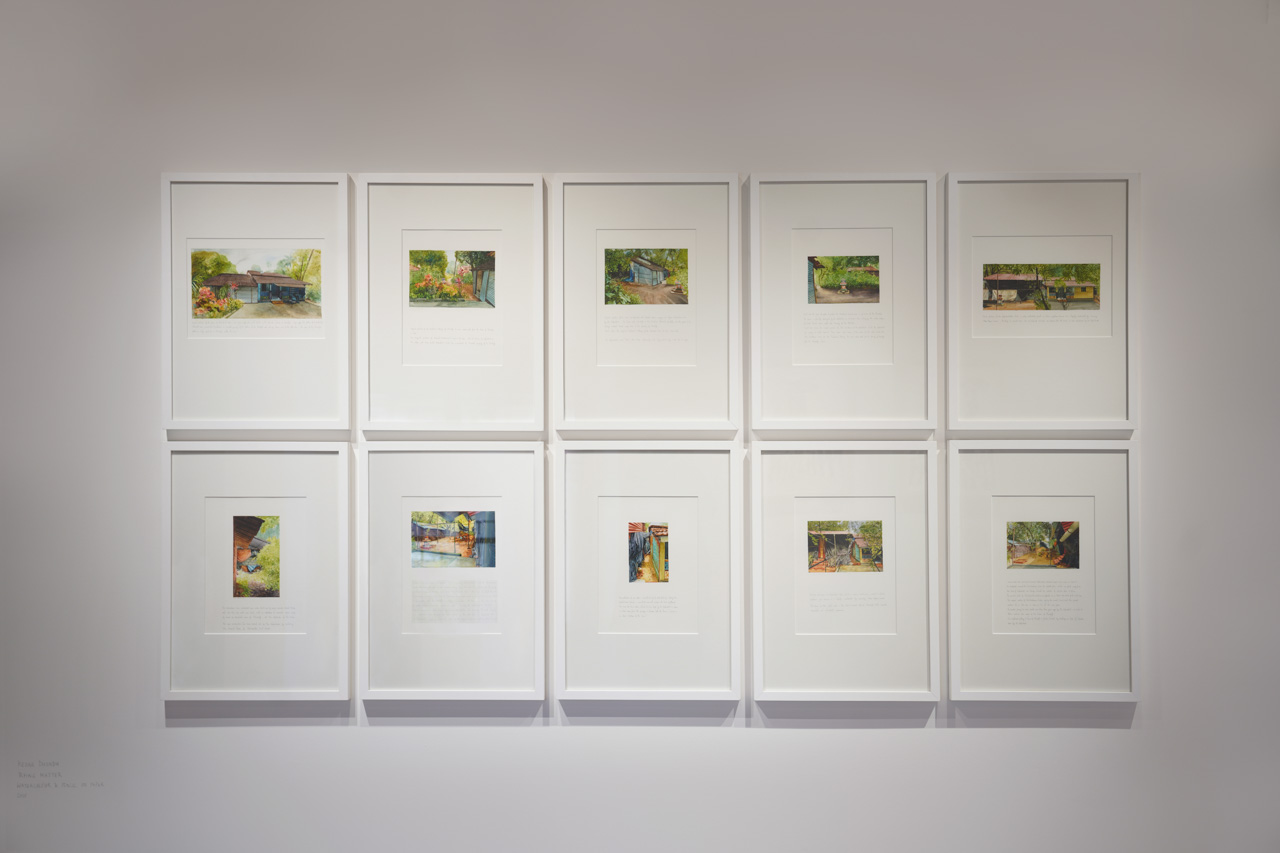
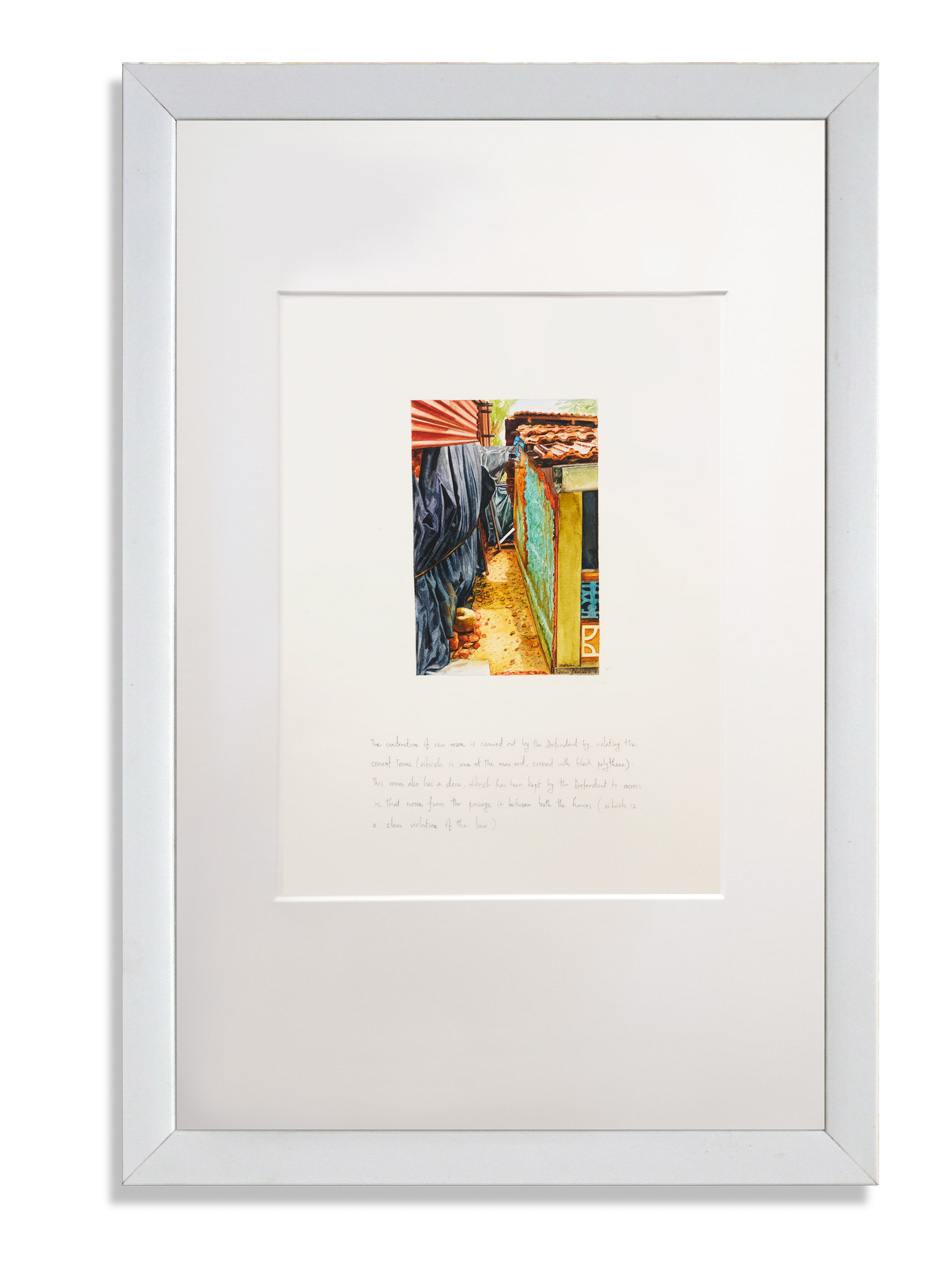
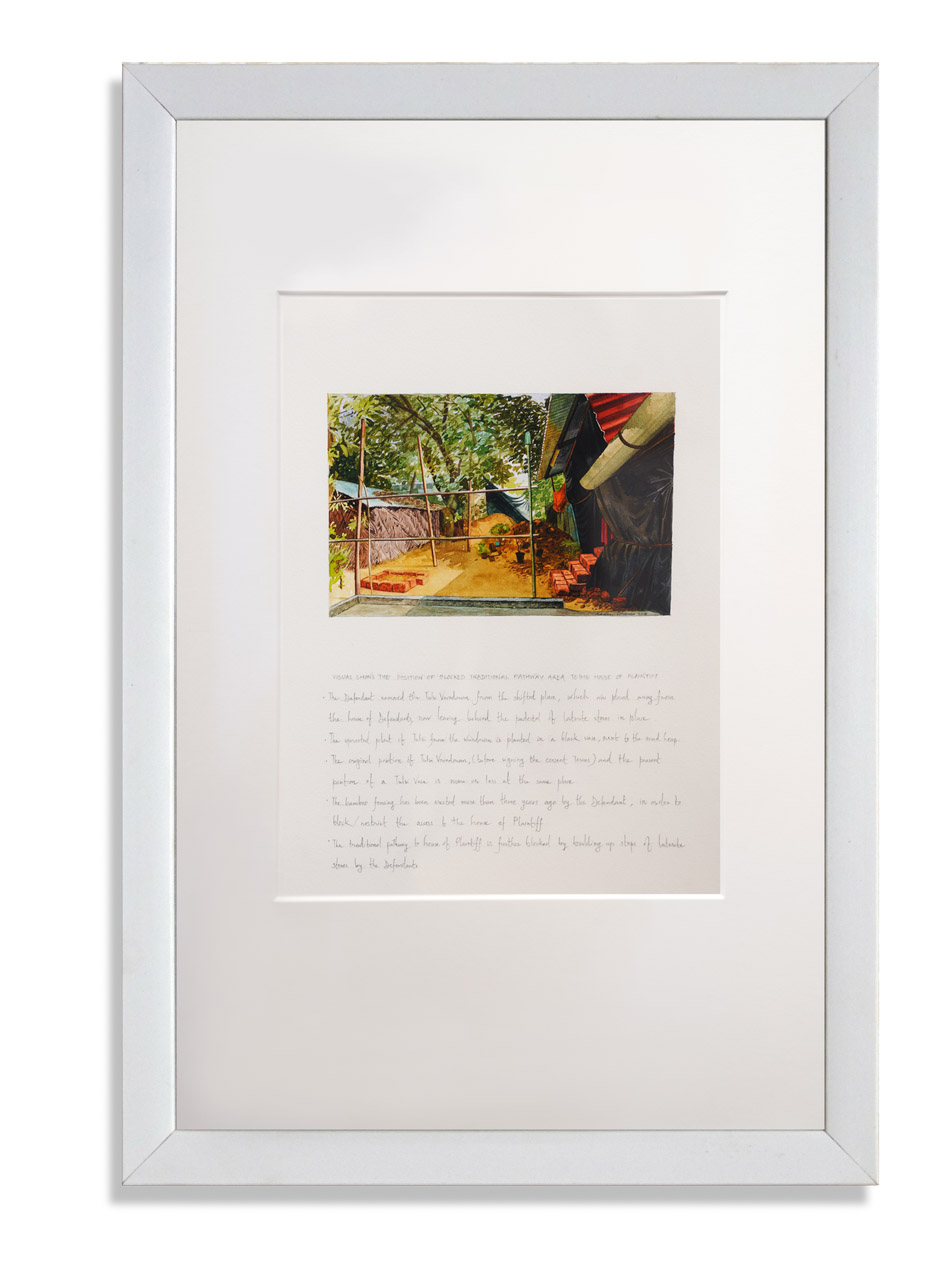
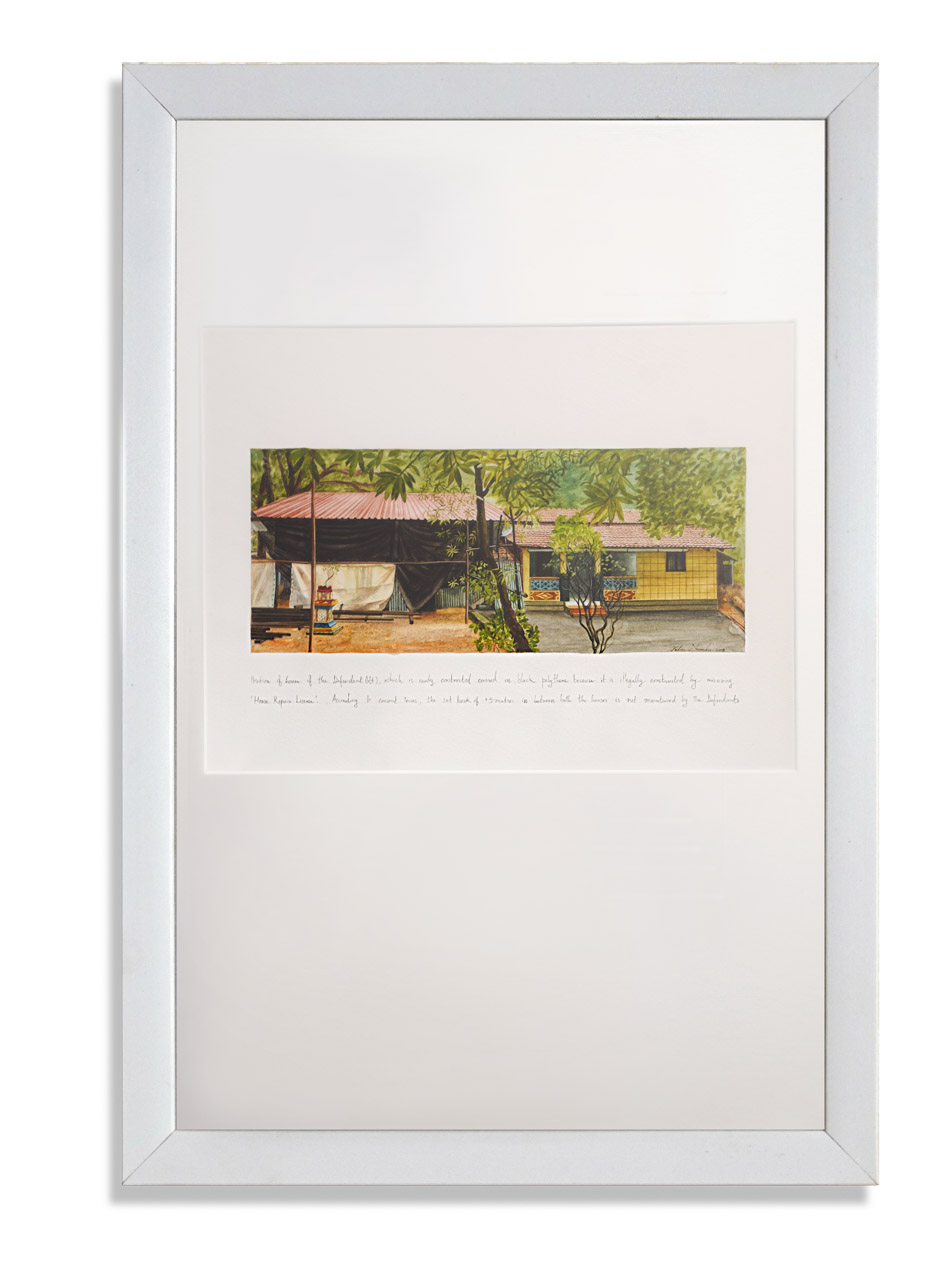
A series of watercolors - accompanied by accurate pencil notes - tell the legal battle of Kedar Dhondu (1981, Tuem, India), who was forced to defend his home from illegitimate expropriation perpetrated by some criminal organizations present in the state of Goa. That of illegitimate expropriation and "land theft" is an extremely widespread practice that leverages a flaw in India's justice system, which does not have specific legislation against land grabbing or even a proper property census system. These kinds of phenomena can occur violently or, more subtly, through the production of false documentation and repeated intimidation. Moving between such seemingly distant dimensions as figurative art and judicial proof, Dhondu recounts that next to his house "the defendant" illegally built a steel sheet structure, thereby altering his property. Although the artist has suffered years of injustice, harassment, and humiliation since 2007, he courageously filed a lawsuit against the dispossessors and to this day has yet to receive justice.
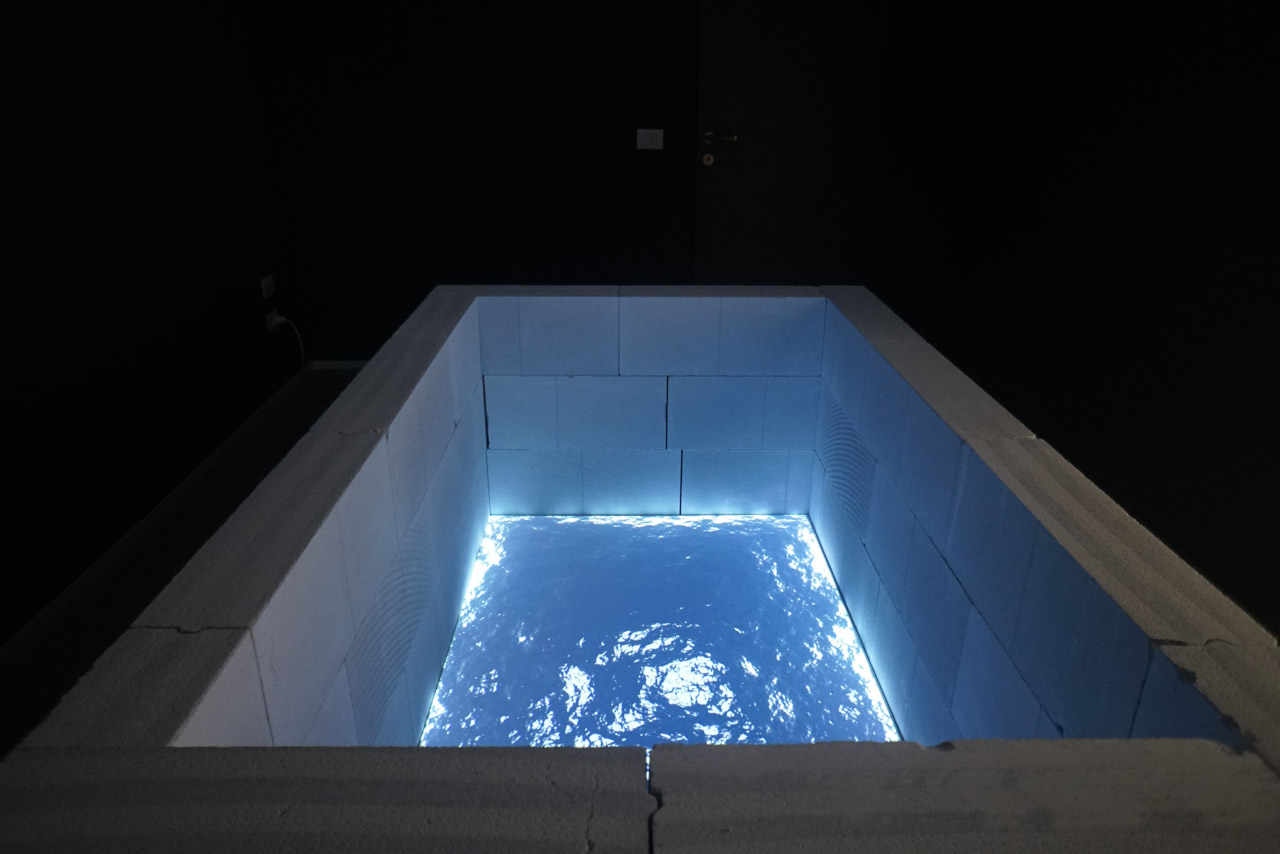
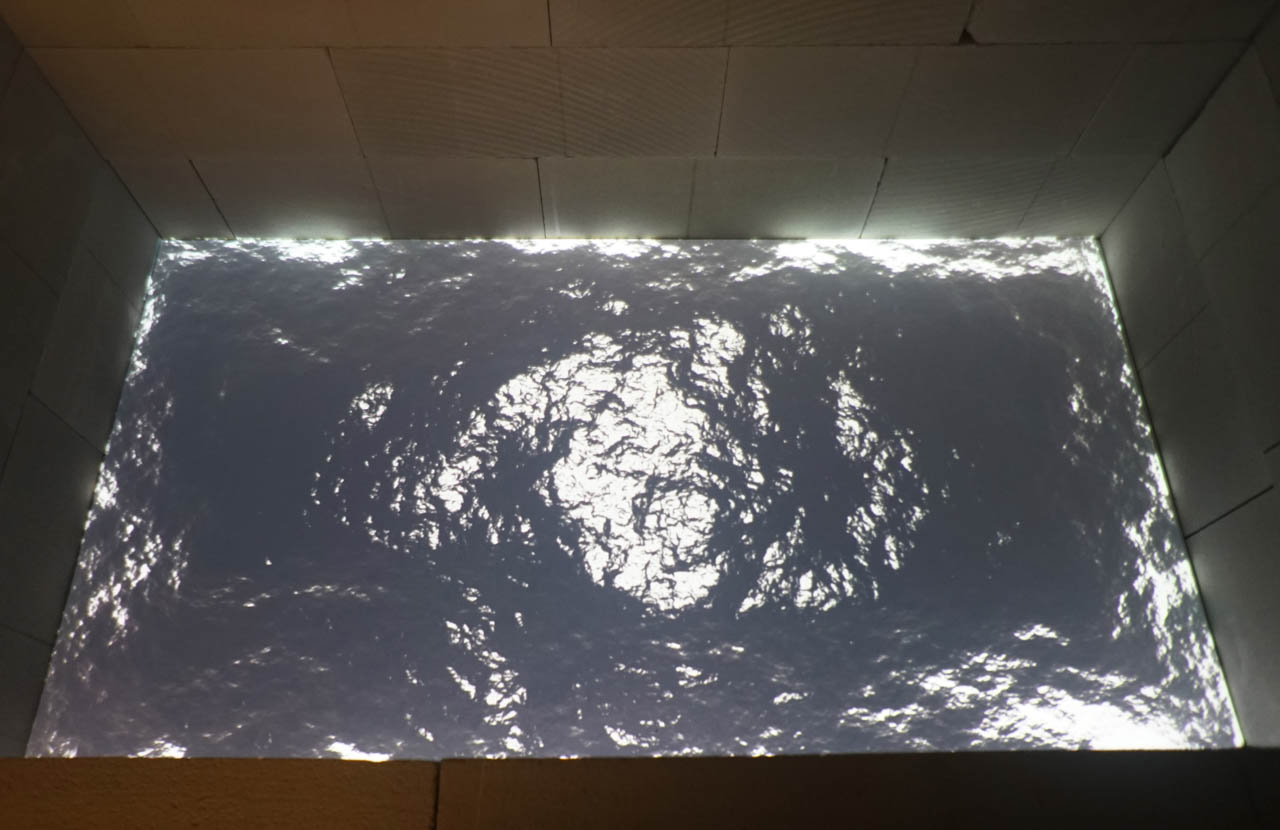
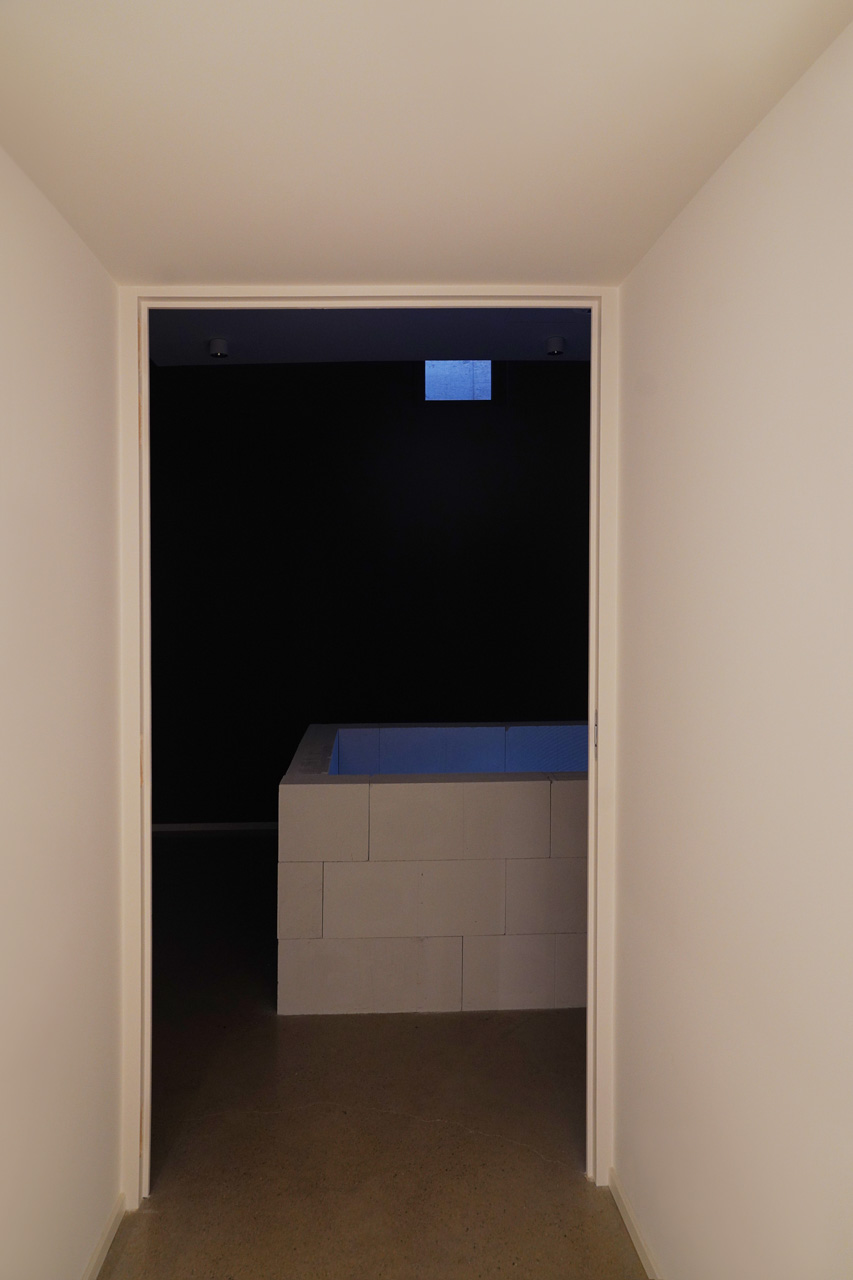
Interested in investigating the relationship between man and nature, increasingly governed by logics of power and economic exploitation, Pranay Dutta (1993, Baroda, India) presents the video installation Beneath a Steel Sky, whose title is taken from a 1990s sci-fi video game with dystopian overtones. Isolating a portion of the Indian Ocean within a structure made of aerated concrete -a building material of Western import-the artist reflects on the processes of exploitation and extraction of raw materials, such as oil, to which the ocean has been subjected for centuries now. Hence the dark, almost oily appearance of this sea that reflects a steel sky and reveals those visible and invisible forces that have shaped and continue to shape the landscape, from colonization to climate change. Inspired by the video game, Dutta imagines a post-apocalyptic future in which water can be harvested exclusively from clouds, which have now become the only source of sustenance for humans.
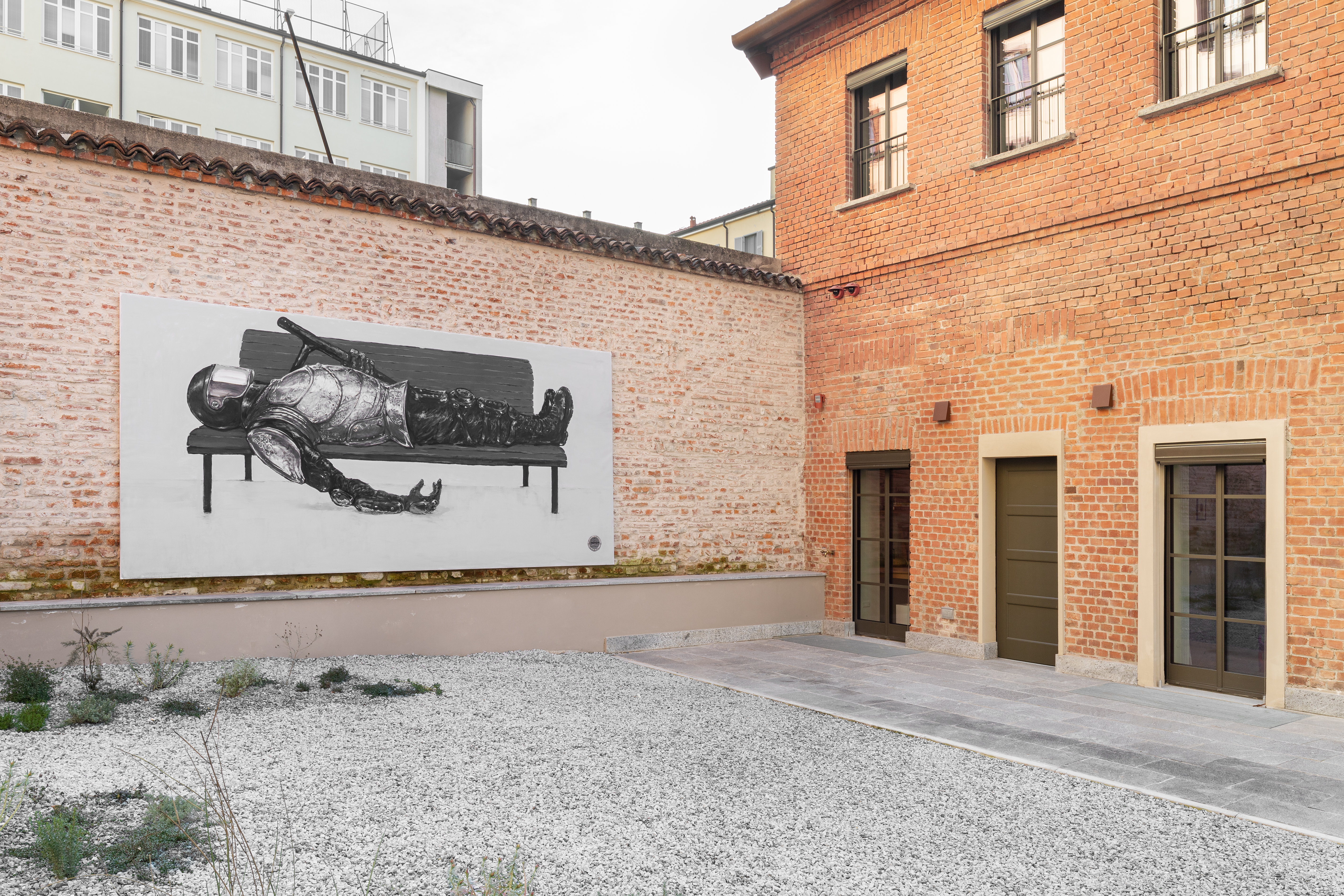
Avian D’Souza’s painting is the starting point of a series of performative
drawing of introspective self portraits. These portraits are drawn
through a character that embodies the nature of a particular angst.
‘Unrest’ captures the feeling of living in a fictitious authoritative universe
that parallels our history and time. ‘Unrest’ as a title compares civil
disorder, rebellions, war, etc to a state of ‘resting’ whether temporary or
permanently. Told through a character that is a sort of half Medieval Knight and half present day Riot Police. Two distinct states of simultaneous existence within one physical body. They seek to propagate their beliefs with drawings through the city, questioning the representations of knights through history and culture in contrast with the Riot Police.
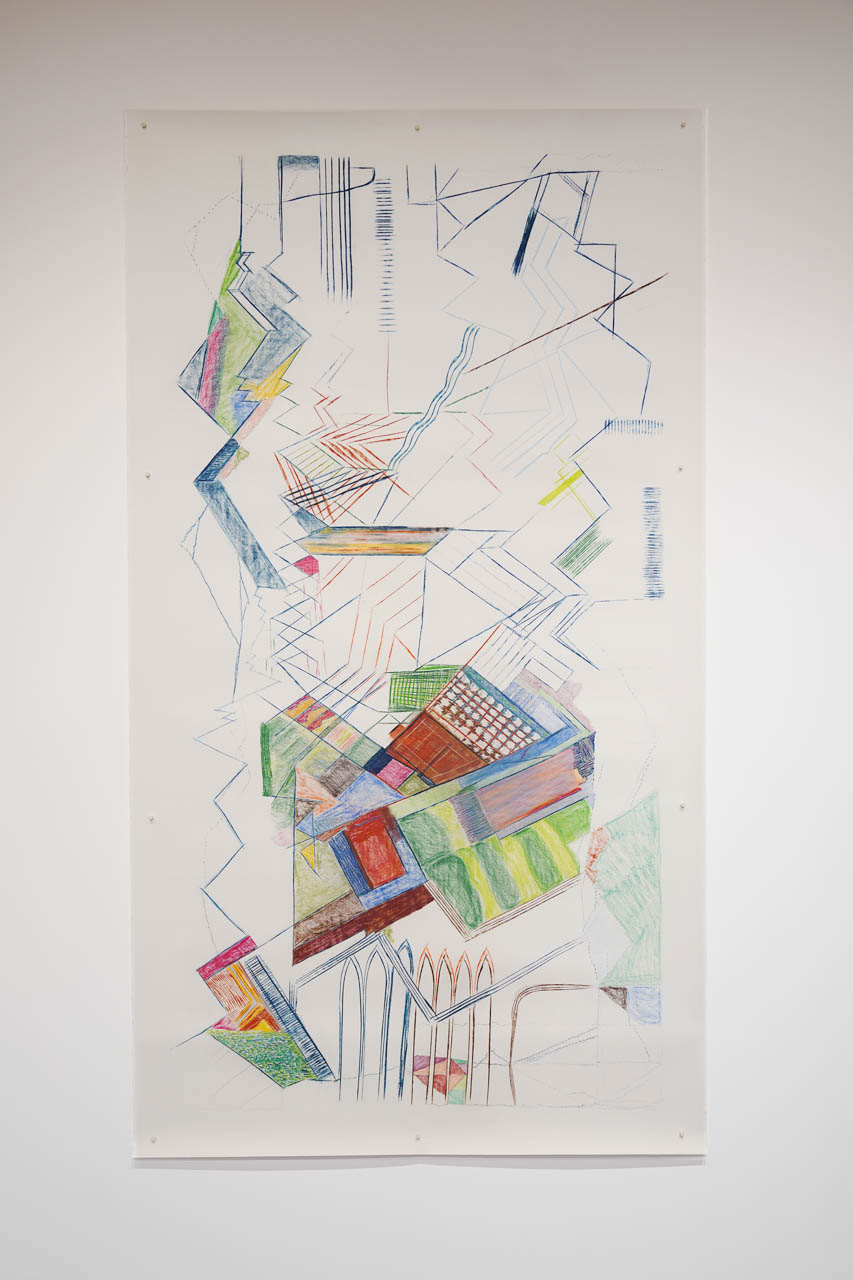
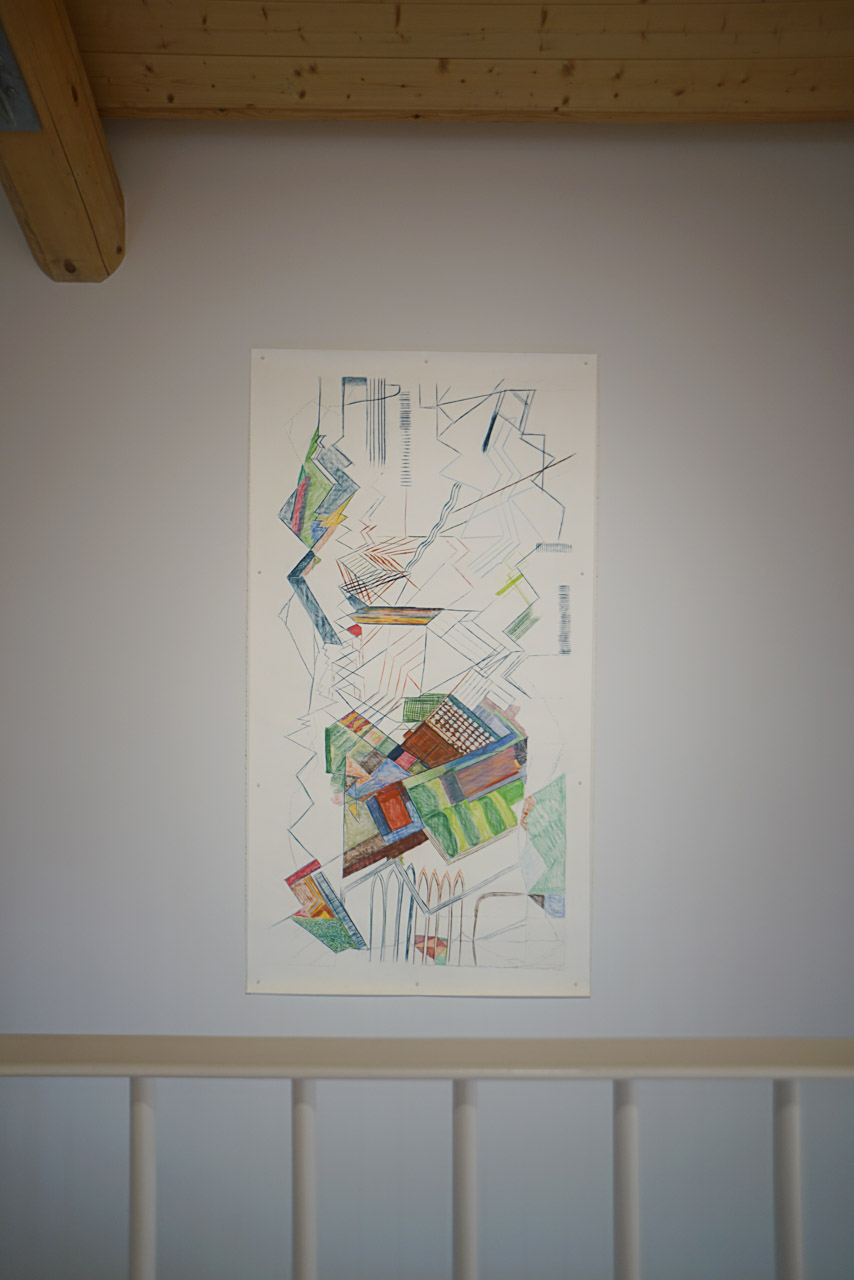
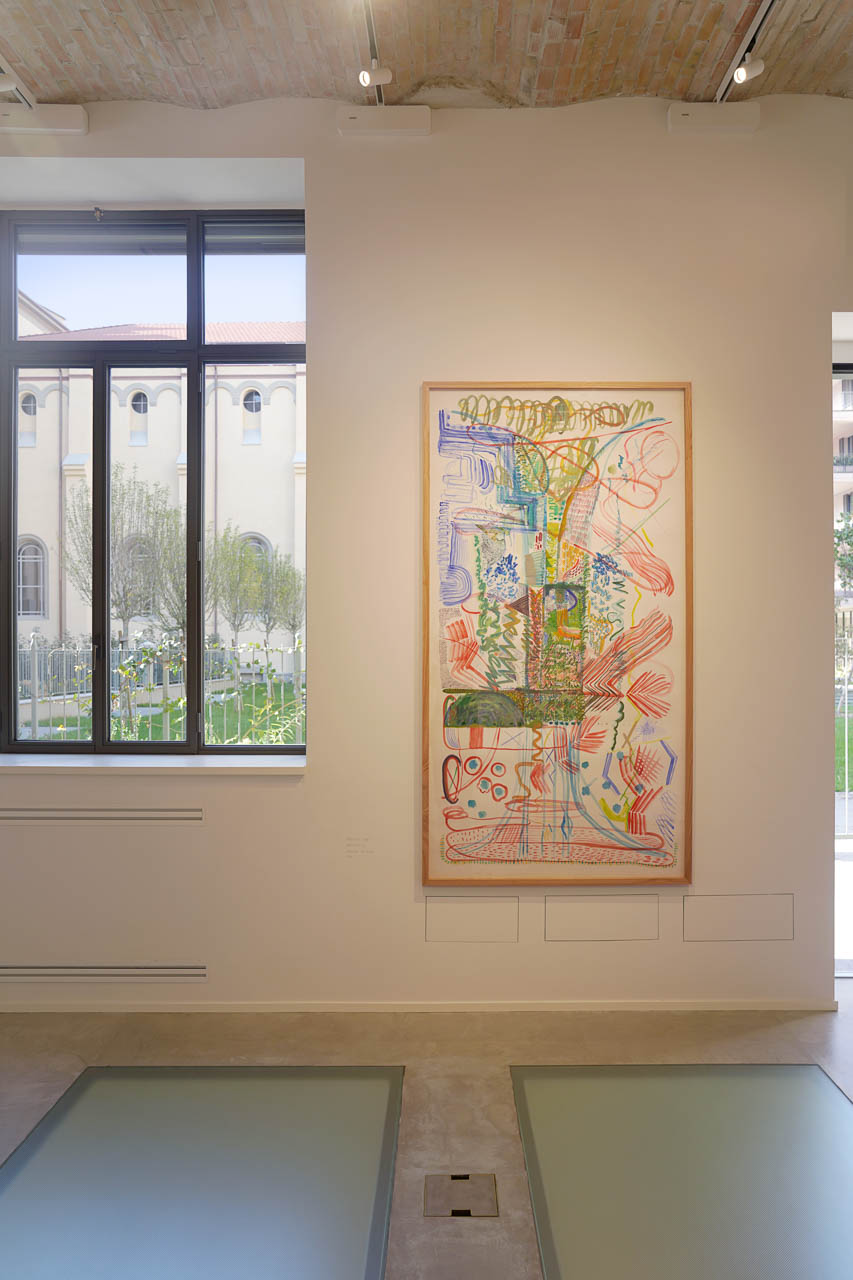
Madhavi Gore's (1976, Goa, India) semi-abstract compositions, designed by the encounter of symbols, lines, colors and shapes that are to some extent instinctive, can be compared to emotional landscapes. The artist traces marks that evoke personal moods and are also clues to natural presences, such as trees and grass. The drawing displayed on the scale, with more geometric and sharp strokes, recalls architectural elements and seems to contain the plan of a city. In the lower part of the drawing, Gore concentrates a denser presence of elements and colors, which render a sense of the density of living in South Asian megacities. The artist's slow progress and her physical, almost performative relationship with the canvas leads her to devote herself, even in large-scale compositions, to the most minute details, made up of dots, short strokes and very fine brushstrokes.
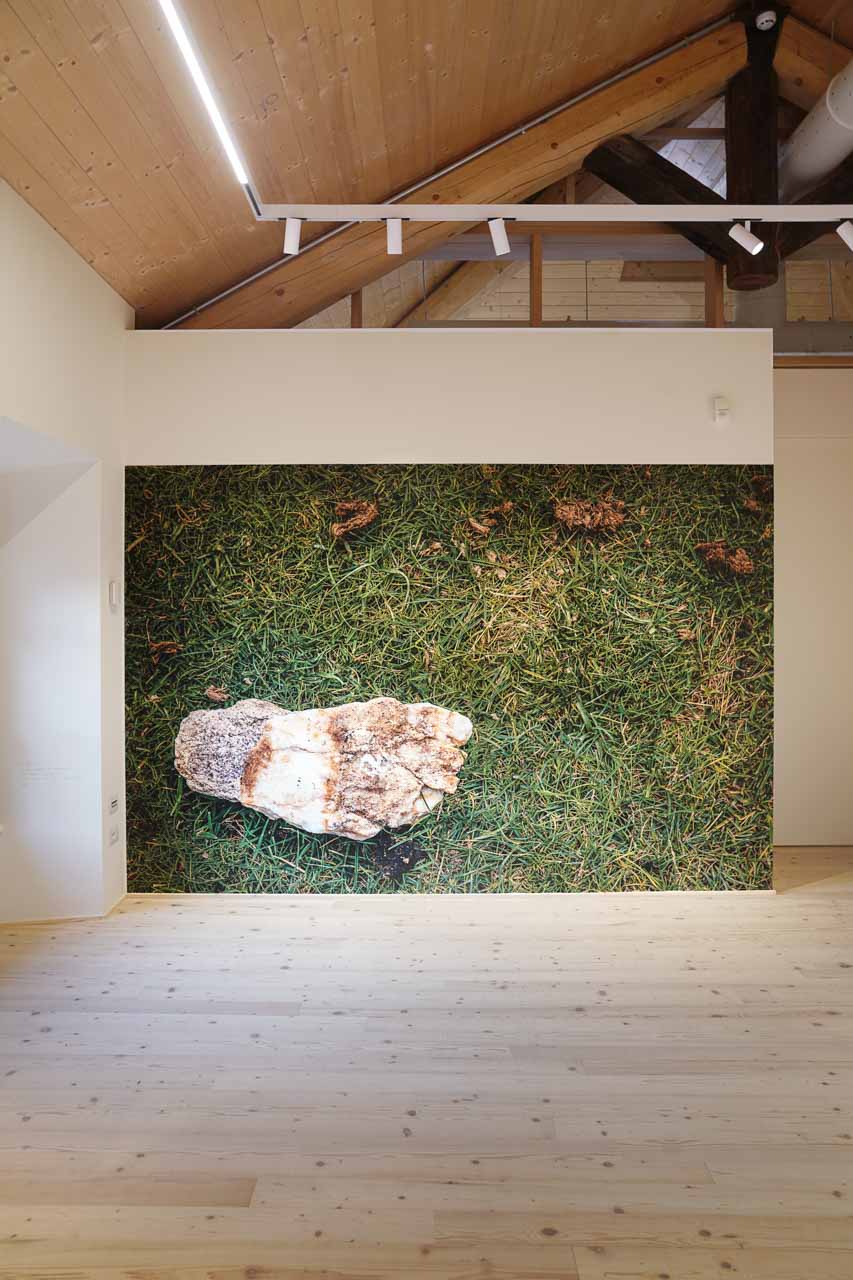
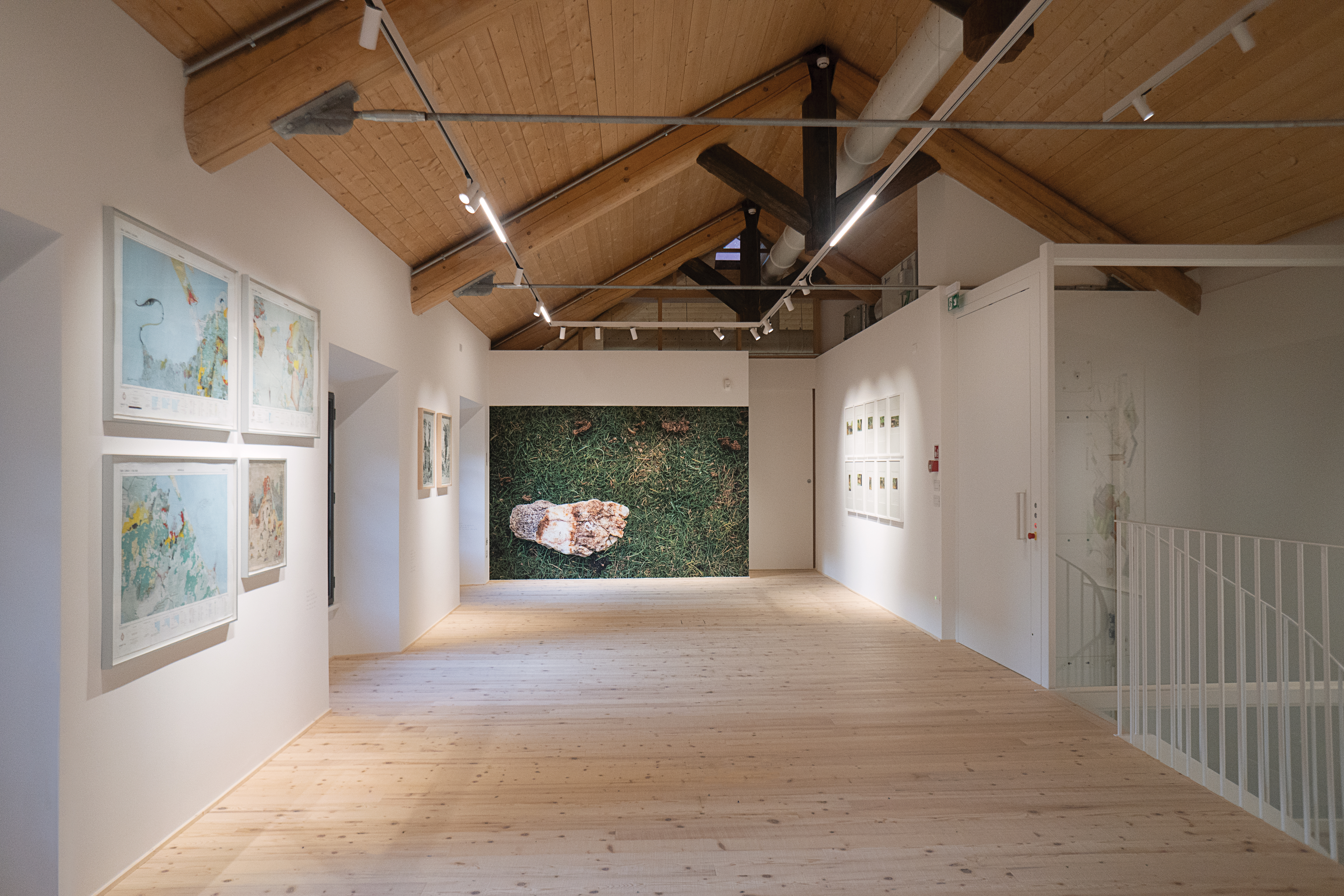
Trained as a dancer, Shivani Gupta (1984, Doha, Qatar) starts from the body to develop what she defines as an anthropological approach to nature. That is how the landscape presents itself to her as a creative surface in which the encounter between her gaze and the random object, defined as a natural element with an anthropomorphic appearance, can take place. The camera is for Gupta a medium through which to unearth the magic of places, an agent for the creation of collective and personal myths. The photograph on display in the exhibition has as its subject a rock that immediately resembles the shape of a foot. A footprint, a fossil or a fragment of an ancient statue? It is up to us to decide, influenced by our cultural heritage, what to see in it.
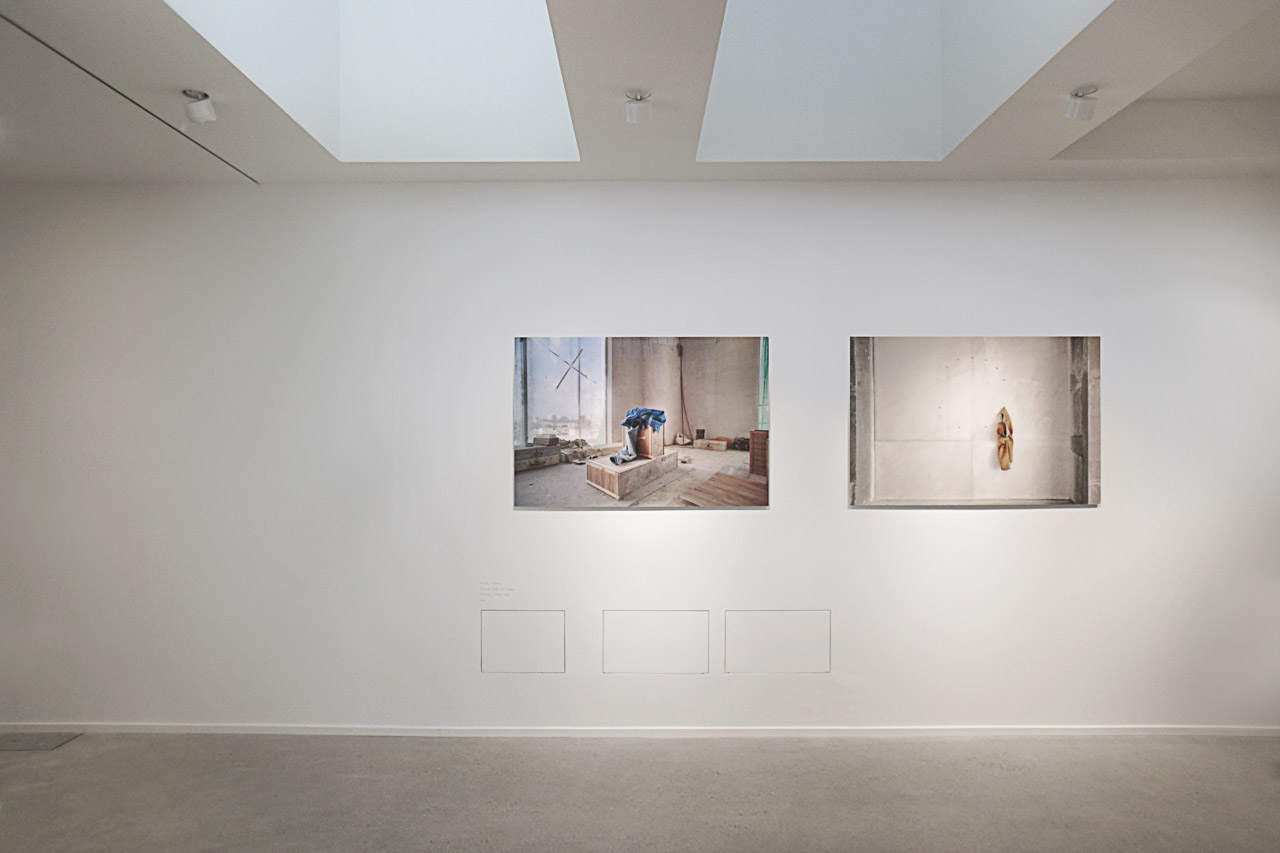
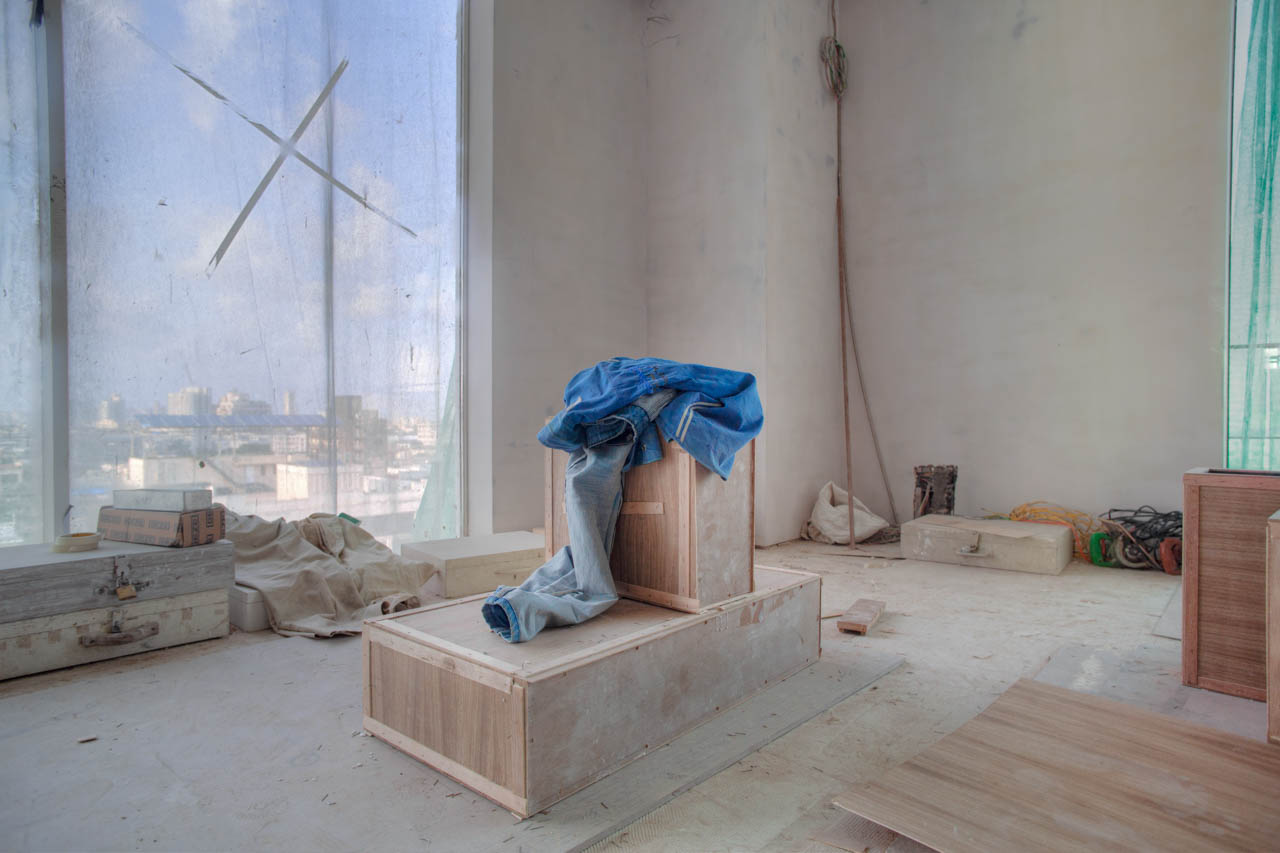
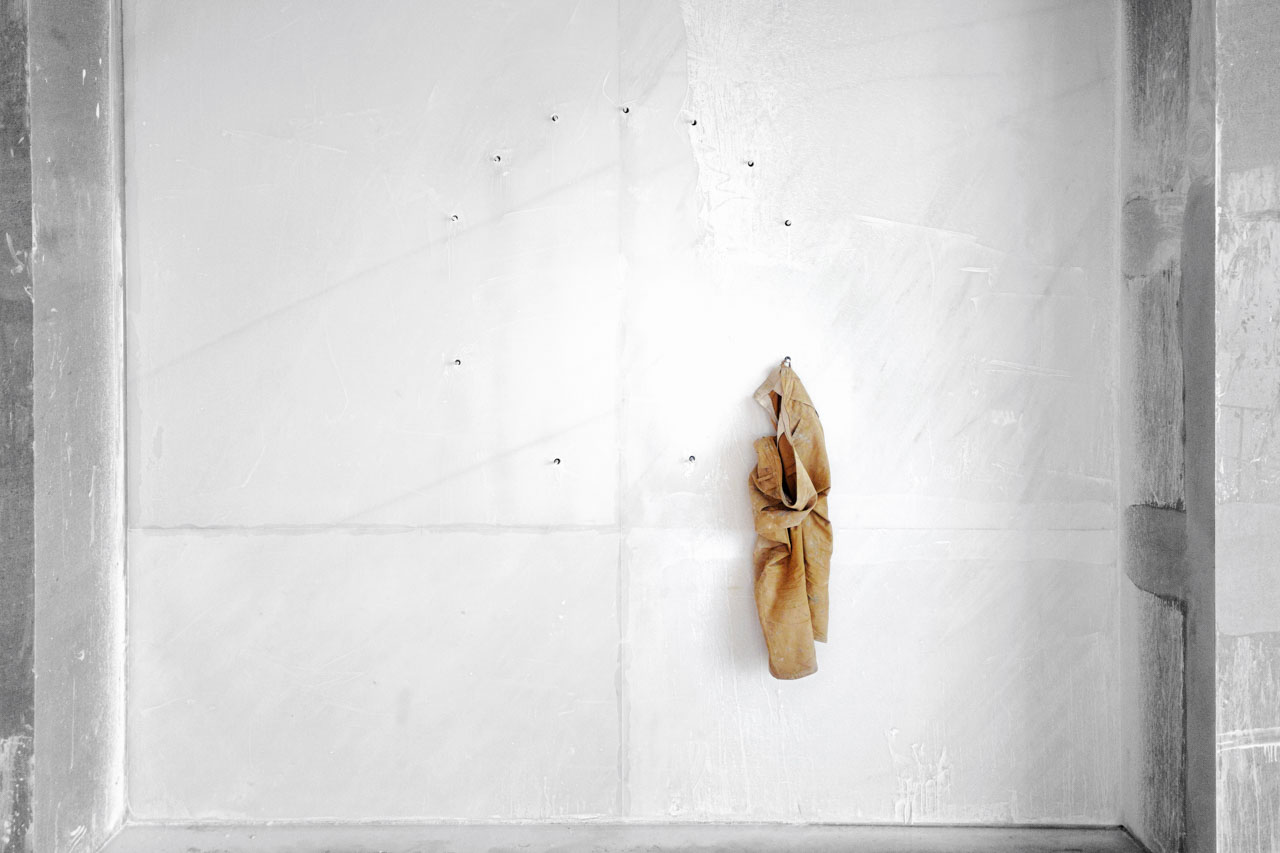
The two photographs narrate the construction boom in South Asian megacities and the massive use of concrete as a building material. Real estate speculation has caused the dizzying growth of new construction sites, which, however, often remain idle for a long time. While not advancing, at least seemingly, these new constructions rewrite the urban landscape, in this case that of Mumbai. Making them materially are laborers working in precarious conditions, invisible men who arrive in the morning and leave again in the evening. It is to them that Kabani (1976, Mumbai, India) looks, to their imperceptible and ghostly presence, here evoked by the work clothes hung at the end of the day in the large, still empty volumes.
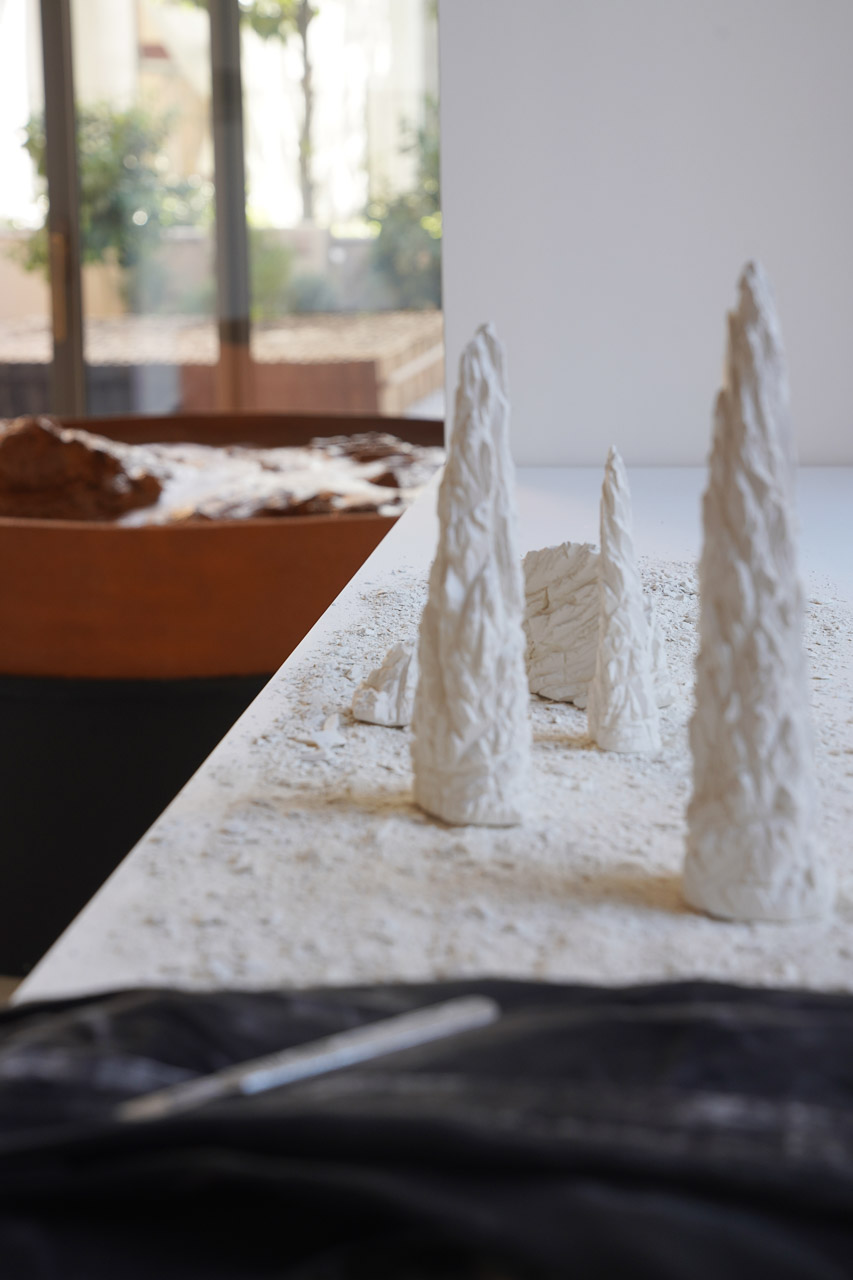
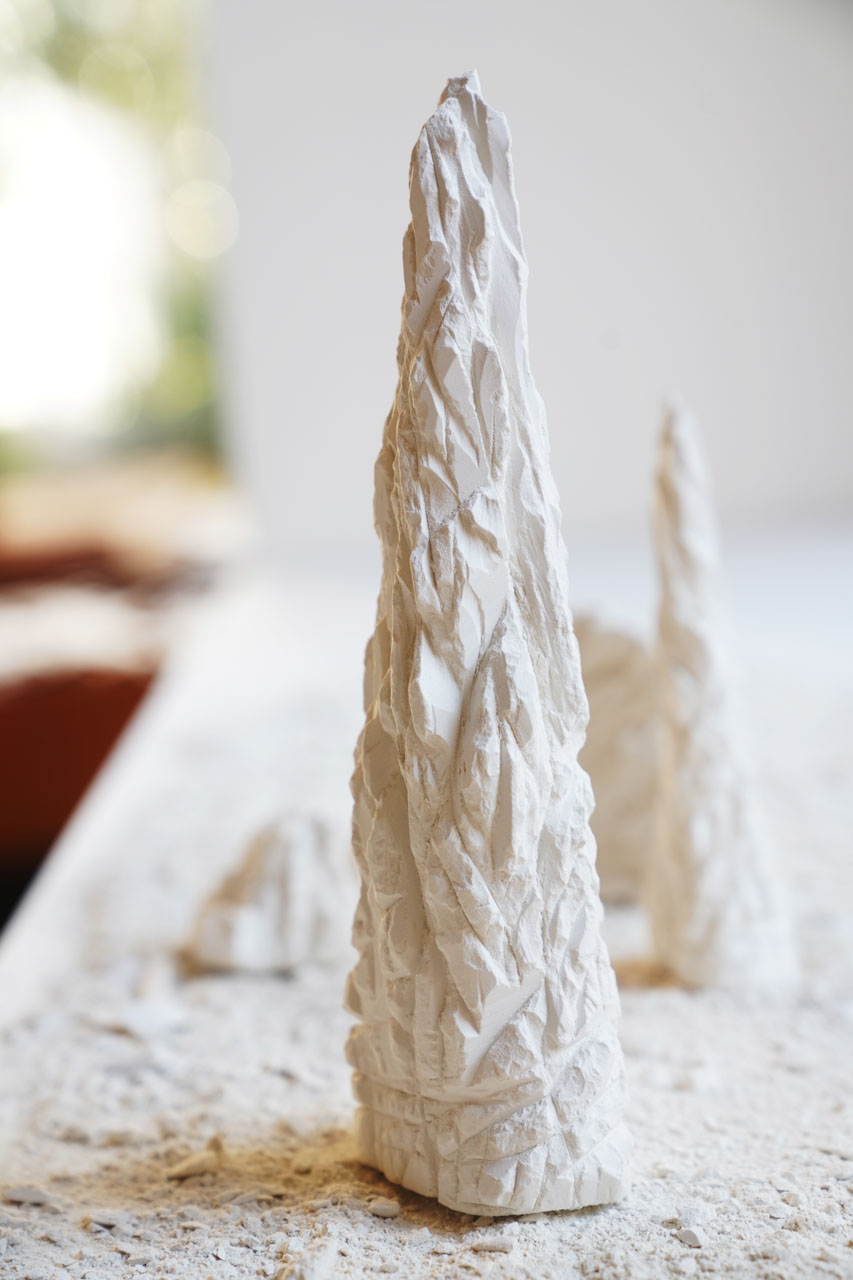
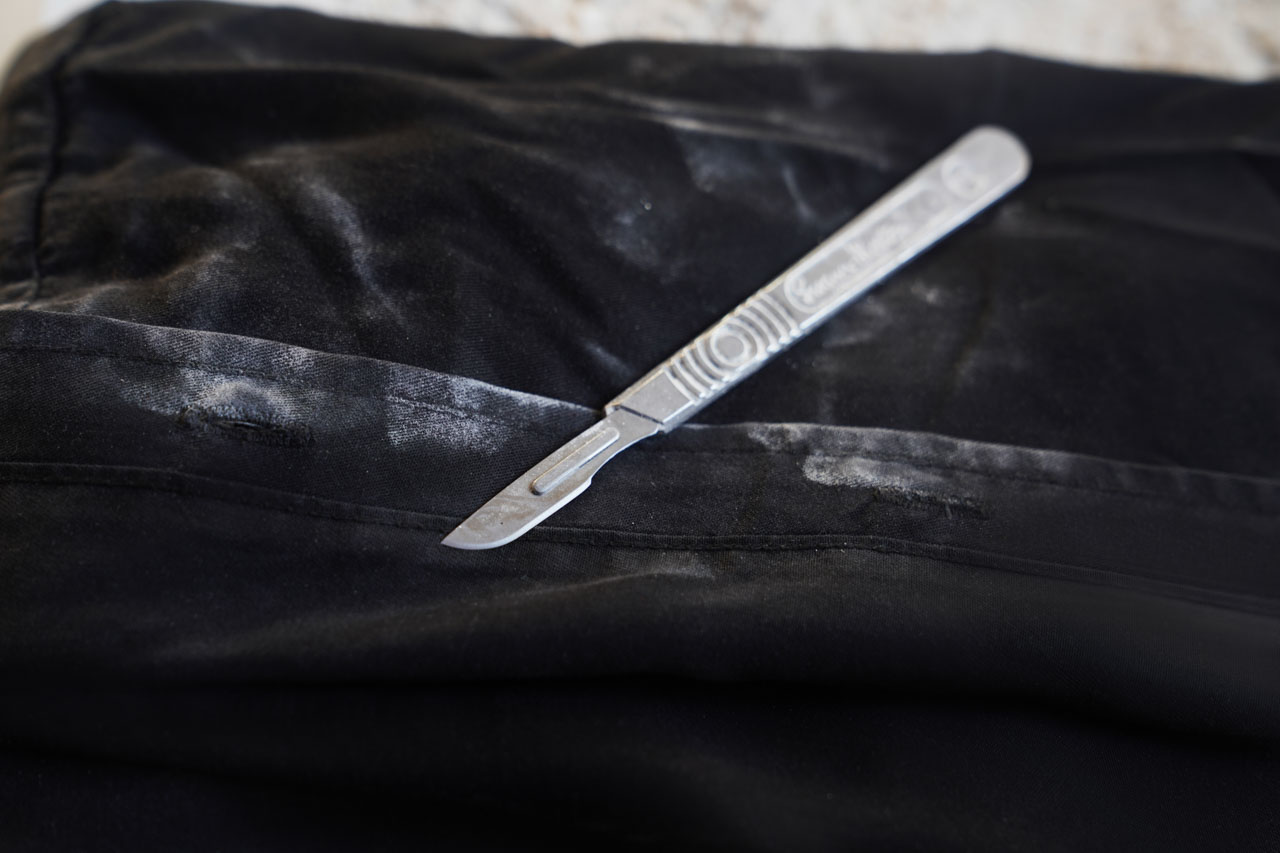
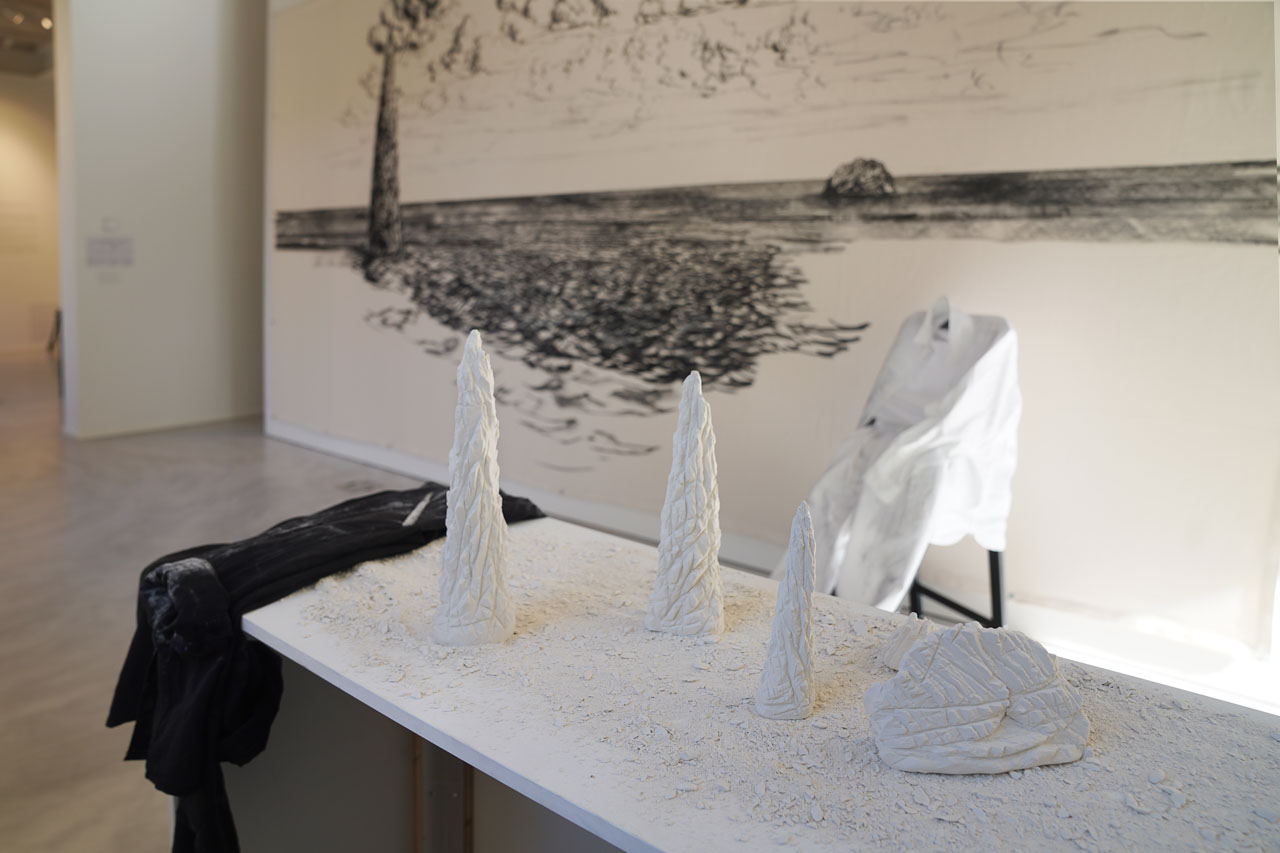
In the simultaneous acting of Nikhil Chopra (1974, Kolkata, India) and Romain Loustau (1982, Cannes, France), a rippling sea drawn in charcoal strokes and a small group of porcelain sculptures come to life in front of each other. In a two-person performance, the artists stage their bodies as an integral part of the creative process. In fact, what remains with the works are the clothes worn by Chopra and Loustau during the action. The protagonist is once again the sea, agitated and stormy, toward which clouds loom menacingly. A pointed rock stands looming from the surface of the canvas; it is the same one that placidly rises from a sandy mound, born of Loustau's stonemasonry. In his artistic practice Nikhil Chopra combines drawing and performance. If the latter lives from the here and now, and is therefore destined to live only in the memory of the audience, drawing becomes an object residue of its action.
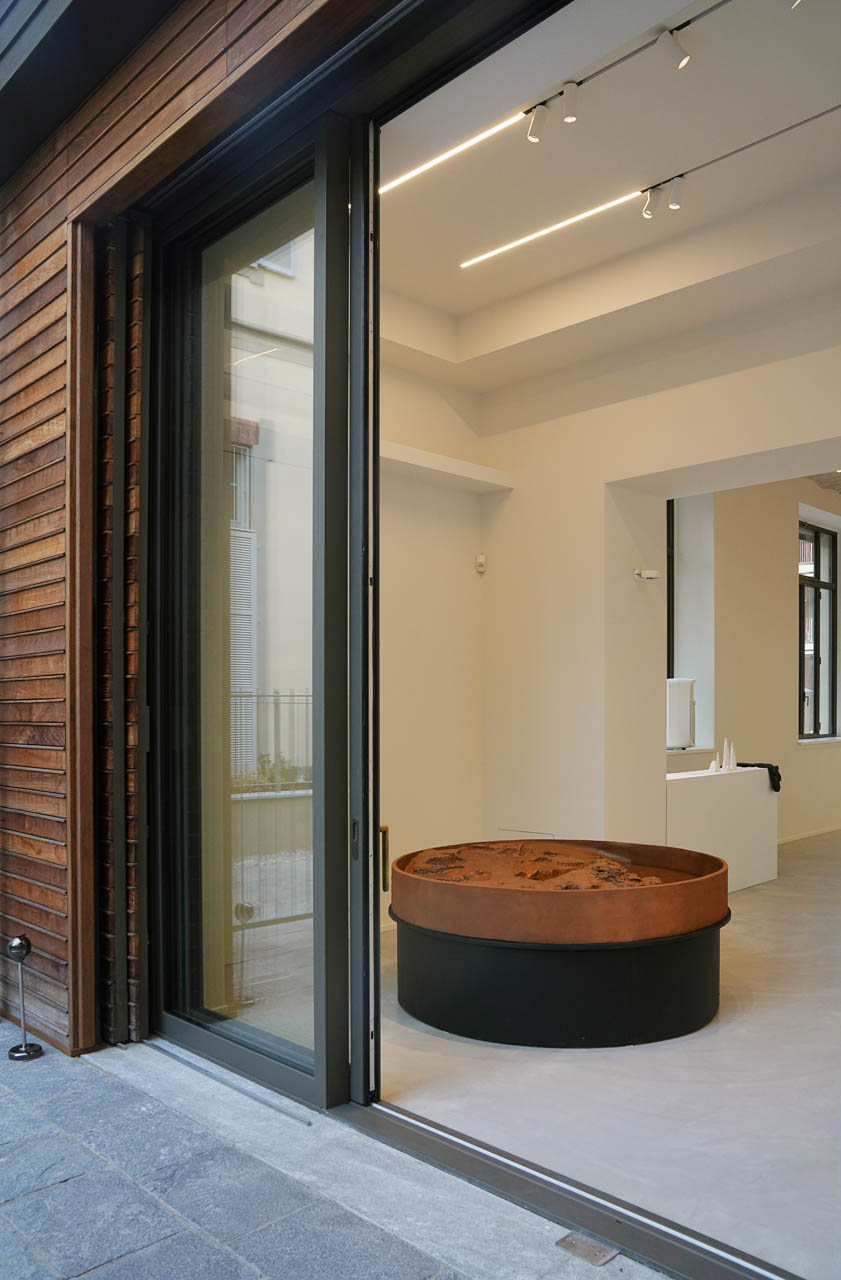
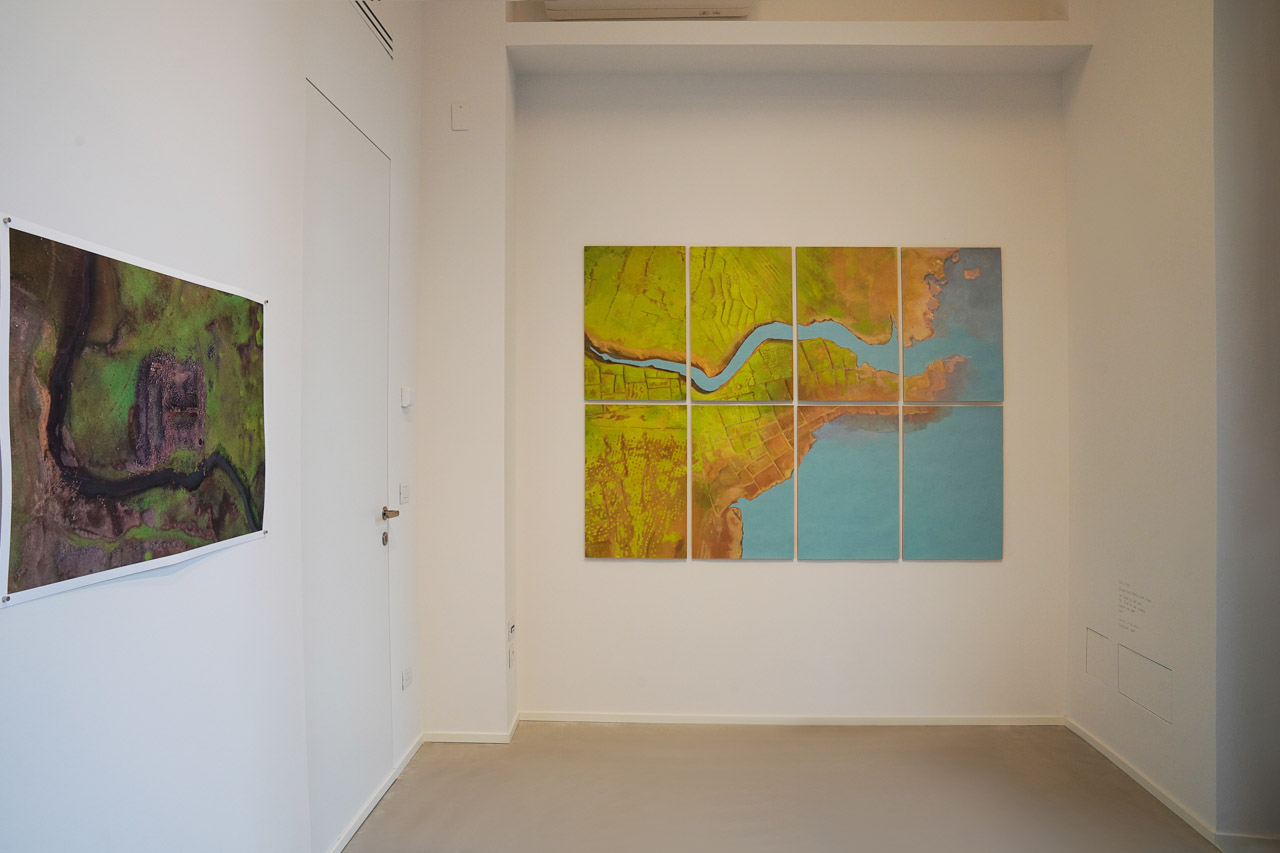
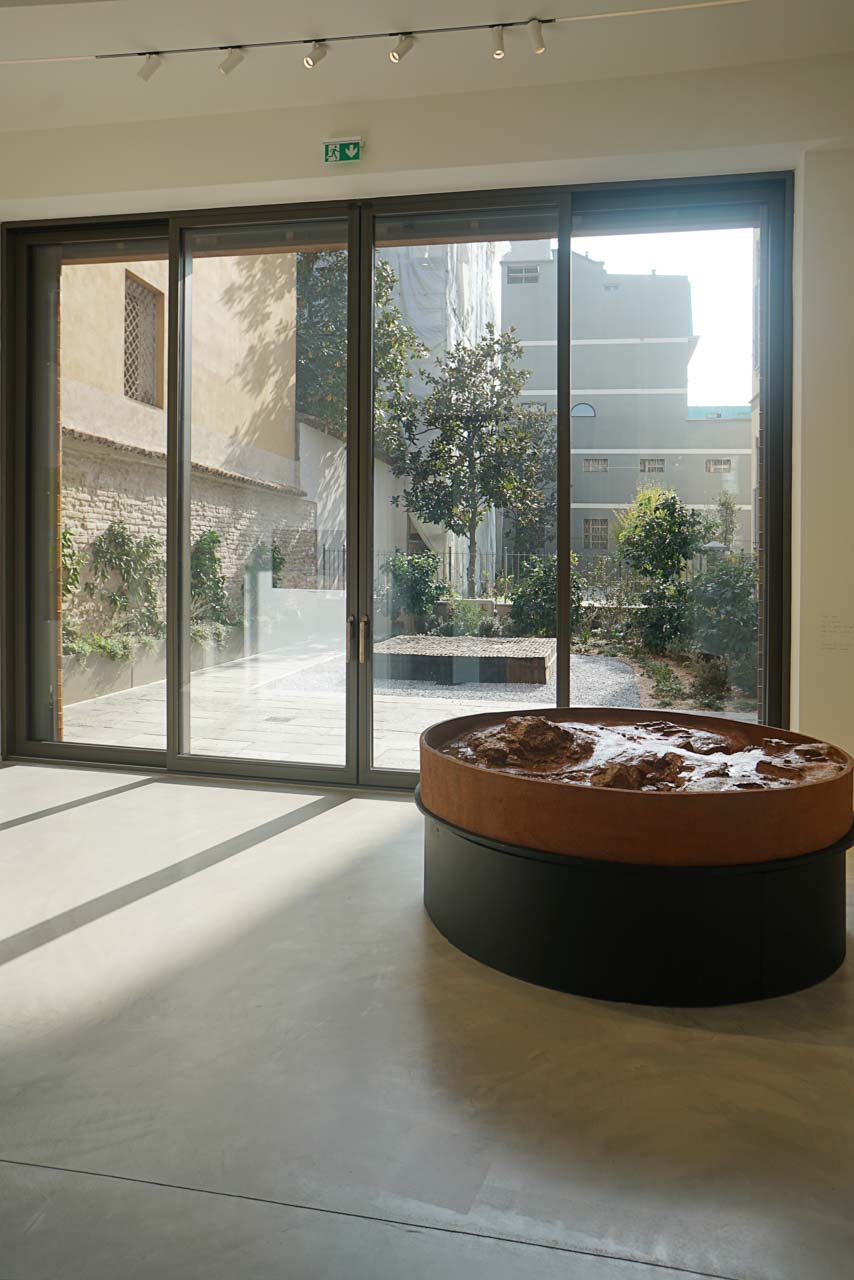
Sahil Naik's (1991, Goa, India) installation follows the flow of water that periodically submerges and resurfaces the village of Kurdi, Goa state. It is a story of sudden escape and painful loss, but also of returns and hope. In 1961, having gained independence from the Portuguese Empire, the Goa government embarked on a series of major works to modernize the country's infrastructure. Among these was the construction of the Selaulim Dam, in the name of which three thousand families were forced to abandon their village, which was submerged under water. In the years that followed, residents continued to go to the shores of what is now a lake to pay homage to their village, singing its memory. But during the summer of 1978, a miracle occurs: the village emerges from the waters for only one month, only to disappear again. This phenomenon still continues, and every year, during the month of May, its inhabitants return to their homes and start living there again, only to abandon the village when the waters return. The buildings were fairly well preserved until the 1990s, when gradually rising temperatures and violent monsoons contributed to the deterioration of the structures. All Is Water, And To Water We Must Return is a work about resilience, memory and community.
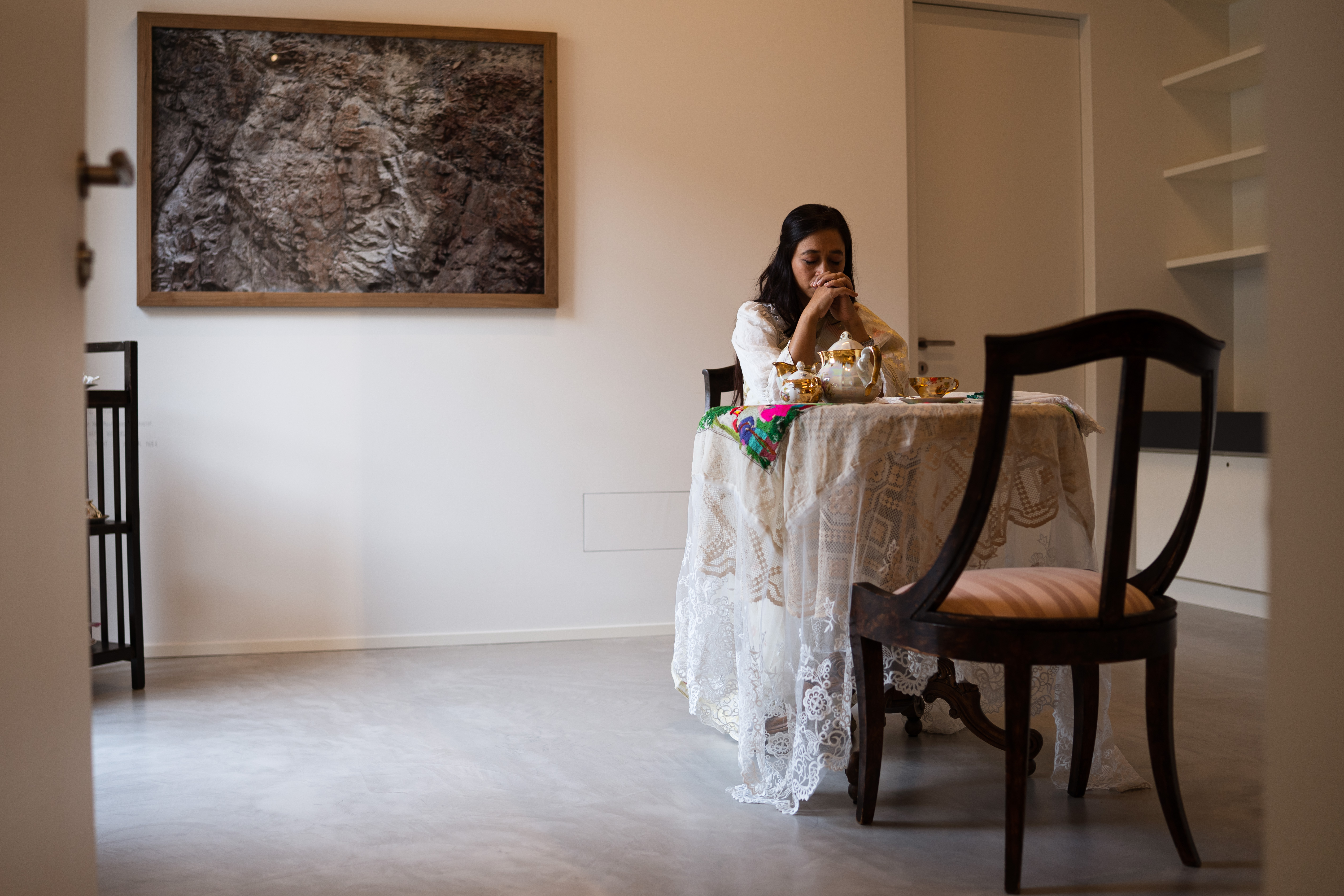
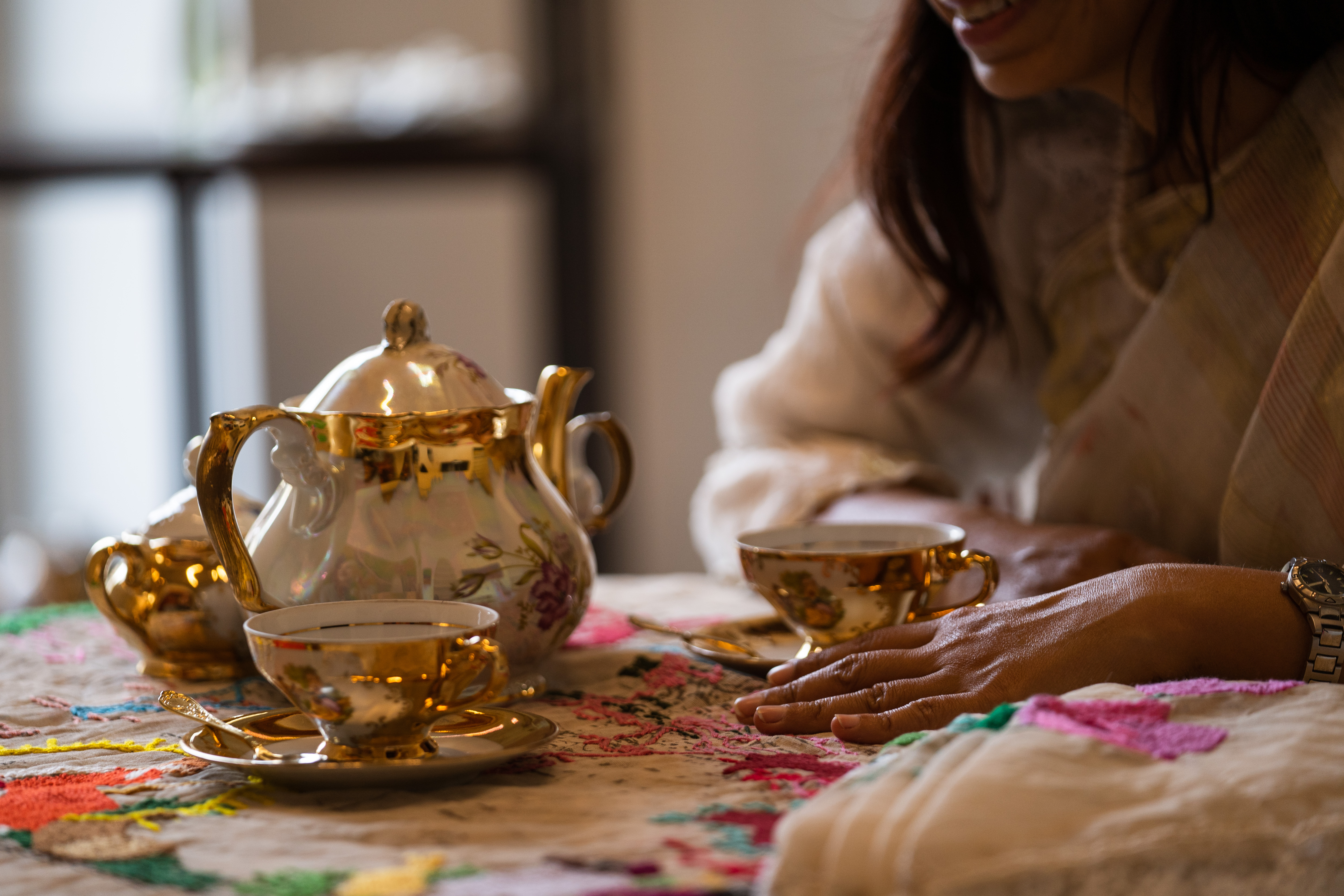
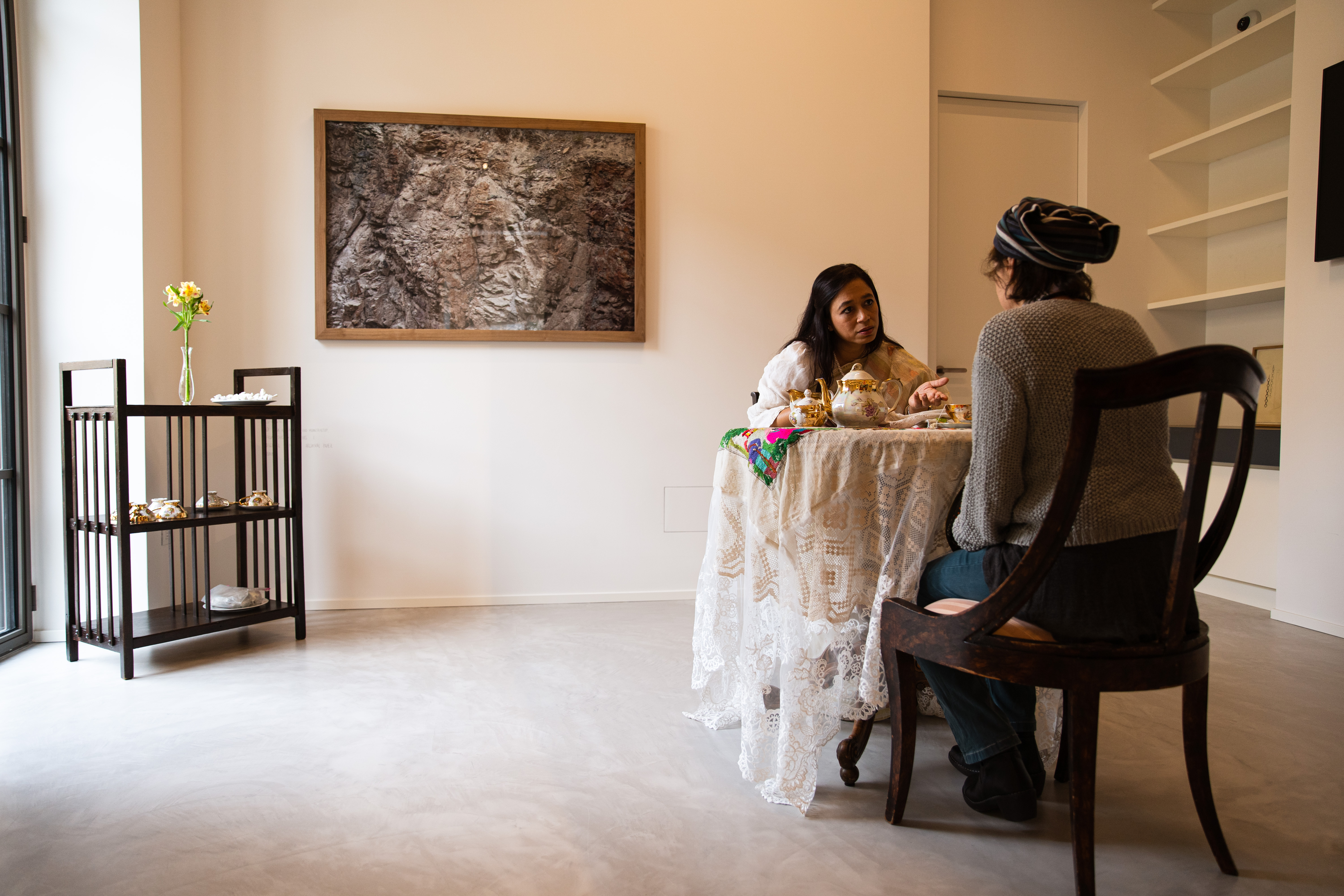
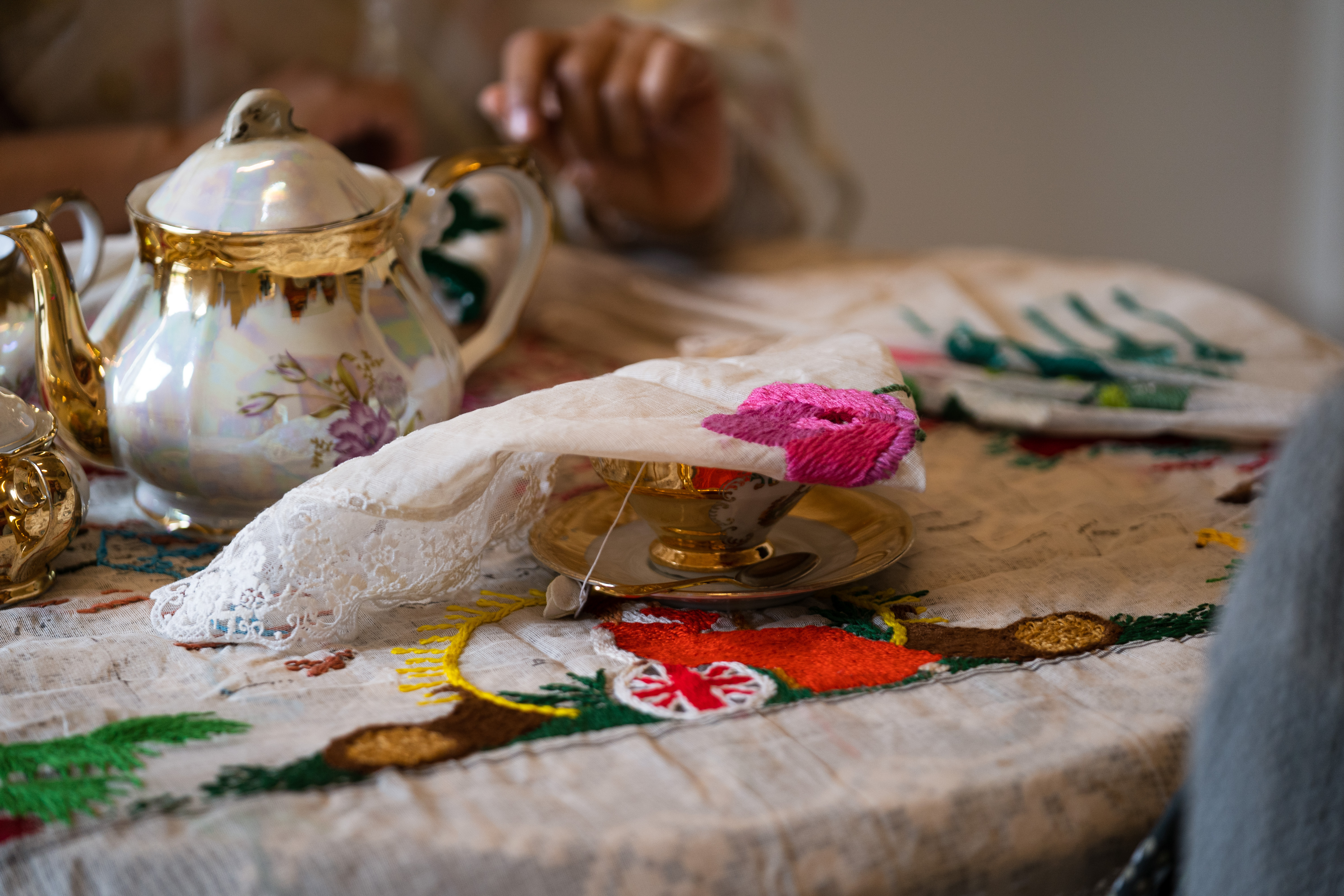
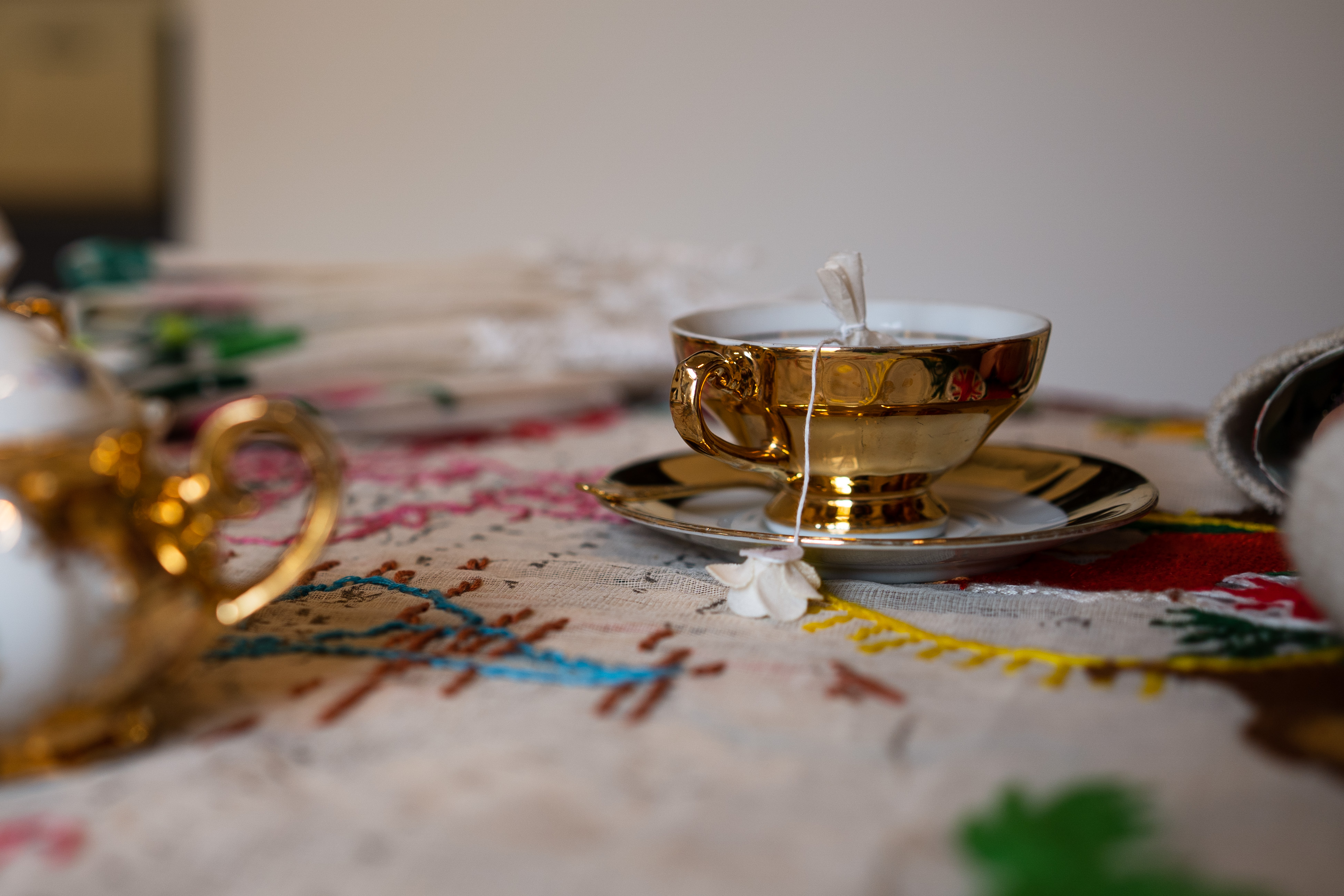
"Let Me Get You a Nice Cup of Tea" (2019-20) is an installation and performance by Bengali artist Yasmin Jahan Nupur. During the performance, the artist holds one-to-one conversations with visitors, offering them a cup of tea that she has grown and prepared herself. Each conversation lasts about 20 minutes.
Nupur invites visitors into a cosy domestic space, but her colonial-era style evokes stories of violence in the region. The tablecloth is embroidered with a map of the British Empire from 1886. The napkins are stitched with opium flowers, a crop that peasants were forced to cultivate by the British East India Company, often for no profit. The artist herself wears a costume that combines traditional Bangladeshi and British elements. For Nupur, this is a reminder that the European custom of adding milk and sugar is an adulteration of Asian tea drinking habits. While emphasising the comforting role of tea drinking in Britain and South Asia, the work invites us to reflect on the impact of British imperialism and colonialism.
This work was developed during a residency at the Peabody Essex Museum in association with the Dhaka Art Summit and was acquired for the Tate's collection in 2020 with funding from the Tate's South Asia Acquisitions Committee.
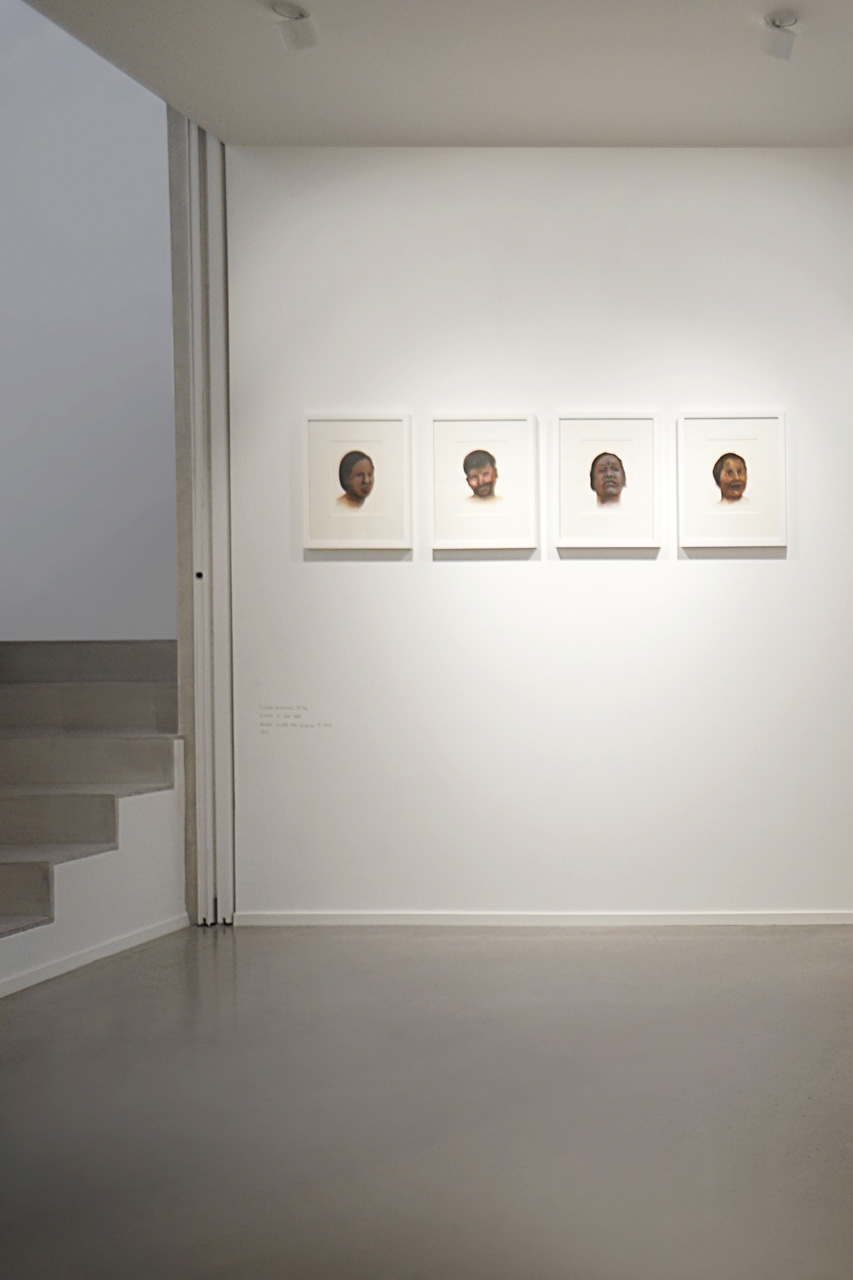
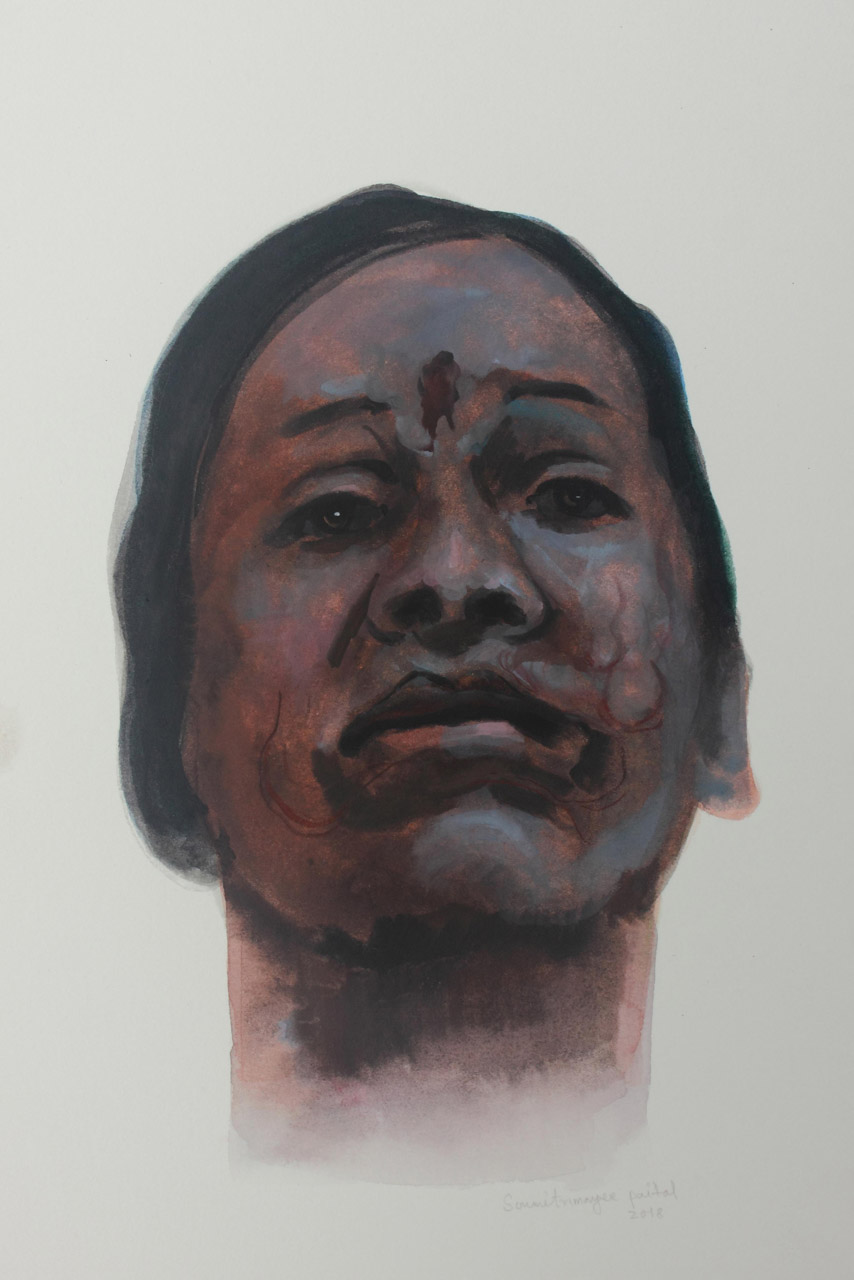
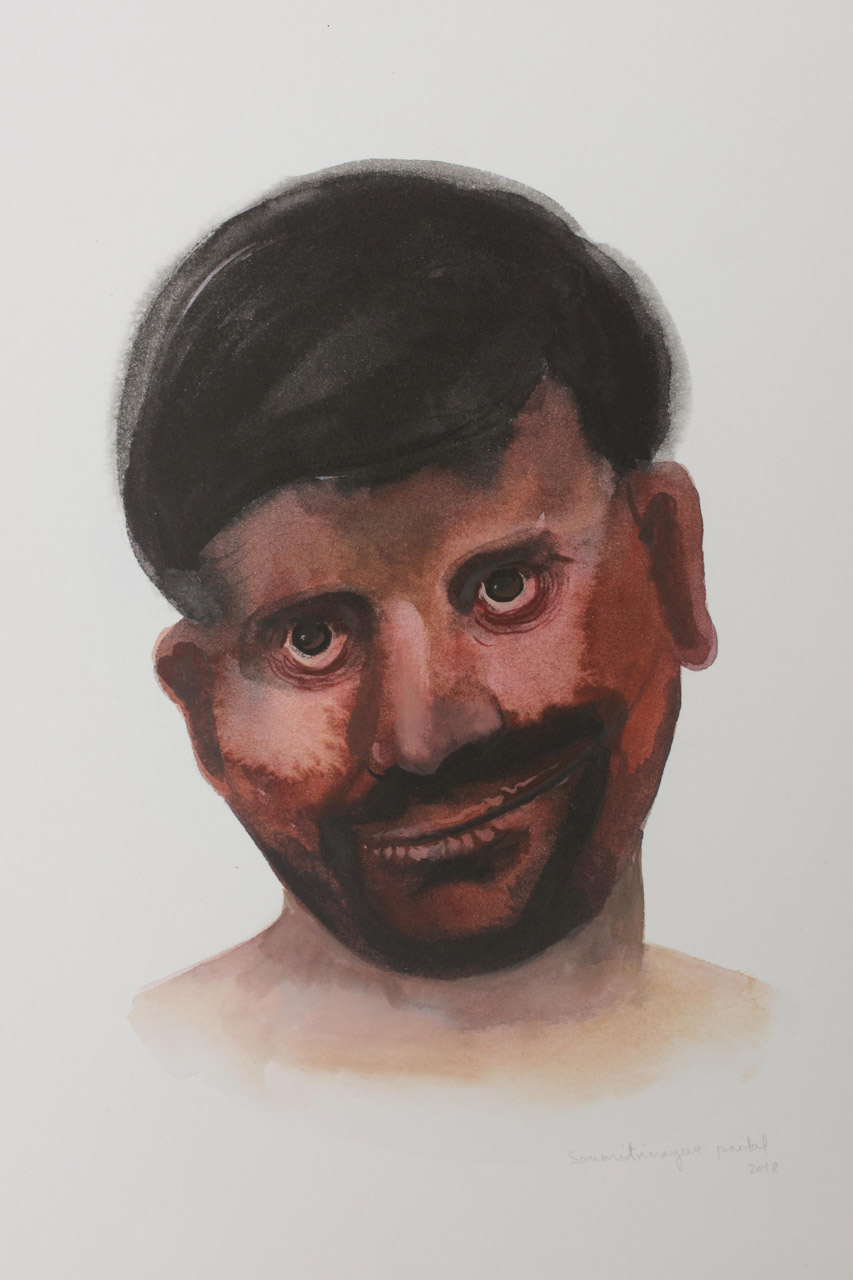
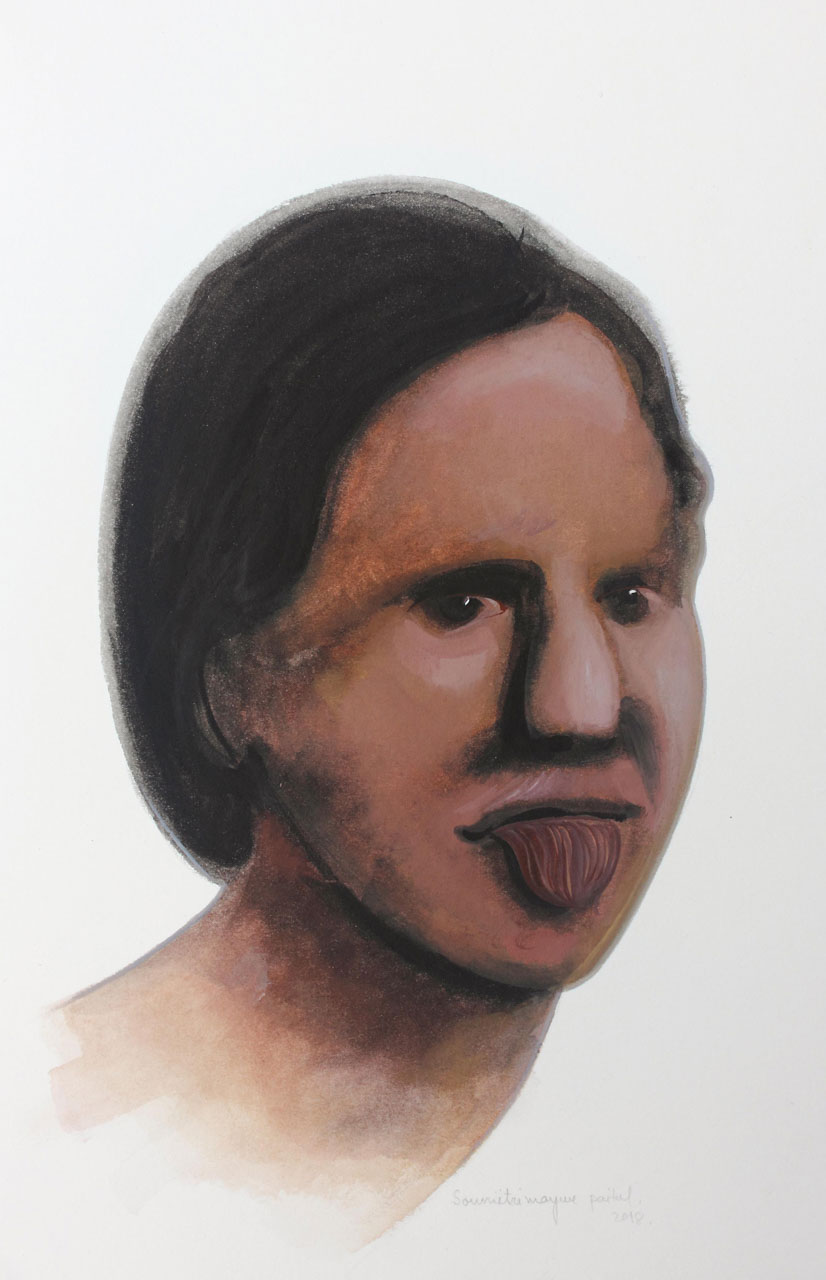
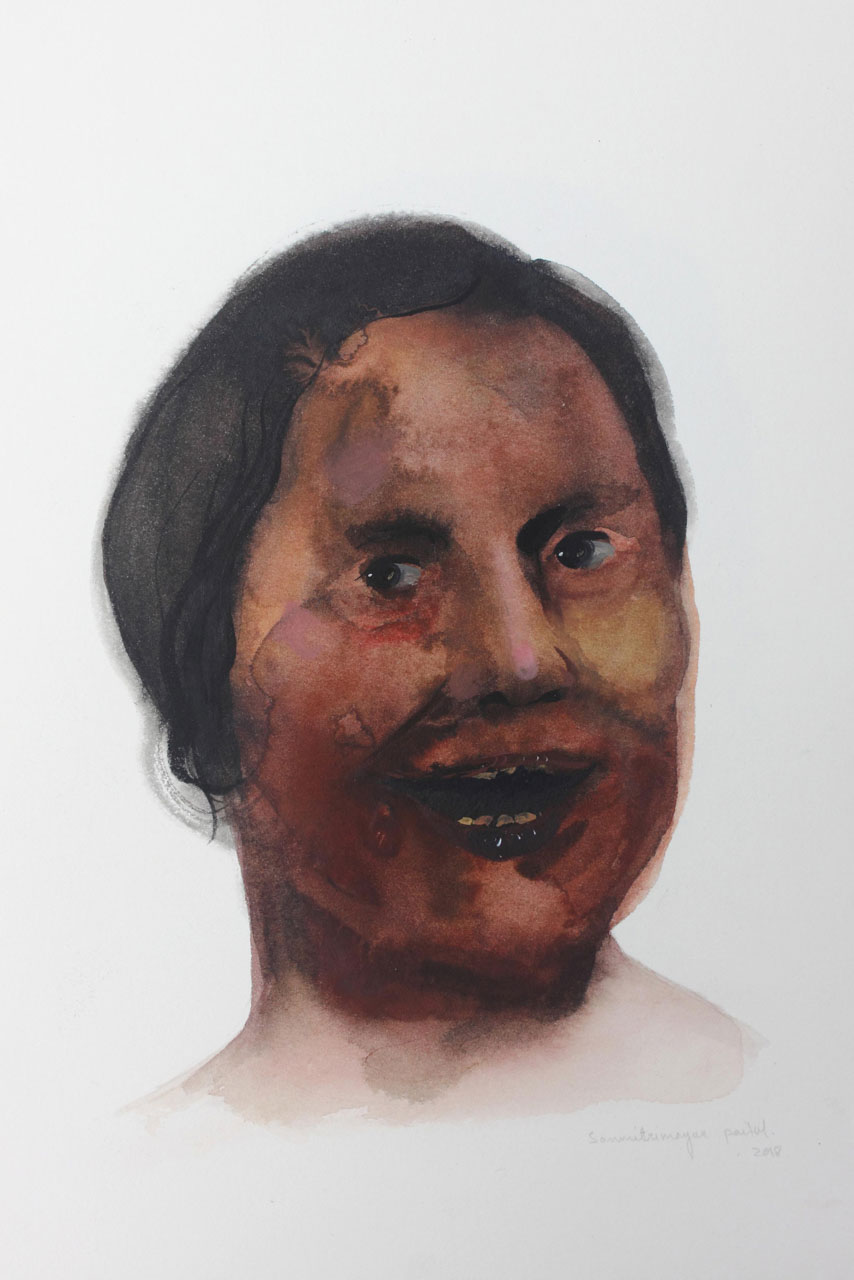
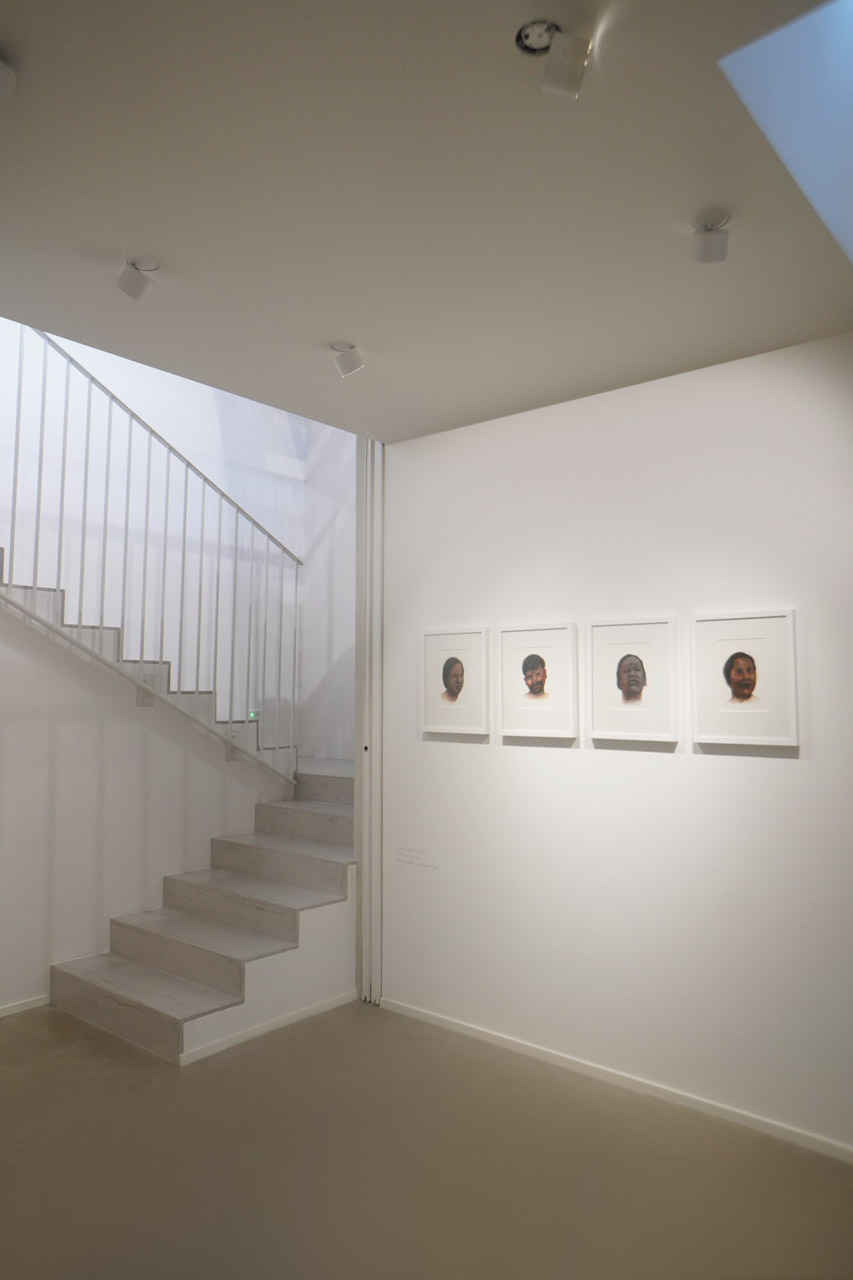
Soumitrimayee Paital (1986, Orissa, India) reflects on human nature and in particular on the concepts of oneness and plurality. The artist, after moving to a new neighborhood, had to deal with the hostility of her new neighbors who gave her less than friendly treatment, hence the 'enemy at the door' of the title. Her portraits depict the stranger using layered painting achieved through the use of watercolor and gouache. The artist transforms and deforms faces by accentuating their expressions, which become grotesque and disturbing at times. Going in search of the different levels of the self, Paital questions how the multiple personalities of each of us are manifested through facial expressions, here deliberately distorted and exaggerated.
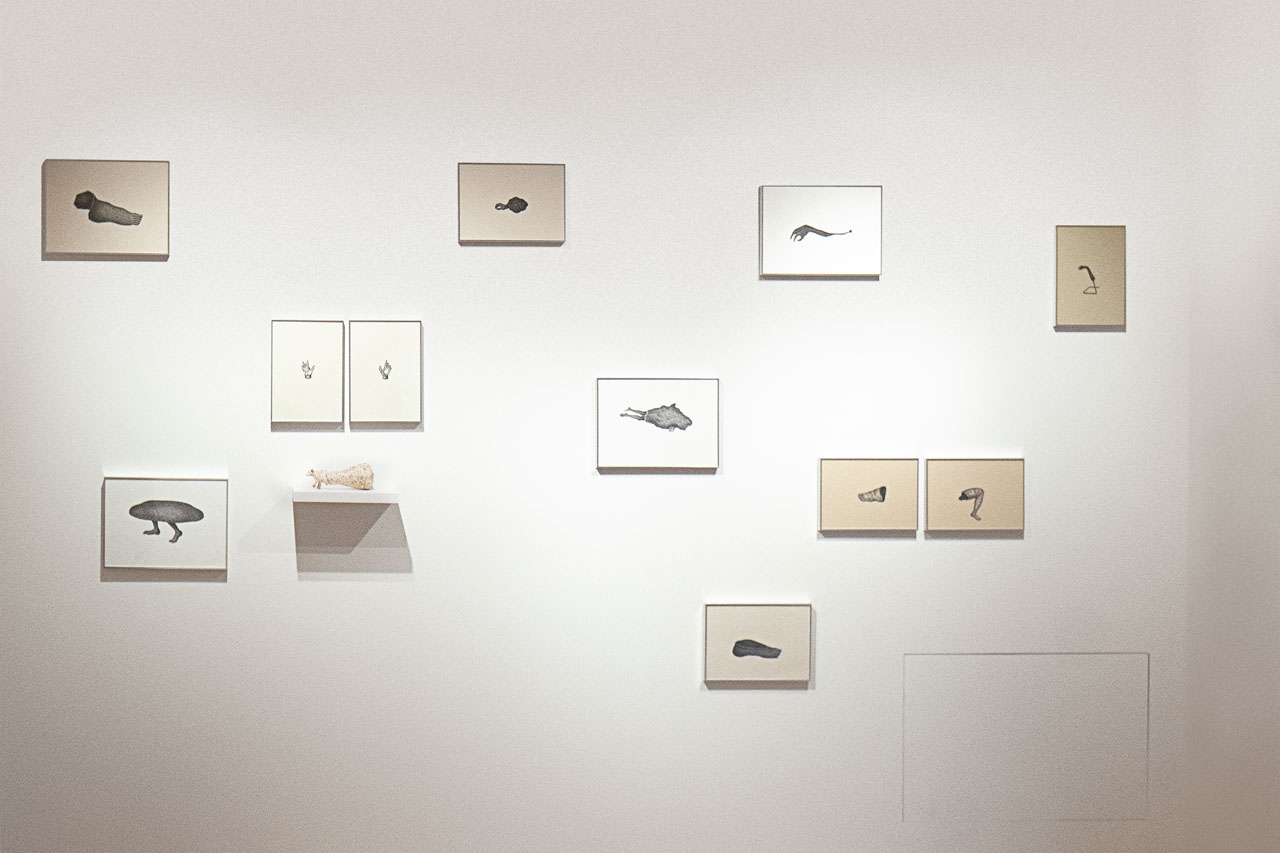
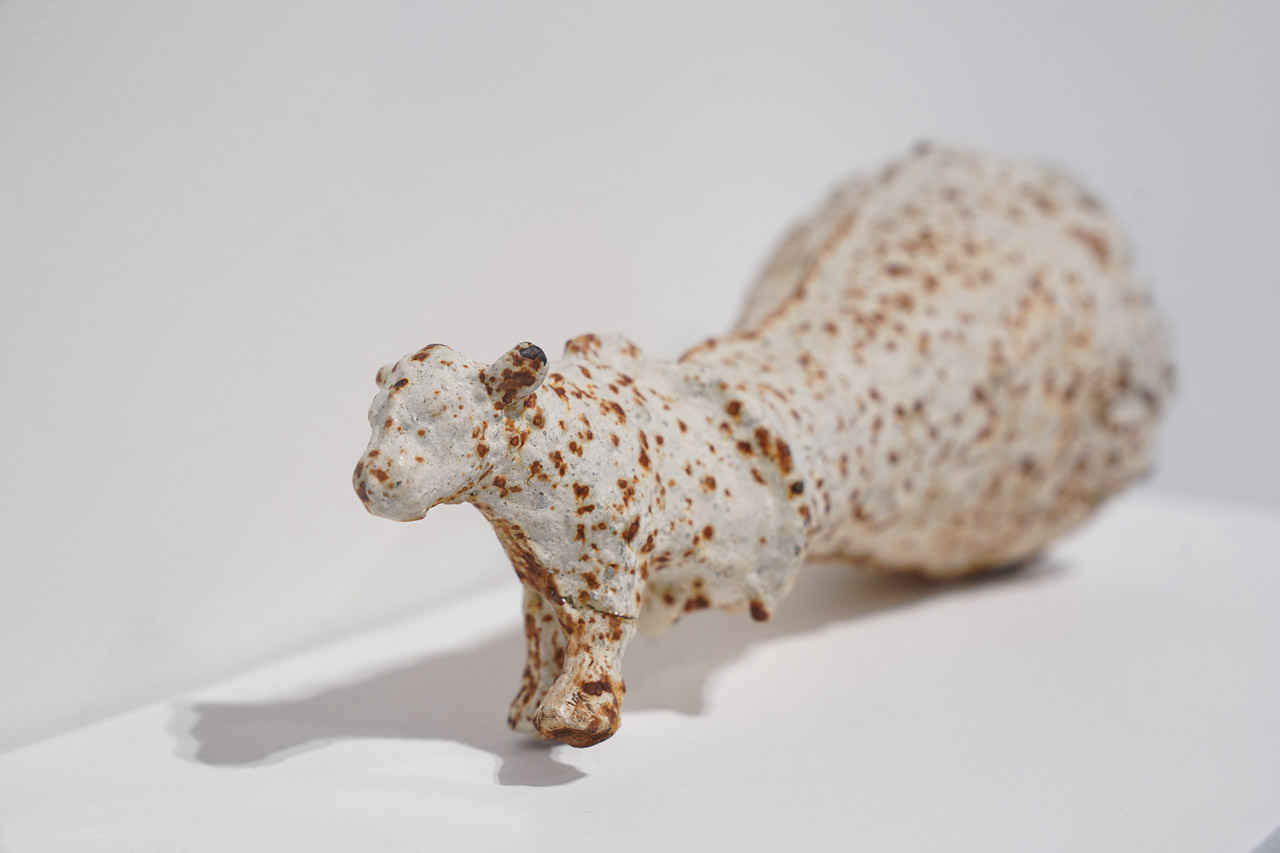
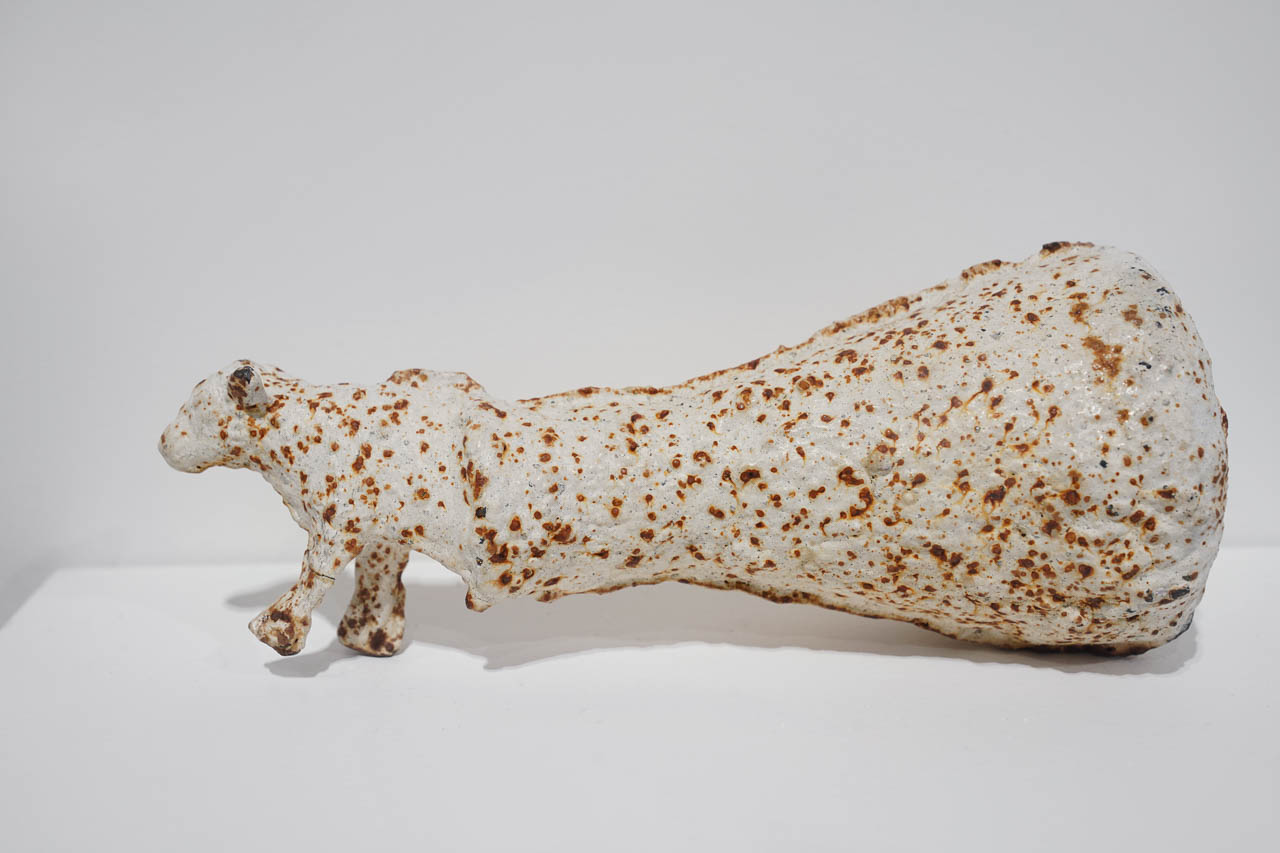
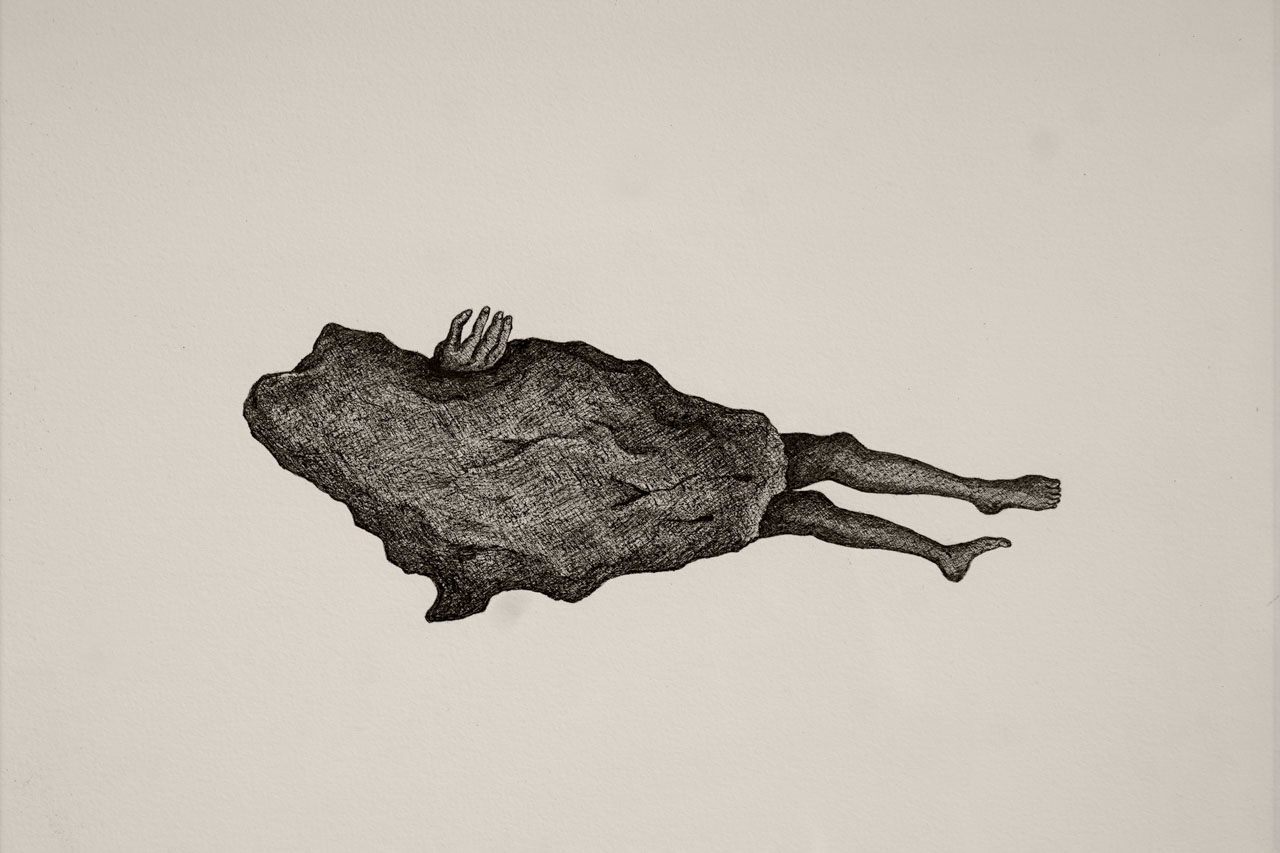
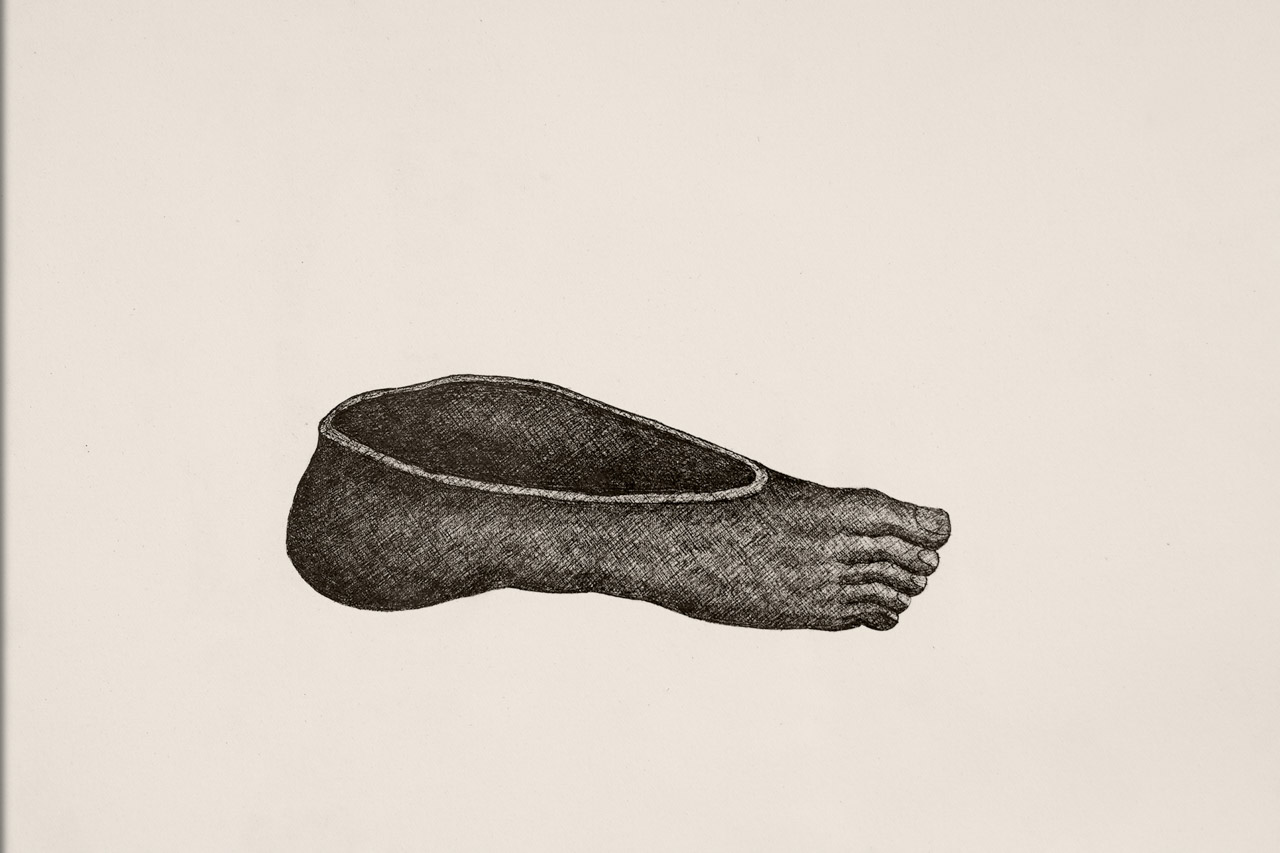
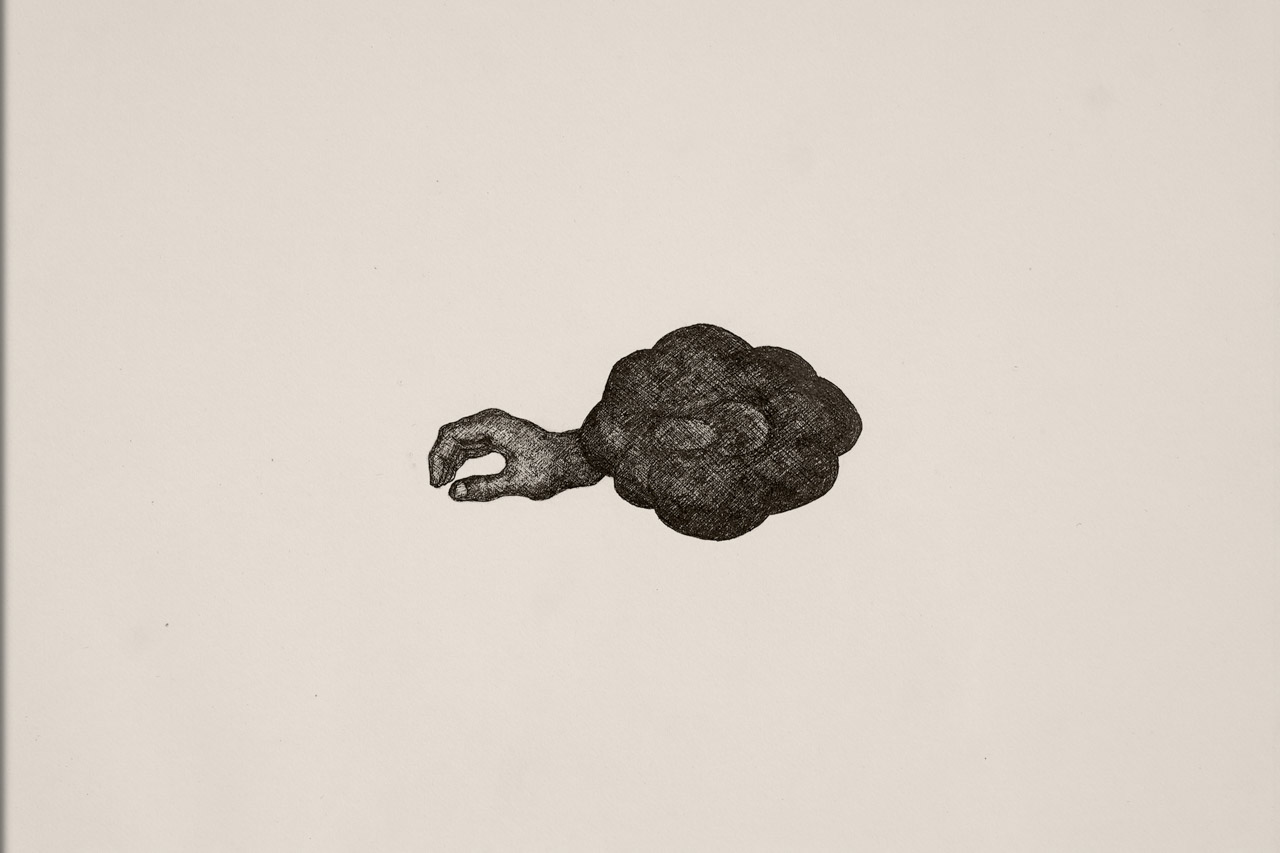
In India, although no longer by law but by common custom and tradition, it is still the caste of Dalits, the "oppressed", who are entrusted with the duty of cleaning up cities of animal carcasses and human corpses, with bare hands and bare feet. Due to this connection with activities considered "impure" and lack of knowledge of their rights, Dalits are to this day excluded from the social life of the country. This gives rise to Amol K Patil's (1987, Mumbai, India) ink drawings depicting deformed limbs and rotting bodies, hybrid creatures between the monstrous and the fantastic that seem animated with a life of their own. To bring these forms to life, the artist was inspired by the theatrical sketches of his father, a scriptwriter of pièces of the absurd and an exponent of the Dalits Panthers, a group engaged in resistance against minor caste discrimination. Inserted in the composition of the drawings finds its place on a shelf a small cast-iron statuette representing a cow-a sacred animal par excellence in India-whose body also appears deformed by the weight of its own carcass. It is a reminder of the illicit and amoral action of those who attempt to make, even from the dead animal, leather.
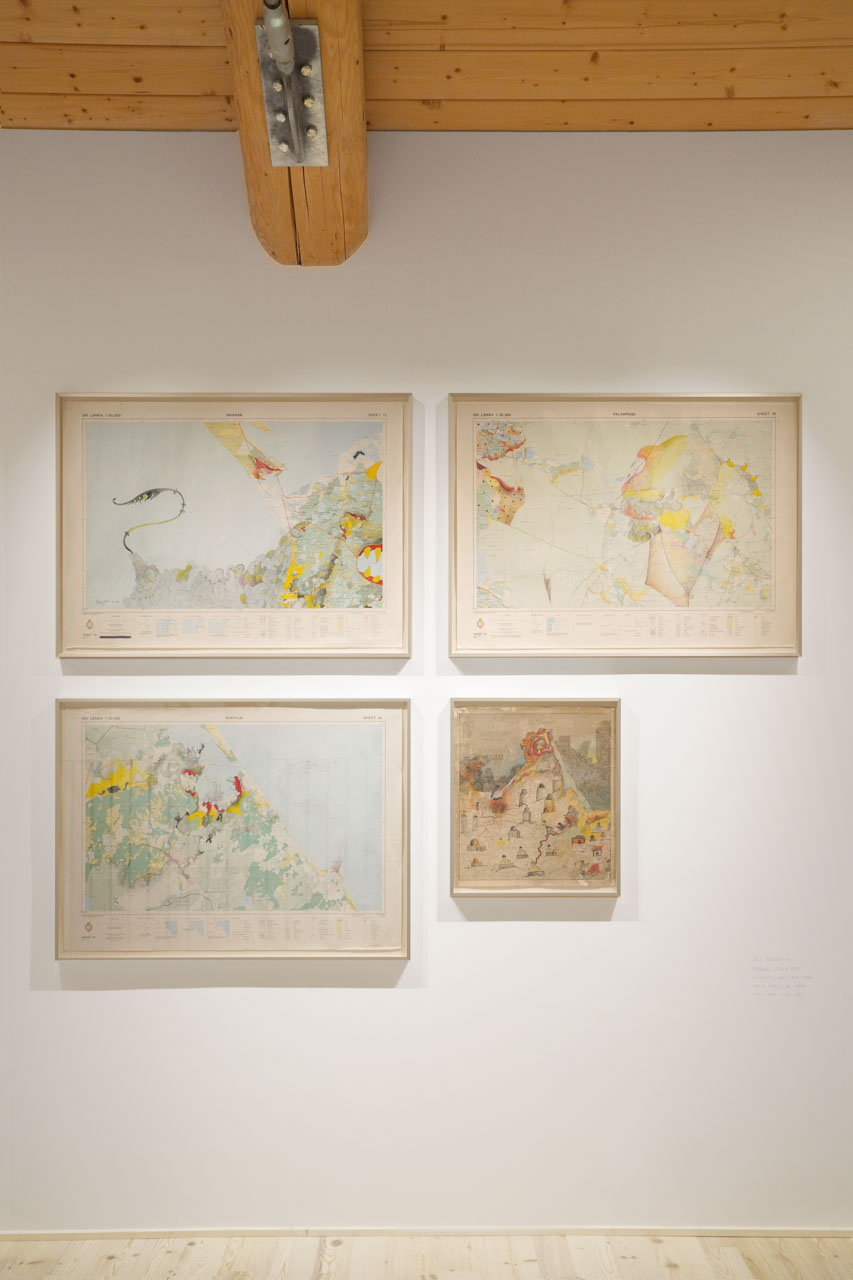
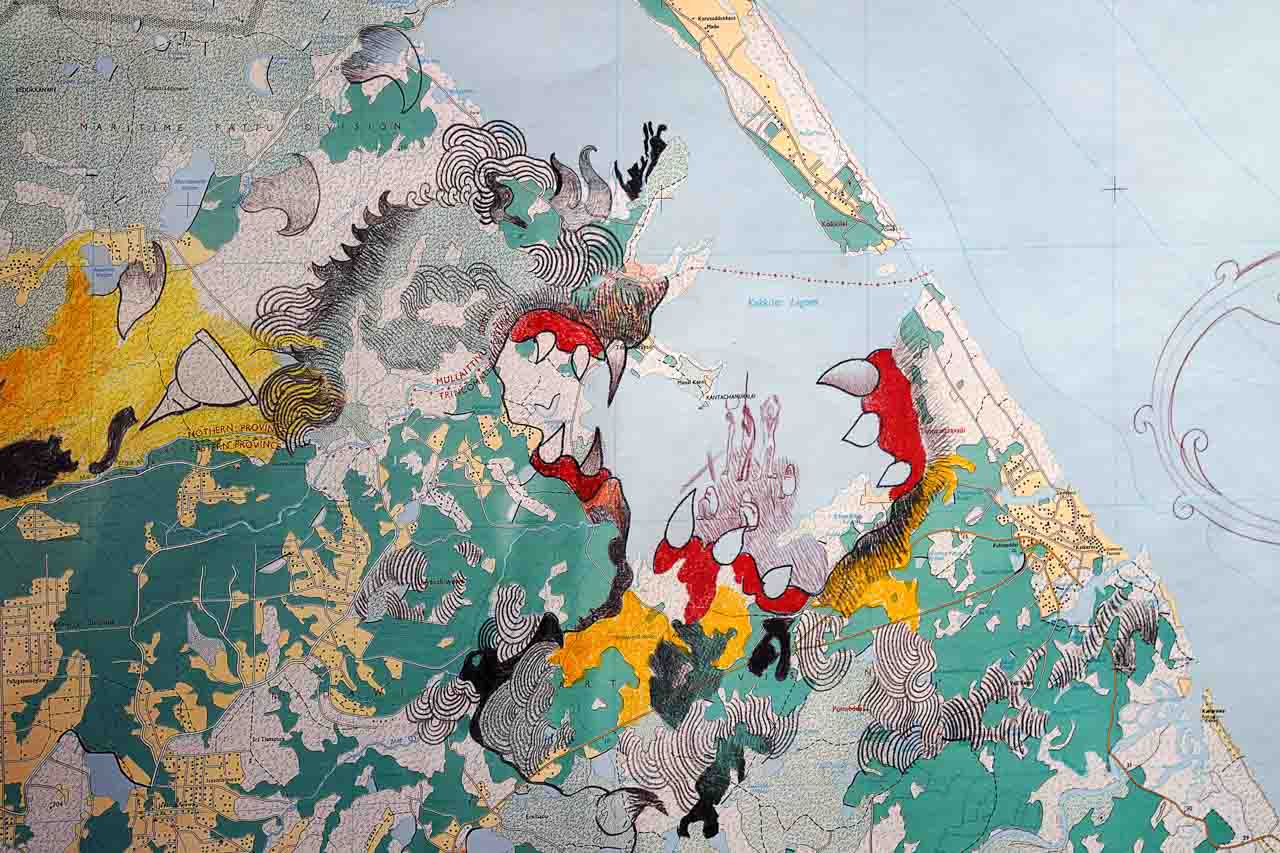
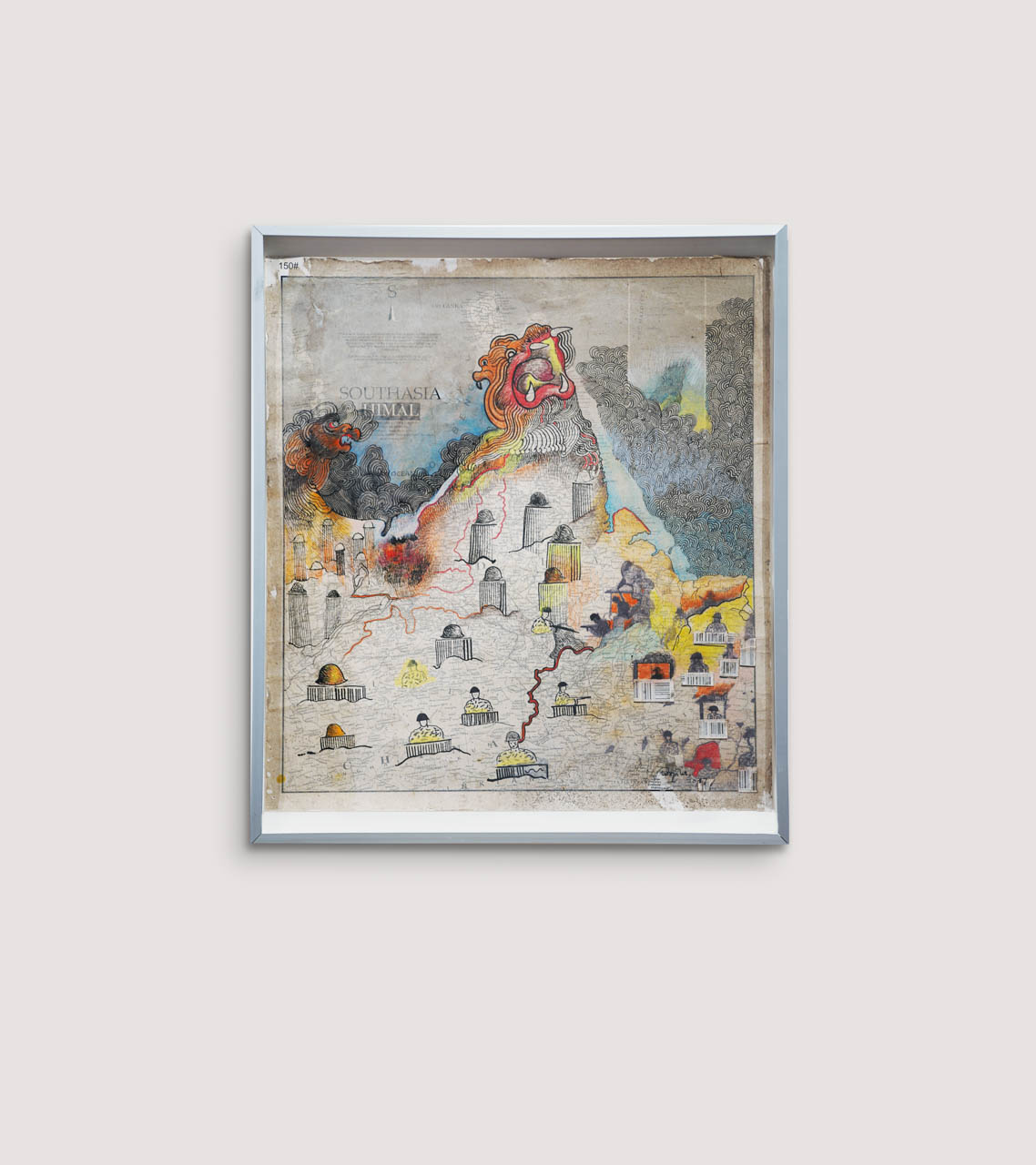
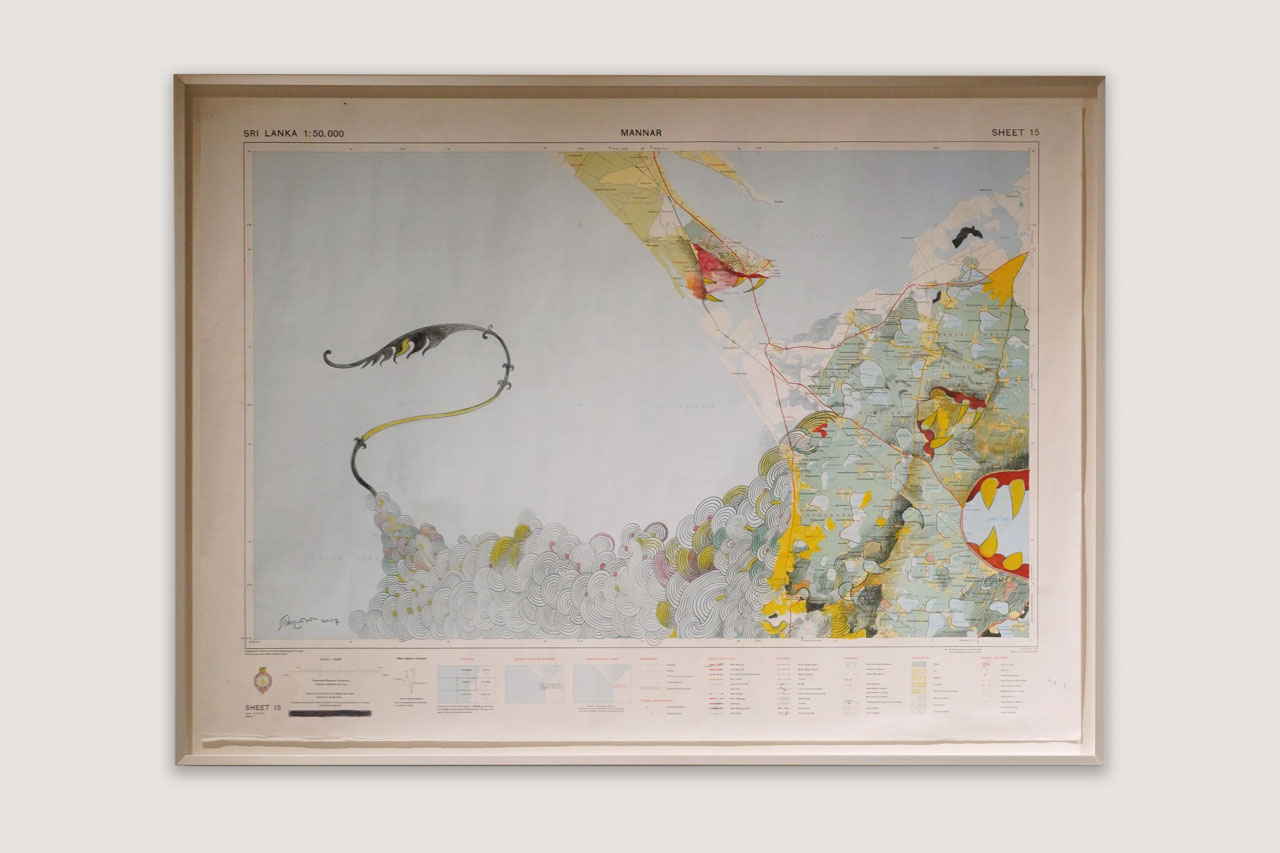
Beginning with the recent history of Sri Lanka-a country plagued by a civil war that has its origins in the conflict between the Sinhalese majority and the Tamil minority, organized into the Tamil Tiger military group-Pala Pothupitye (1972, Deniyaha, Sri Lanka) reflects on the problem of border defense and national identity. According to the artist, the main cause of the outbreak of conflicts is the violation of borders, which leads the invaded people to fight in defense of their identity. Intervening directly on some maps, the artist gives birth to a new territorial narrative that lets new mythologies surface. Zoomorphic creatures emerge that through their bodies rewrite the conformation of the country. Three larger maps isolate three precise regions of Sri Lanka, Kokkilai, Pallampiddi and Mannar, while a smaller one presents the Indian Subcontinent upside down. The latter is a map published in 2004 by Himal Southasian magazine that reverses the traditional position of north and south and suggests a rethinking of the power and thought dynamics underlying regionalism and nationalism.
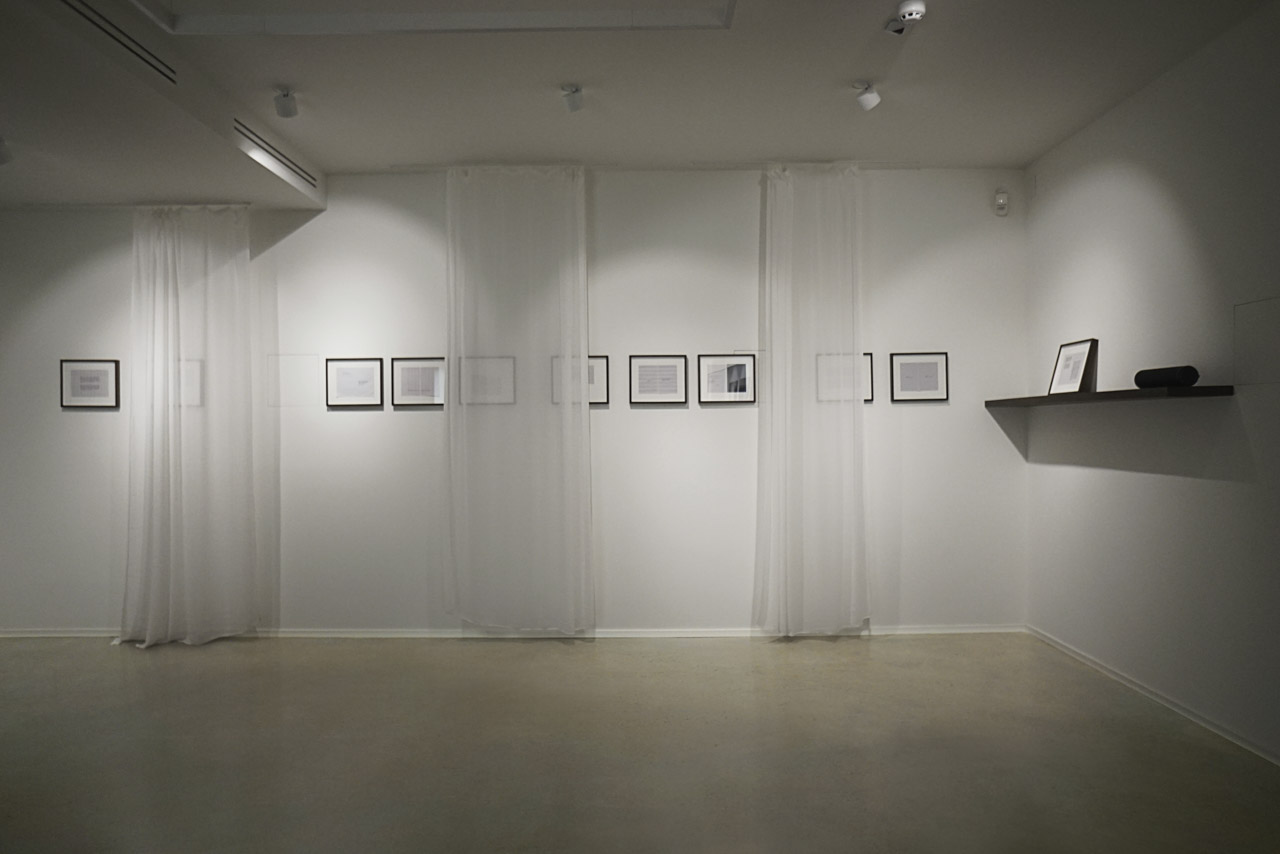
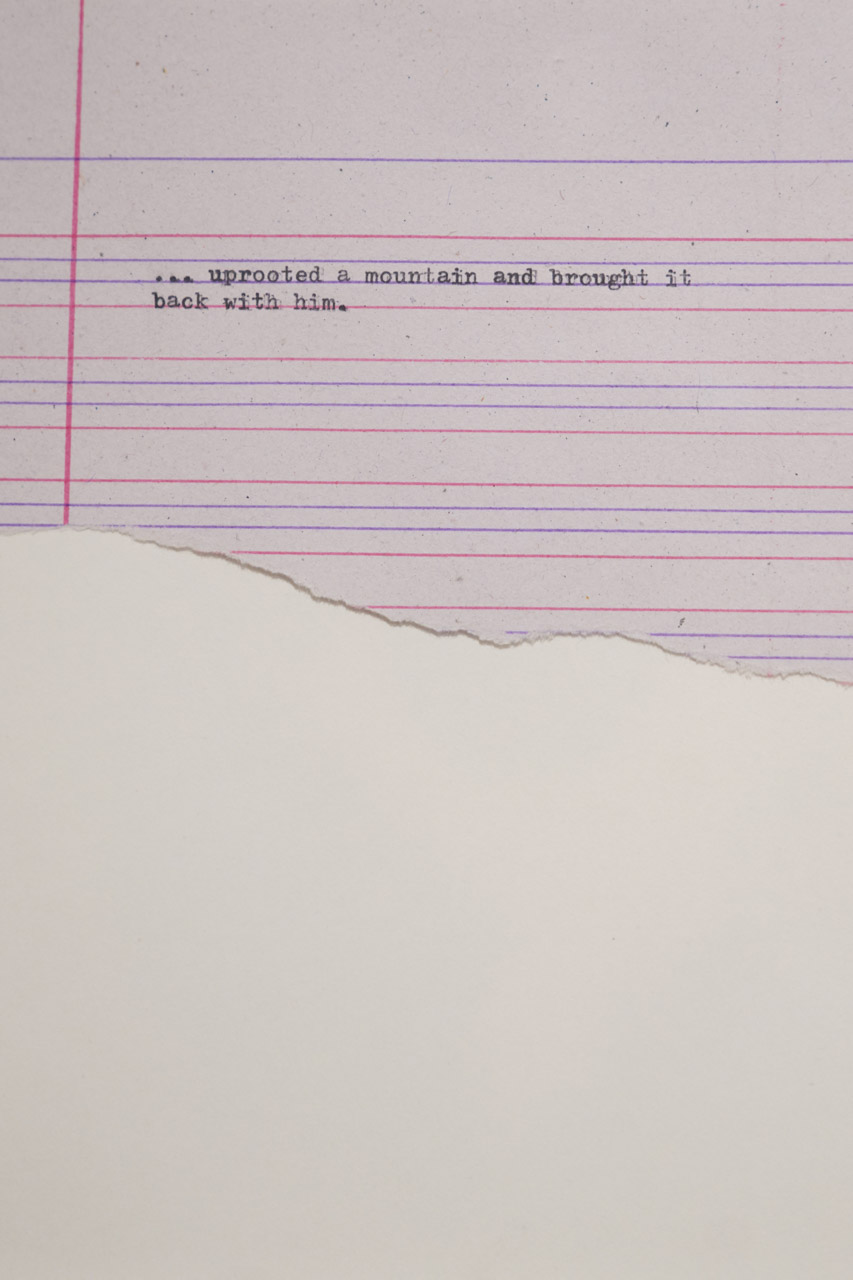
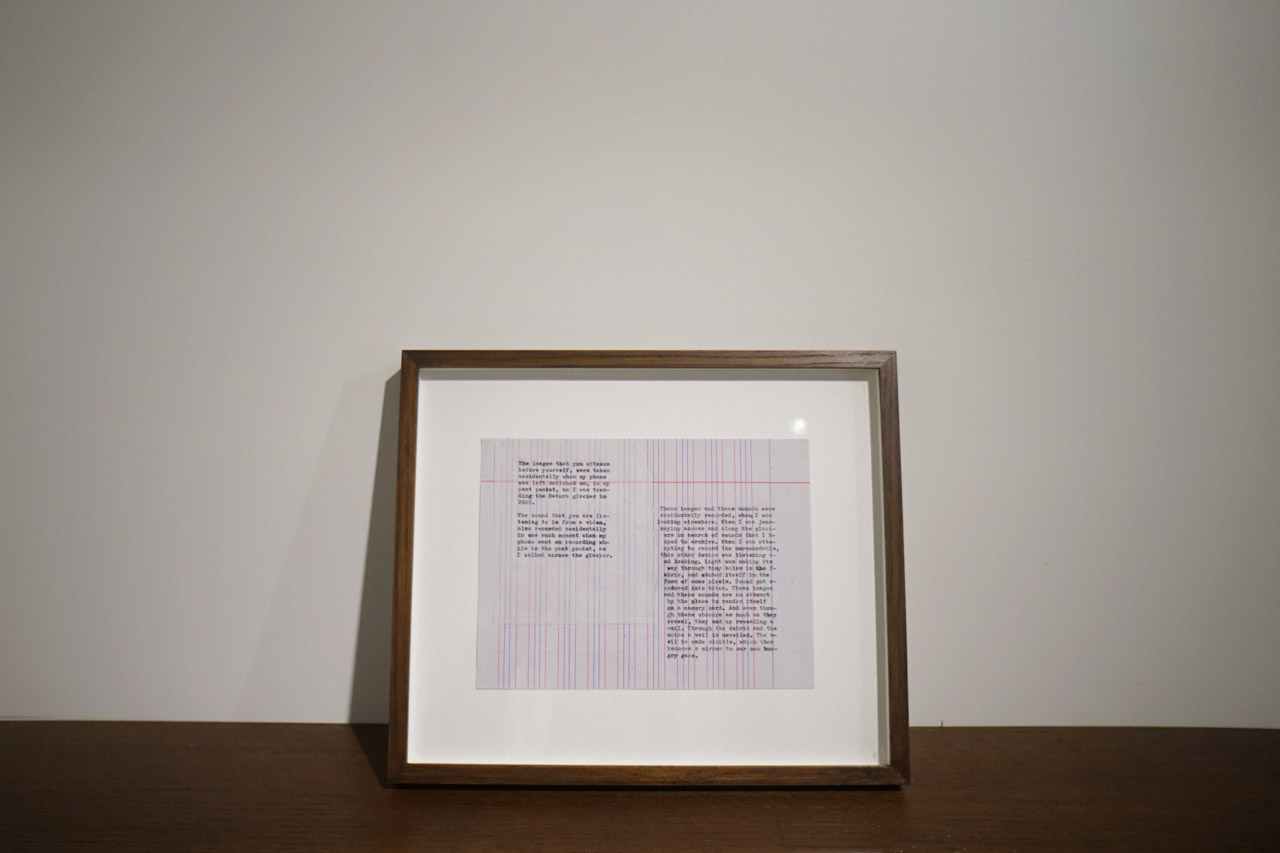
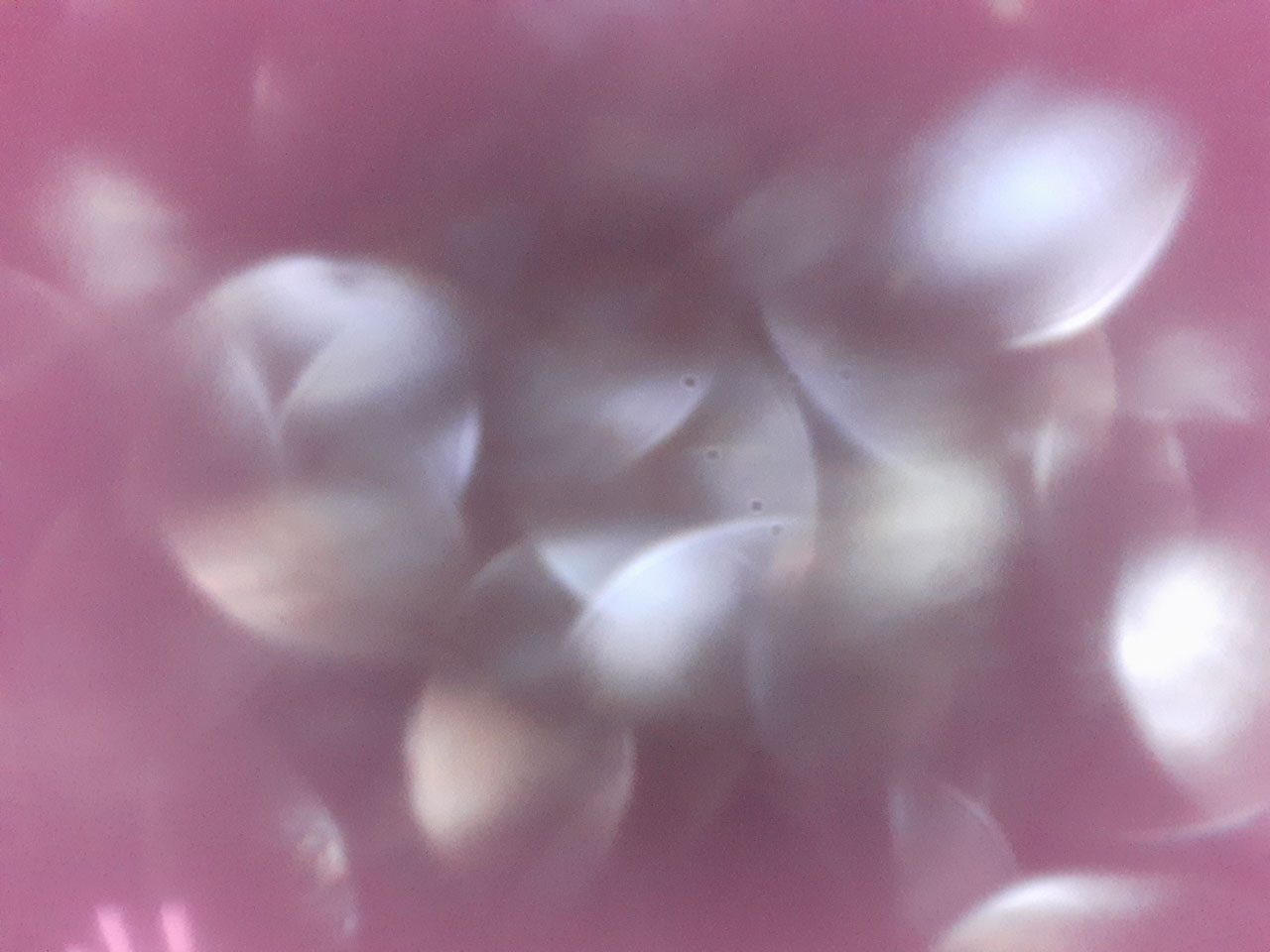

During the summer of 2020, Fazal Rizvi (1987, Karachi, Pakistan) crossed the mountains of the Karakorum with the intention of capturing the sounds of the glaciers and places he passed through. Once back in his studio he realized he hadn't recorded anything of what his ears had heard. Faced with the inability of technological means to capture the sounds of nature and its essence, the artist decided to exhibit only what his phone had accidentally produced, recording by chance while he was walking: abstract shots of pure light - interspersed with blank slides - and random noise recordings. On the wall, veiled by curtains that recall the presence of fog, short verses typewritten by Rizvi are projected; poetic suggestions in which he wonders, as well as other things, what the difference between image and imagination is.
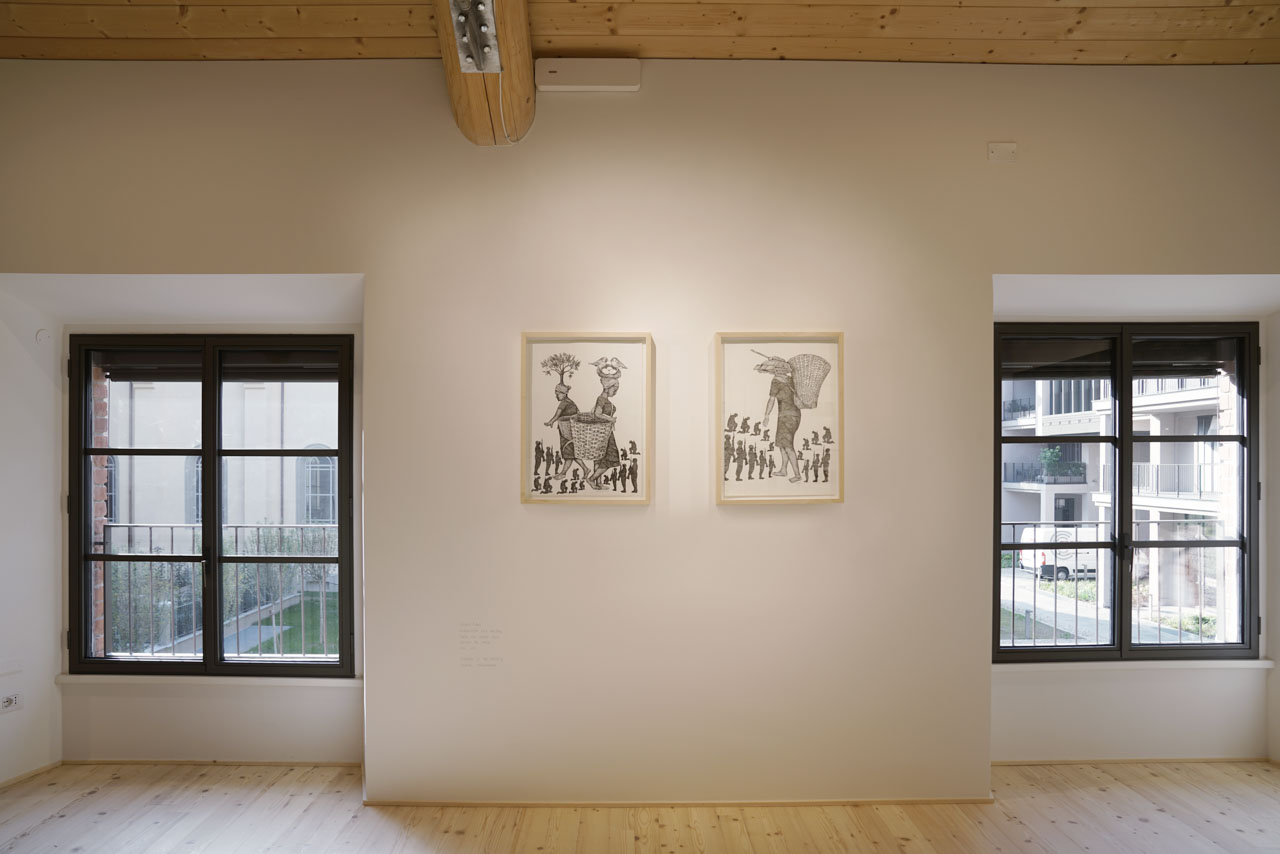
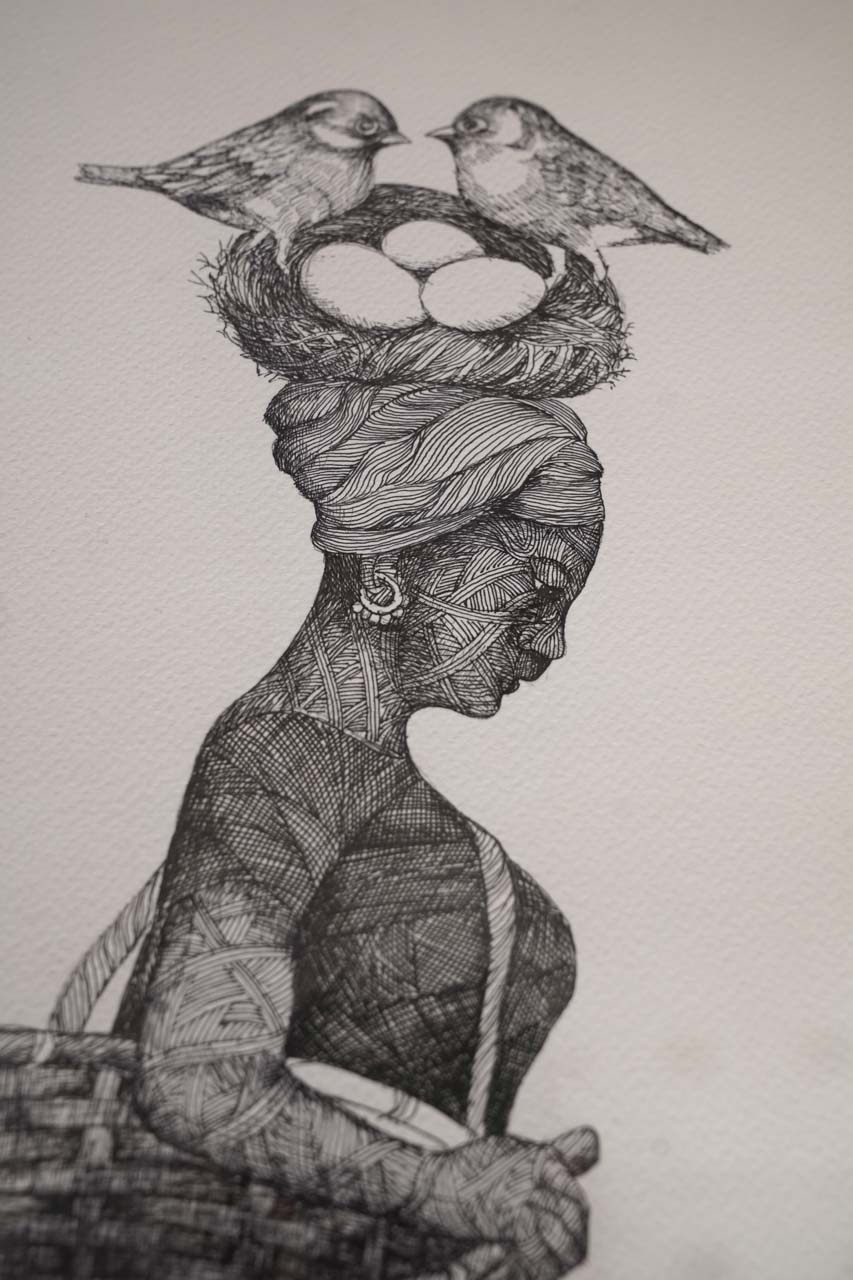
Joydeb Roaja (1973, Khagrachori, Bangladesh) belongs to one of 11 indigenous tribes, called Tripura, who have lived in the Chittagong Hill Tracts in southeastern Bangladesh, bordering Myanmar, for centuries. Over the years there have been numerous tensions and clashes around their lands. In fact, neither Bangladesh nor Myanmar recognize their autonomy and, given the mineral wealth of the territories they inhabit, both countries try to force the tribes' expulsion. The artist, with a fine and detailed pen stroke, depicts women in traditional dress and with their attributes of both daily and symbolic character, such as the baskets with which they are used to collect tea, or the arrows they use to carry on their struggle. Since this is a matriarchal society, it is the women who take charge not only of the chores of daily life, but also of the defense of their territories against military attacks. A battle that takes on the ambivalent features of a partly peaceful and partly violent resistance.
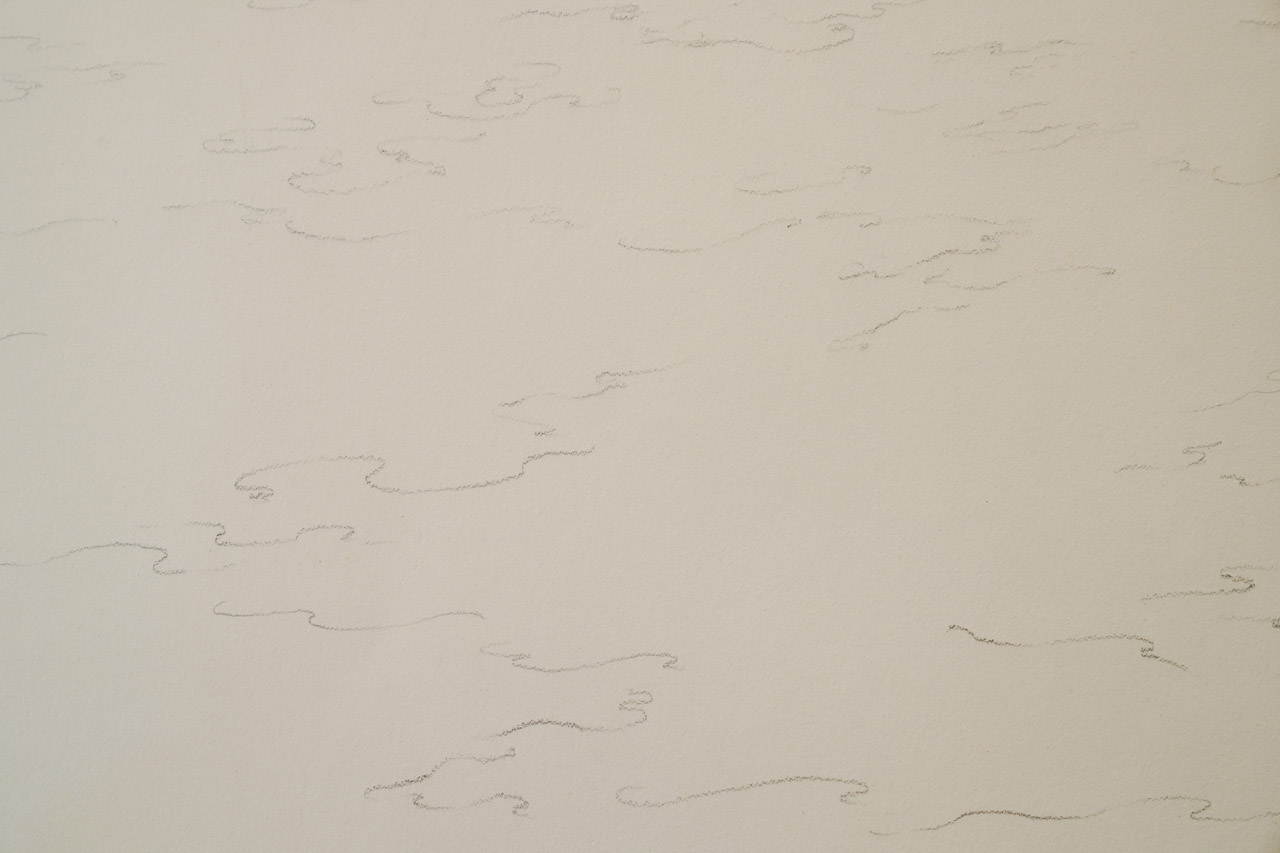
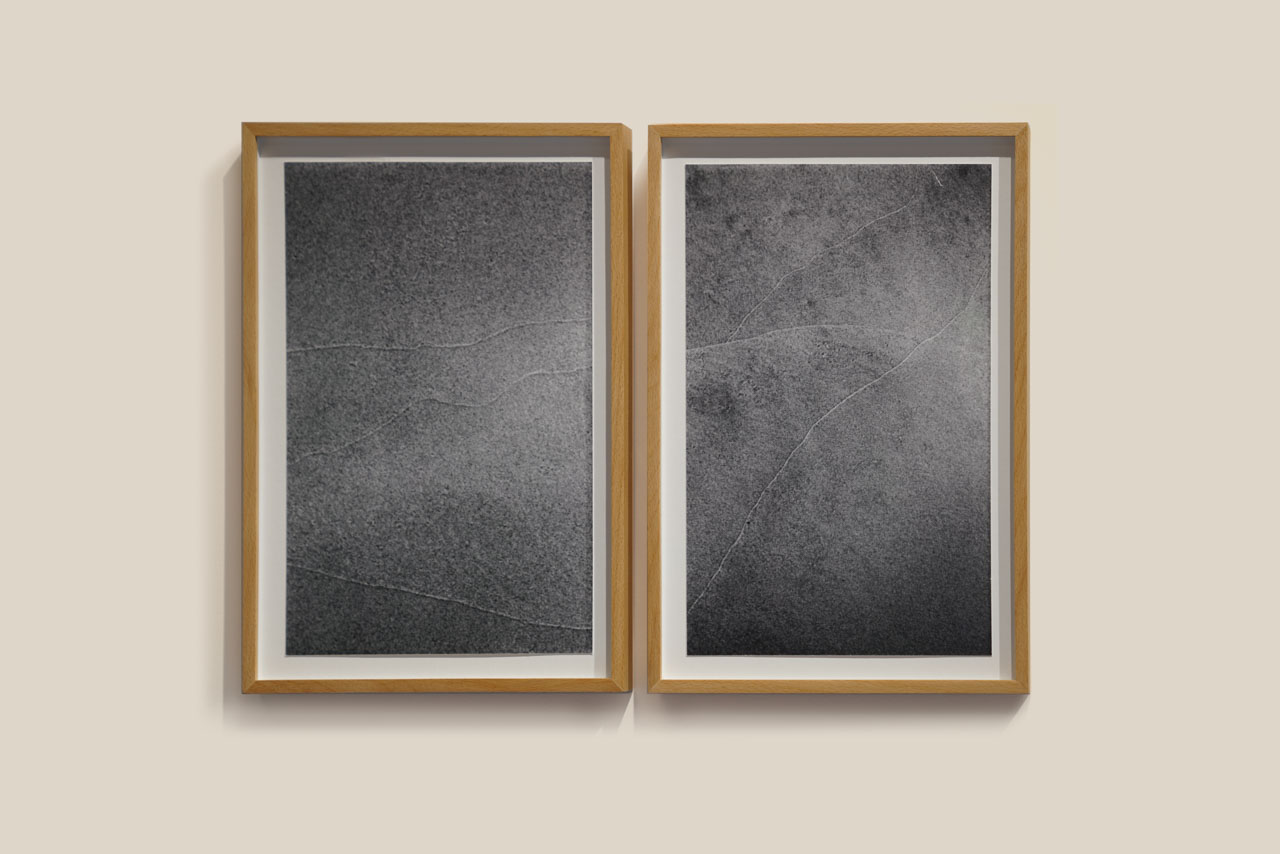
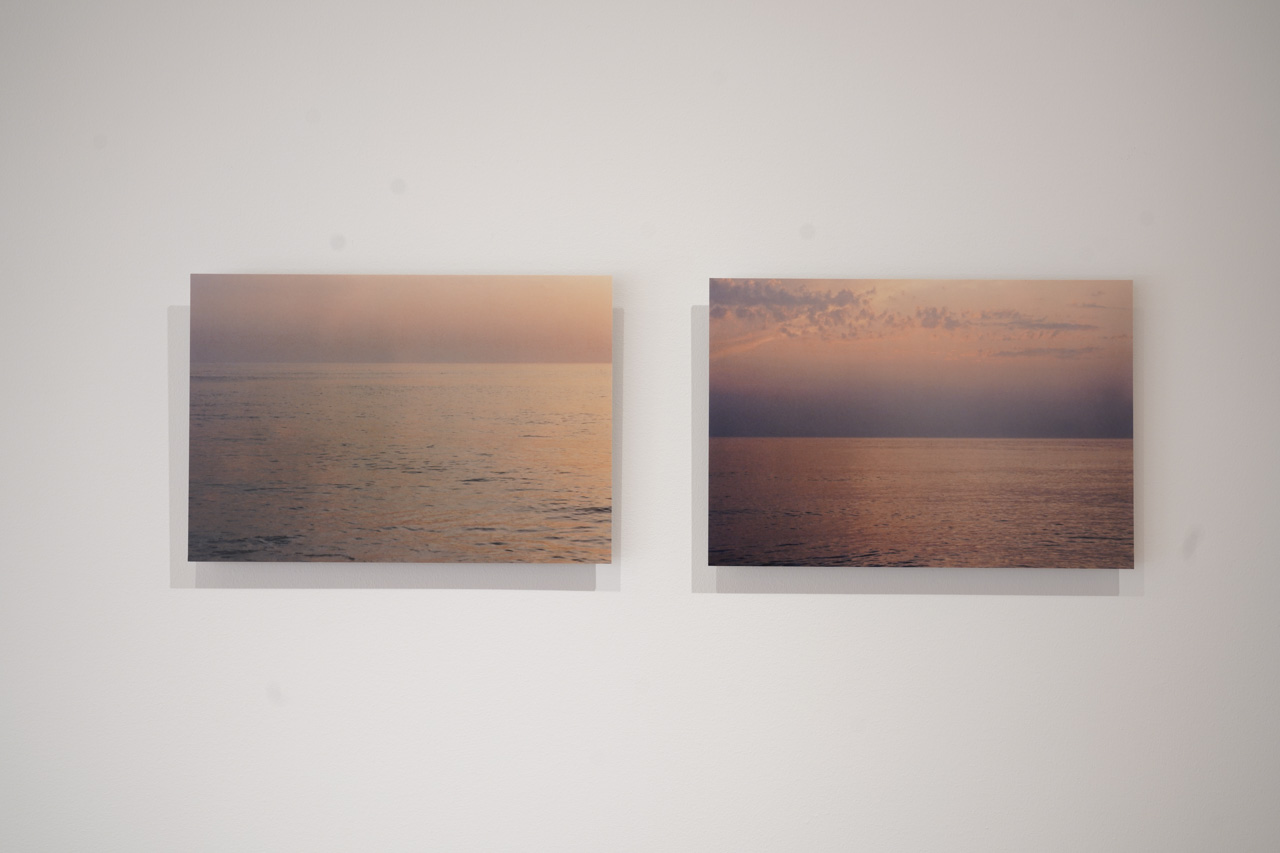
Lala Rukh (1948-2017, Lahore, Pakistan), who has always been engaged in the struggle in defense of women's rights and was among the founders of the Women's Action Forum in the early 1980s, has, with her sensibility, created a personal imagery that is distinguished by its sober and minimalist forms. Through drawing and photography Lala Rukh has repeatedly immortalized the Indian Ocean, projecting on its surface a universe of dreams and memories, in search of abstraction from the world. With a light stroke that stems from her training in Islamic calligraphy, Rukh evokes the continuous motion of the waves as she frames portions of the ocean with her lens, photographed in different countries, at various times of the day and from different vantage points. What interests her is the attempt to fix in an image the motion of the sea, its rippling surface, its slow and inexhaustible progress. However, the poetic and contemplative tone of her work also reveals a conceptual and philosophical approach. The sea and its movement allow her to reflect on the passage of time and life. Almost abstract landscapes or imperceptible pencil marks make transience palpable, immortalize moments and at the same time evade them.
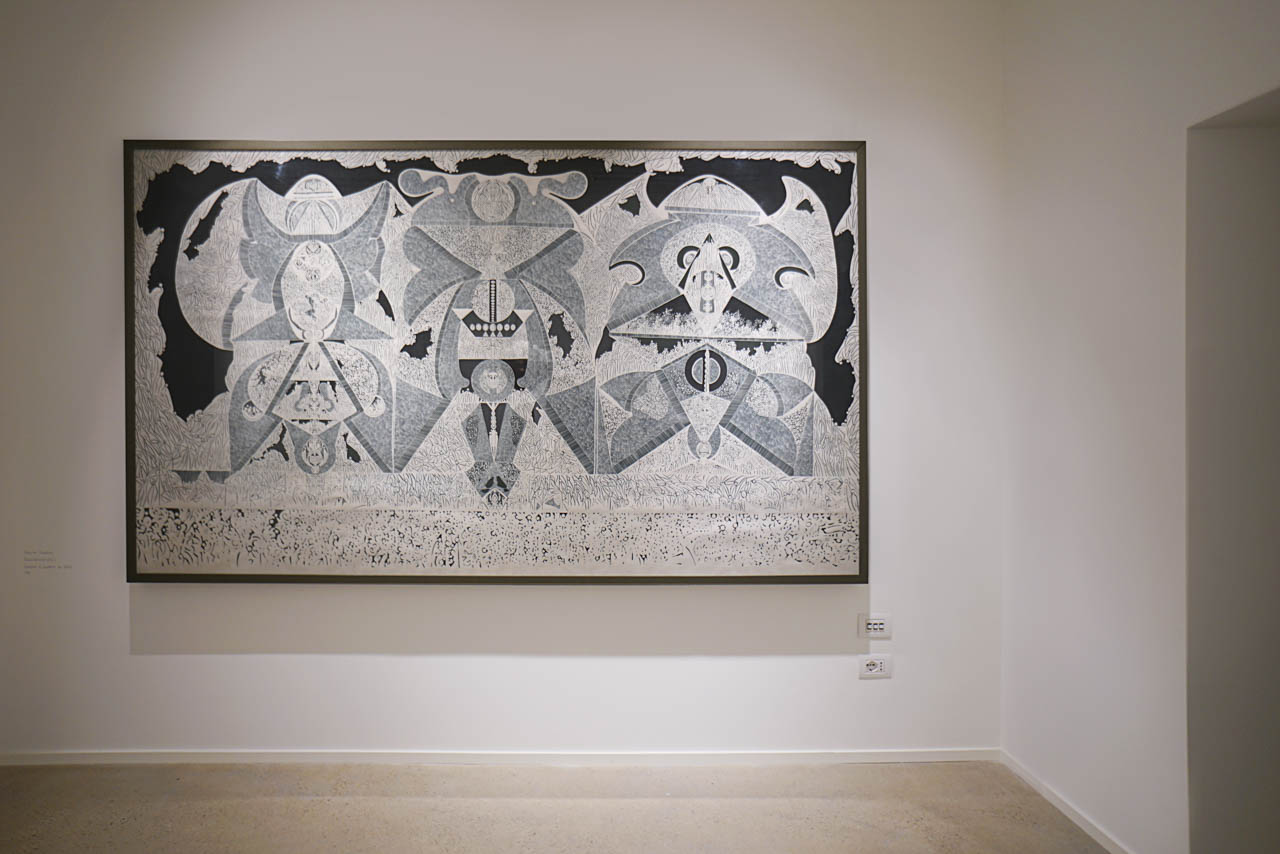
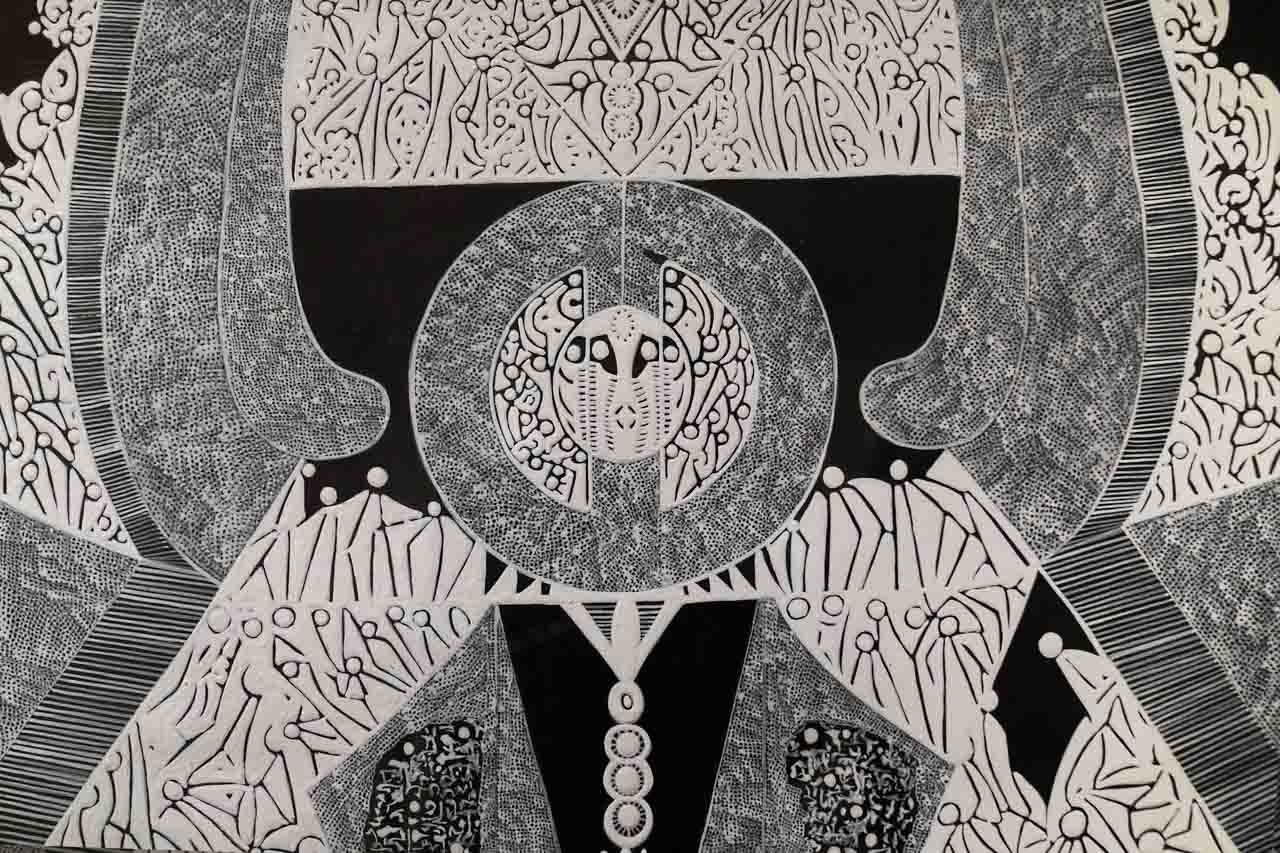
Inspired by traditions connected to her homeland and using natural pigments, Vineha Sharma (1975, Nuova Delhi, India) brings to life compositions that at first glance recall indigenous paintings. Between memory and ritual, symbolism and mysticism, the artist builds a microcosm that seems inhabited by thousands of figures. Stylized forms, at times human, that emerge the closer you get to the pictorial surface and describe different collective situations. Holding all these characters together are three large figures of totemic grandeur, who seem to peer and question us in their impassivity.
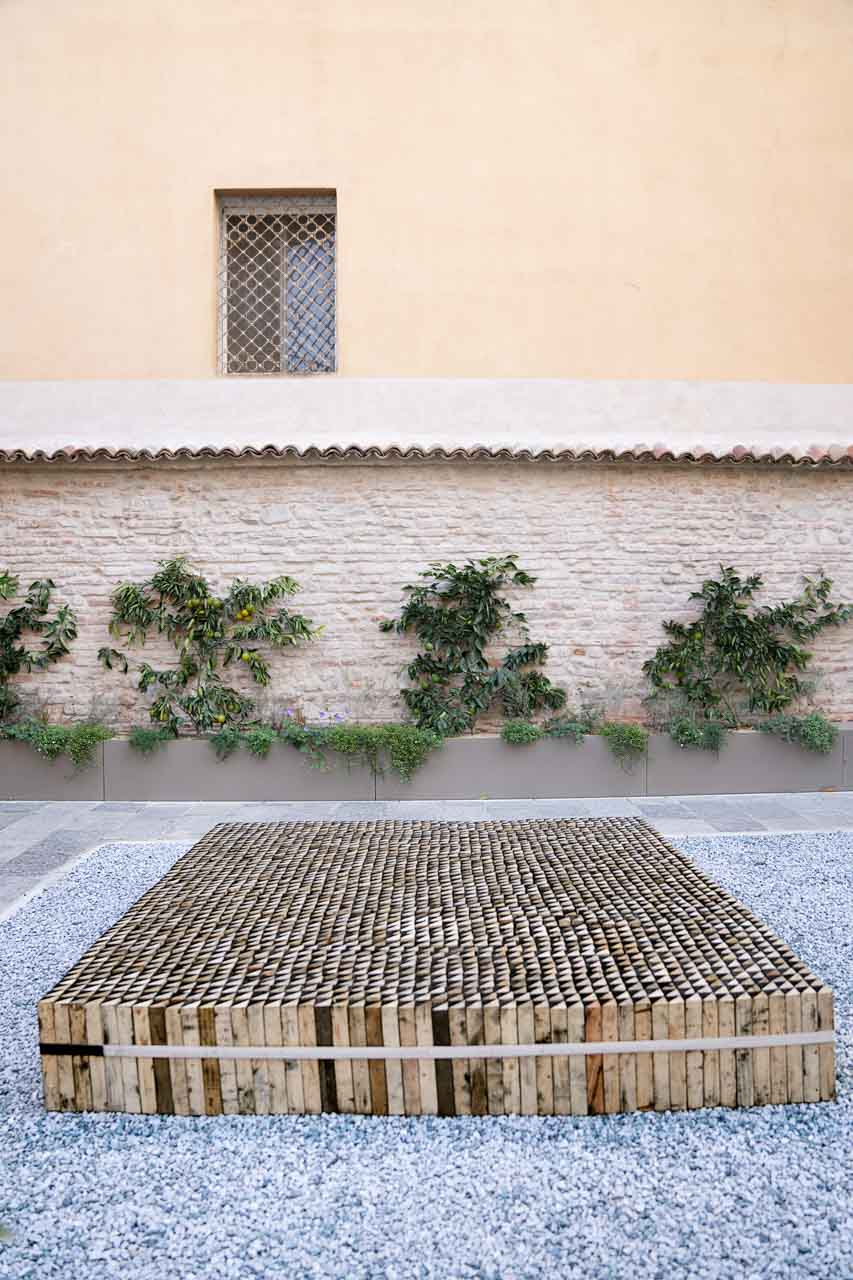
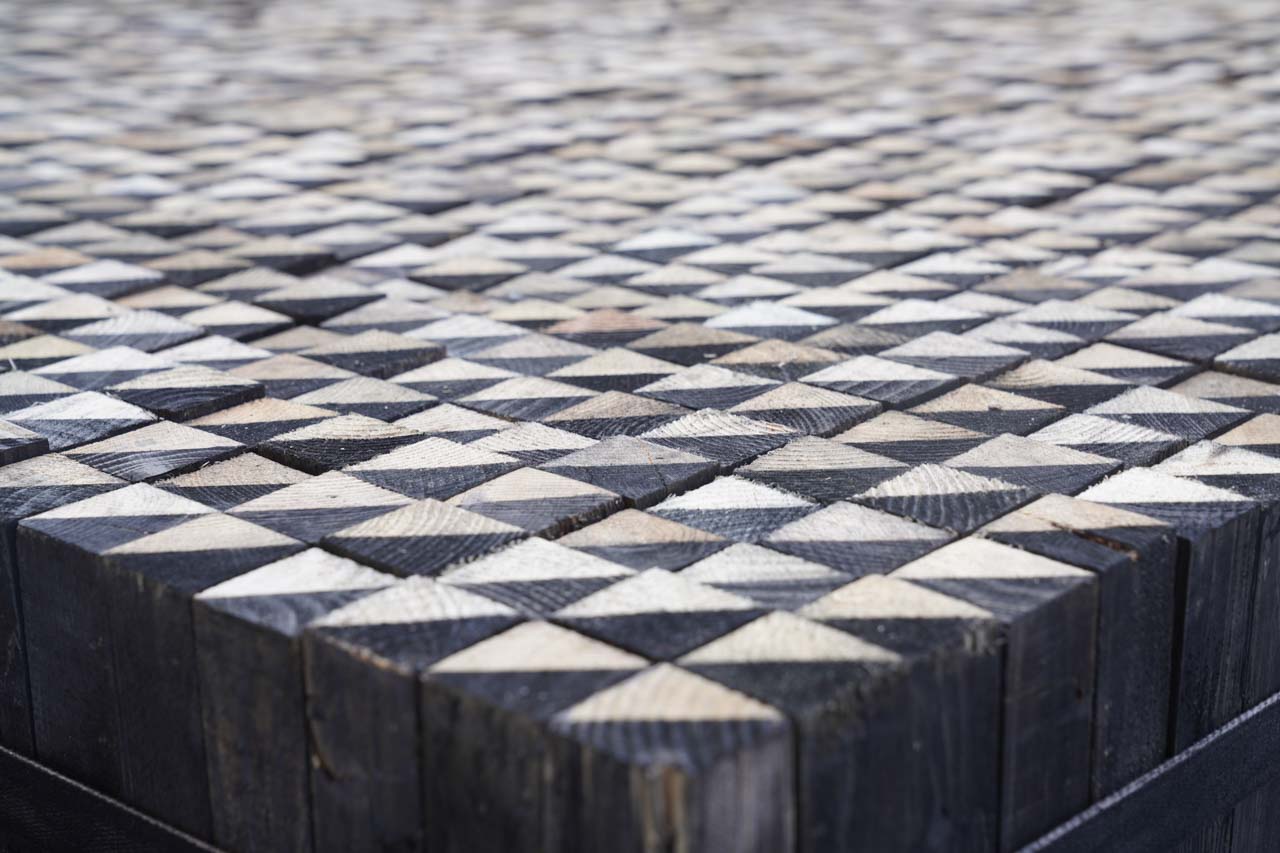
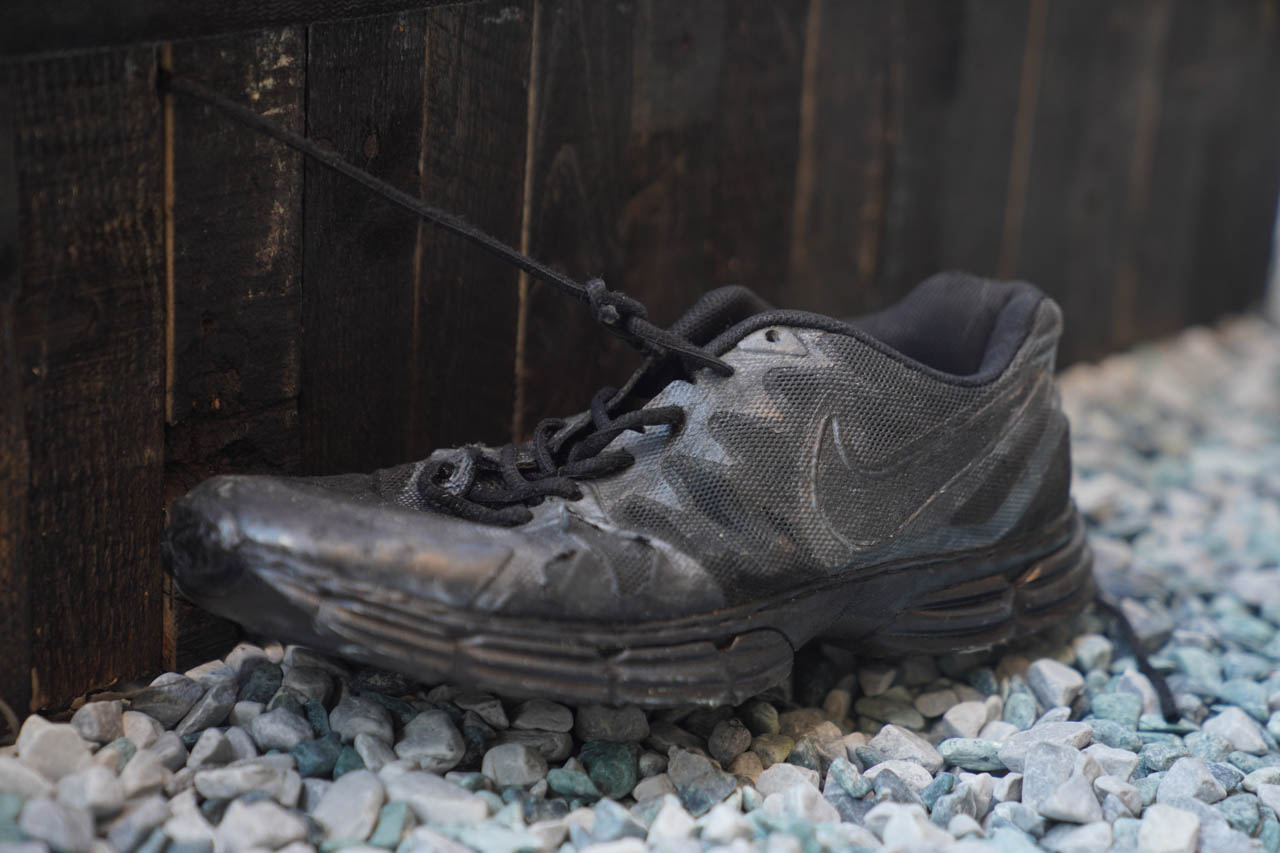
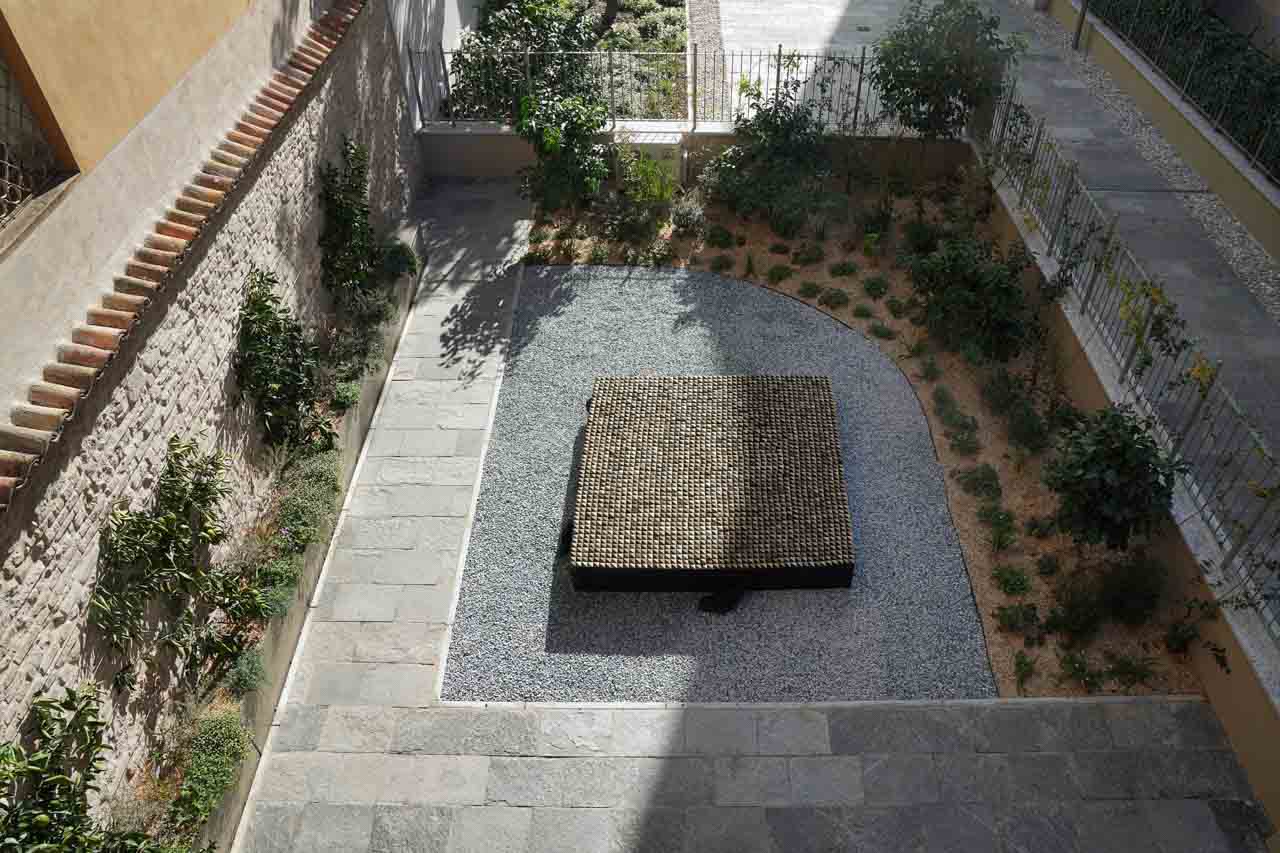
A childhood spent in Mumbai, a city of unbridled urban development and extremely high housing concentration, influenced Divyesh Undaviya's (1994, Bhayandar, India) future research, oriented toward investigating the relationship between man and space, between the body and architecture. Greys are to be listened to; are to be felt is in fact the hypothetical floor plan of a city, made up of hundreds of wooden laths, from which shreds of clothing, probably belonging to workers and laborers, emerge, evoking the magnetic and oppressive power of big cities. Holding it all together is a pulling strap that emphasizes the sense of constraint that the inhabitants of a megacity feel as they walk through crowded, chaotic streets. What does it mean to live in a city inhabited by nearly 50 million people?
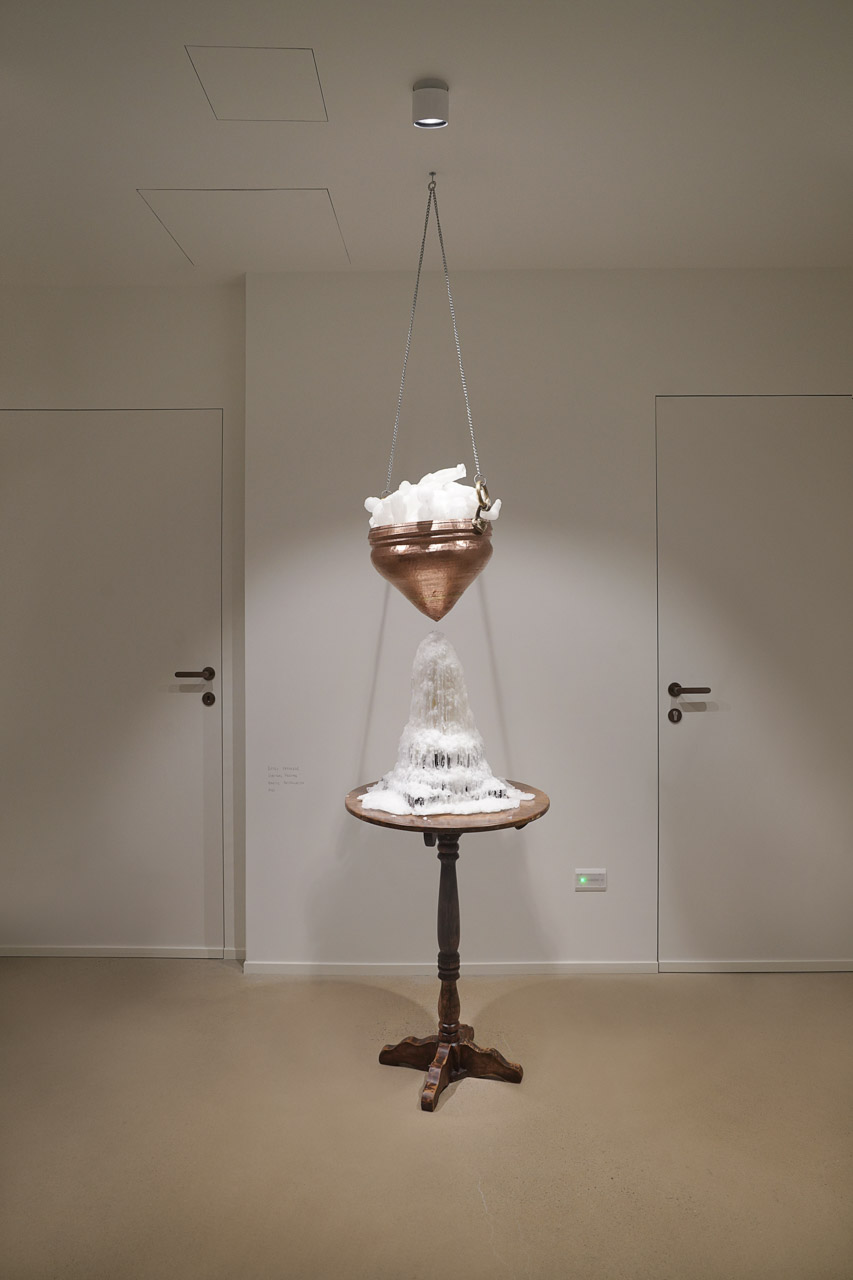
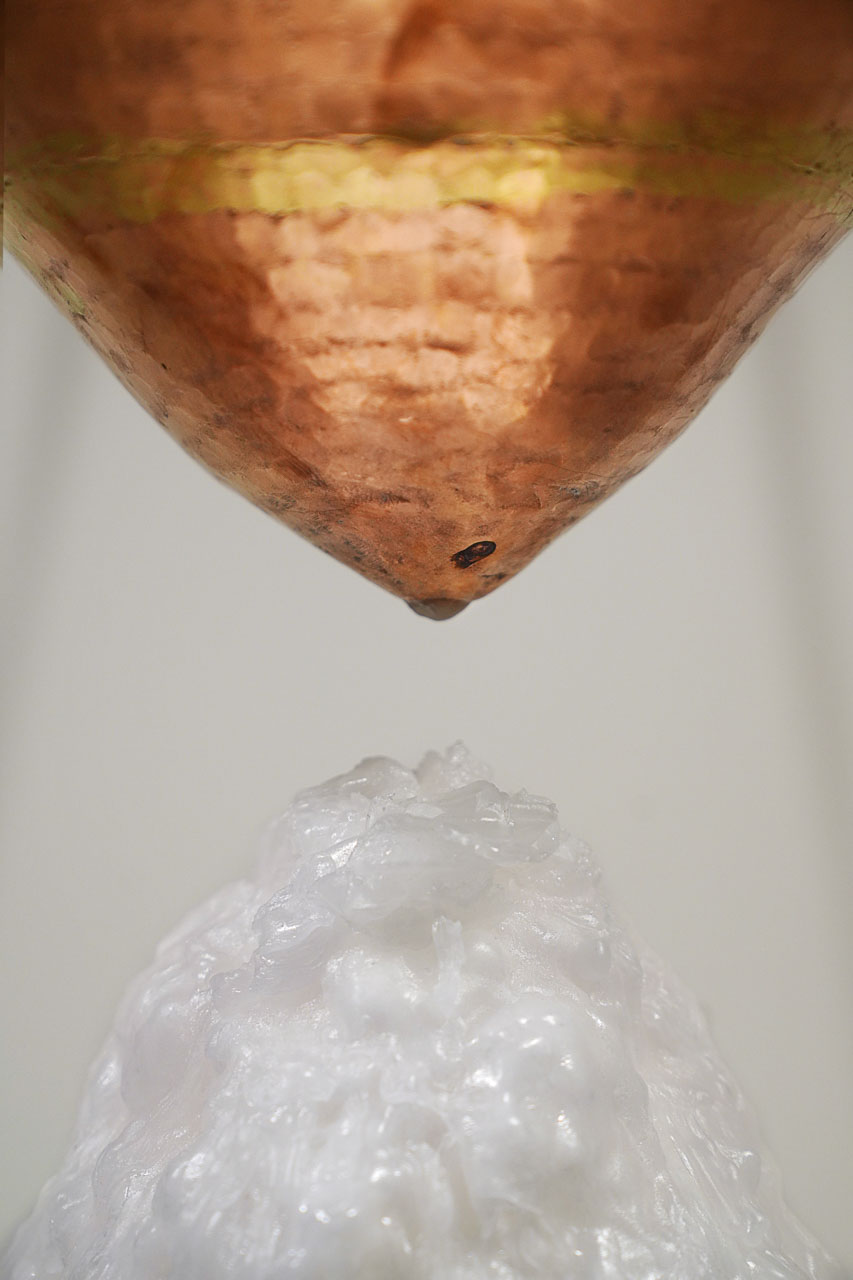
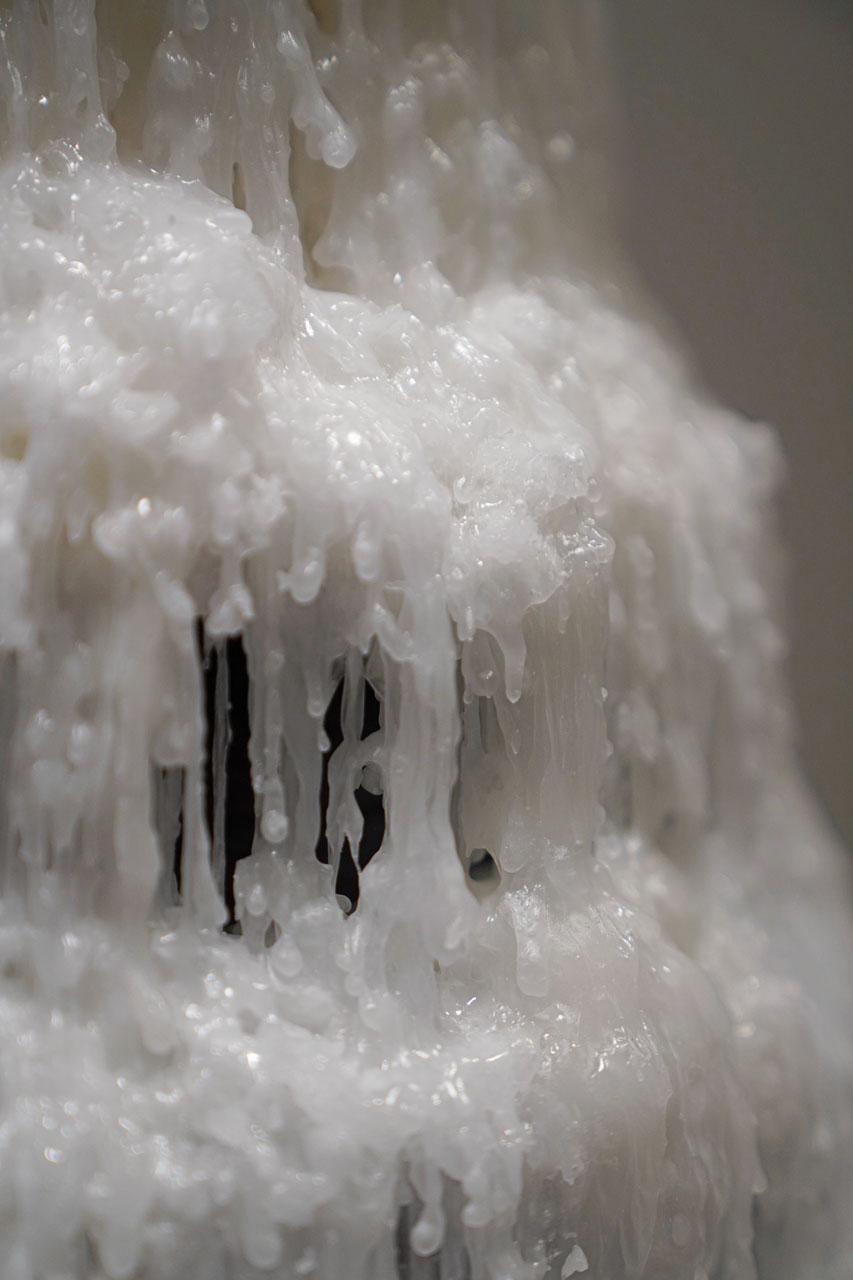
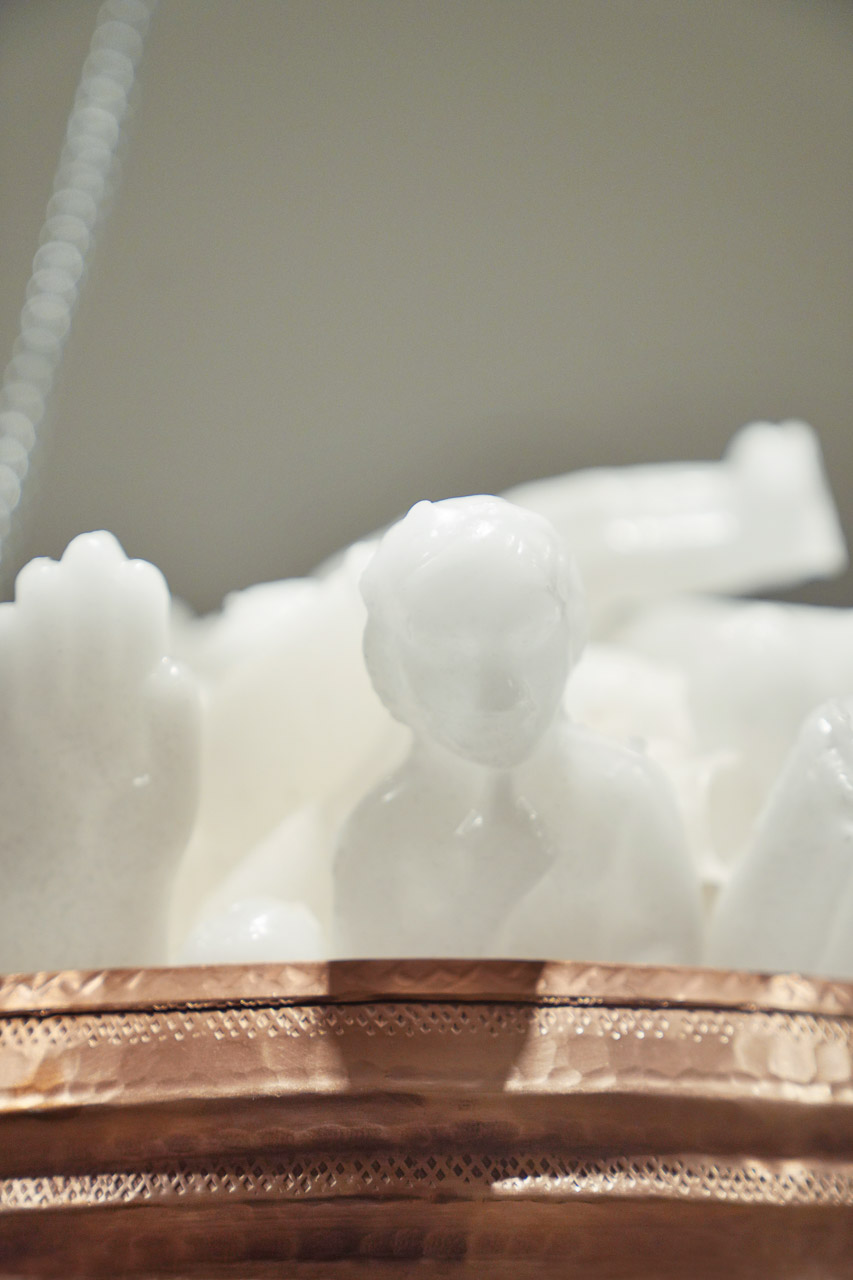
Before Portuguese colonization and the subsequent arrival of Catholicism, Goa was a place connoted by an animistic spirituality. Today, entire markets develop near the city's places of worship for the sale of wax votive offerings, statues that correspond to the most varied prayers and requests made by the faithful, in a hybridization of indigenous culture, animism, shamanism and Catholic devotional rites. Spiritual Machine is the machine that allows us to process our wishes while at the same time evoking, not without irony, the commercialization mechanism of spirituality. A spirituality that is reduced, in the same way as wax figurines, into an indistinct and undefined amalgam.