Chì ghe pù Nissun!
Bekhbaatar Enkhtur
Martina Melilli
Matteo Pizzolante
Agnese Spolverini
Lavanderia
Via Lamamora 26, Milan
Chì ghe pù Nissun! started out as a reinterpretation and extension of the residency, research and production process entitled A Sud di Marte, in which the four artists – Bekhbaatar Enkhtur, Martina Melilli, Matteo Pizzolante and Agnese Spolverini – participated between April 2022 and January 2023 in Castrignano de' Greci (Lecce), at KORA – Centro del Contemporaneo.
During their two-month residency, the artists were invited by Ramdom and Fondazione Elpis to engage with the concept of the “Meridione” and explore its practical and symbolic implications. Their study of oral tradition, anthropological essays, and texts on local history served as the starting point for an interpretation of decentralized contexts as potential spaces for the reactivation of meaning. This interpretation places such contexts at the center of a broader, highly topical political and cultural debate.
The exhibition taking shape in the former industrial laundry that houses Fondazione Elpis aims to build on this reflection and broaden its scope, effectively re-examining the dichotomous “city-province” relationship and the models of production and consumption that these historically represent. The phrase that gives the exhibition its title—Qui non c’è più Nessuno! (There’s no one here anymore!)—spoken in the Milanese dialect by the owner of a historic shop on Via Orti, can be heard just as easily—albeit with two distinct meanings—in a central neighborhood of Milan or in a town in southern Italy, such as Castrignano de’ Greci itself. A statement that creates an unintended parallel between the transformations of inland areas and those of the urban fabric, highlighting the global nature that such processes take on today.
While A Sud di Marte evokes the vision of a distant destination—a South as a place of revelation and experimentation with a new methodology—Chì ghe pù Nissun! stems from the artists’ lived experience in Castrignano de’ Greci and evolves through engagement with a radically different context: that of a neighborhood undergoing profound transformation within a major urban center.
The narrative that emerges from these four voices evokes a complex and multifaceted spectrum, a polyphony of perspectives and approaches that are very different from one another despite having passed through the same context. The exhibition finds in this diversity of practices a key to understanding that allows for the construction of a narrative which, starting from the sites of the residency, extends all the way to the center of Milan to give shape to new ideas and new perspectives.
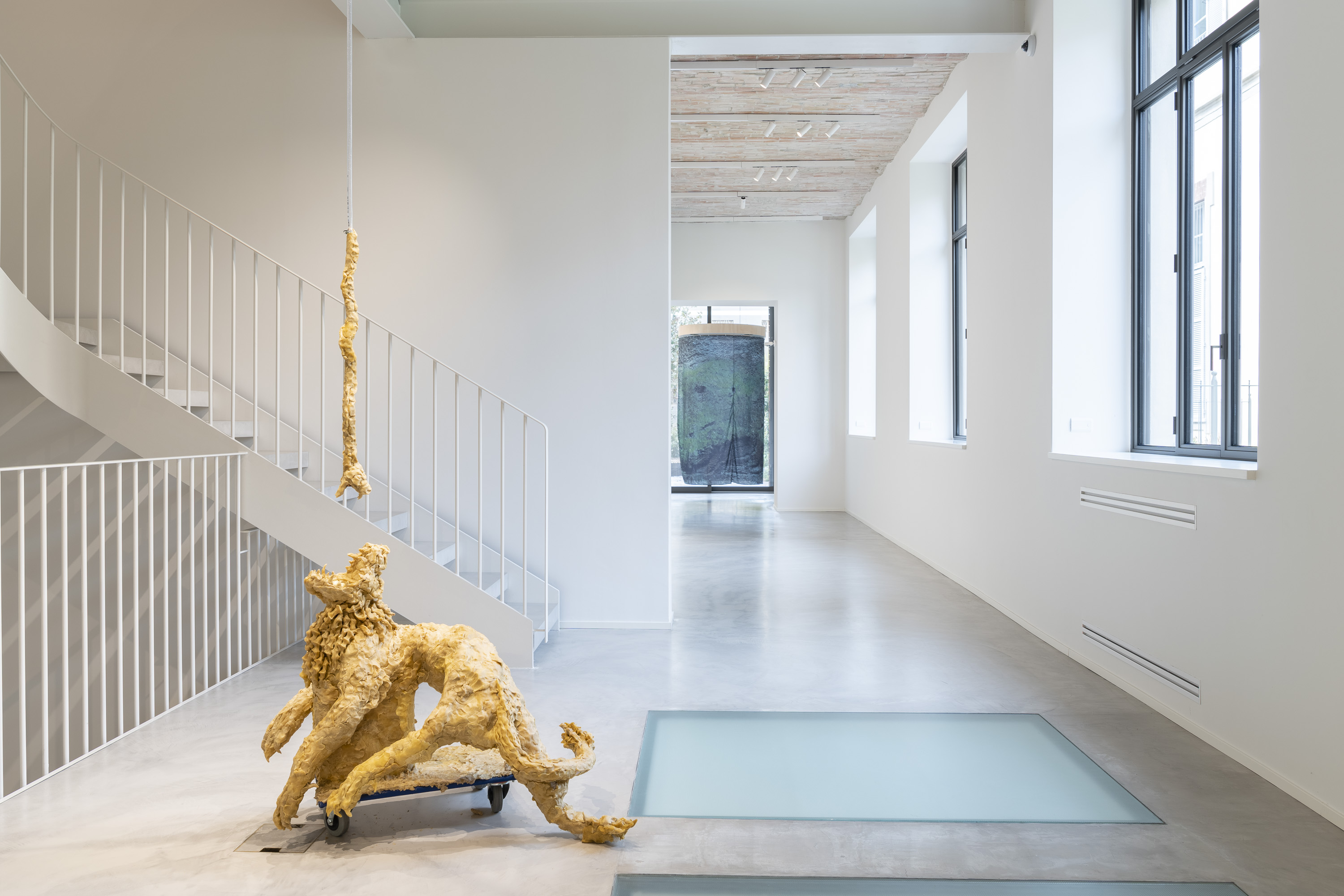
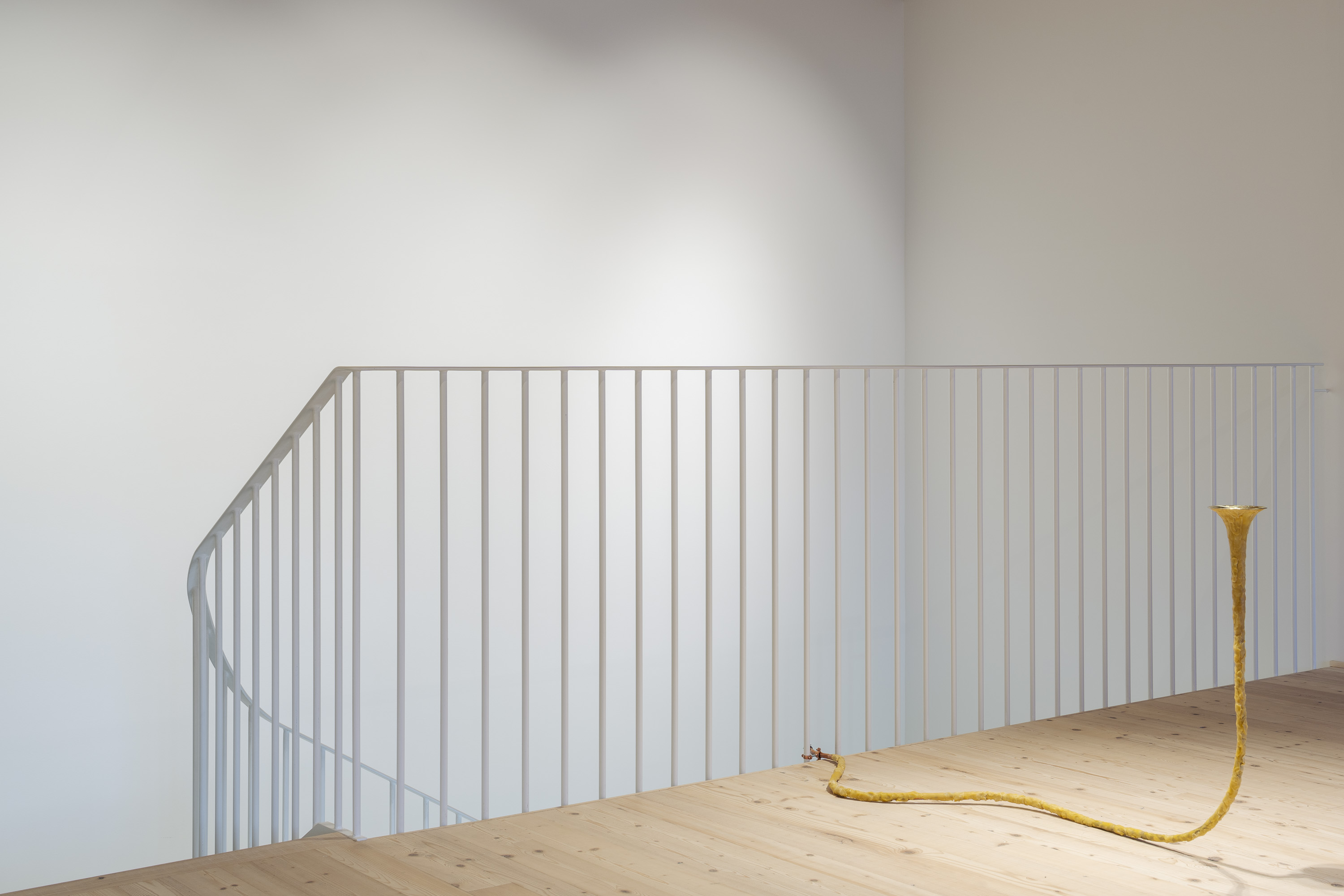
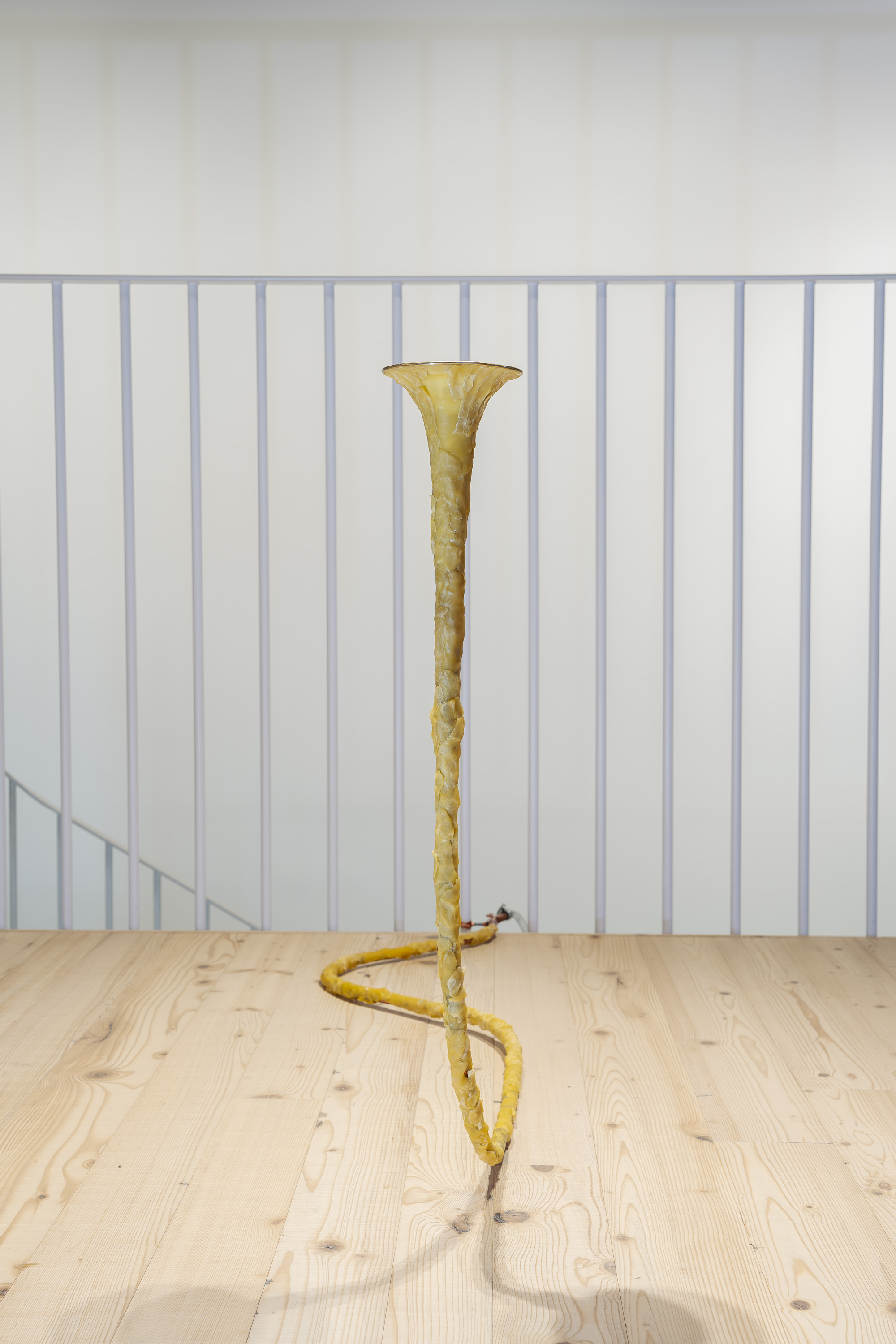
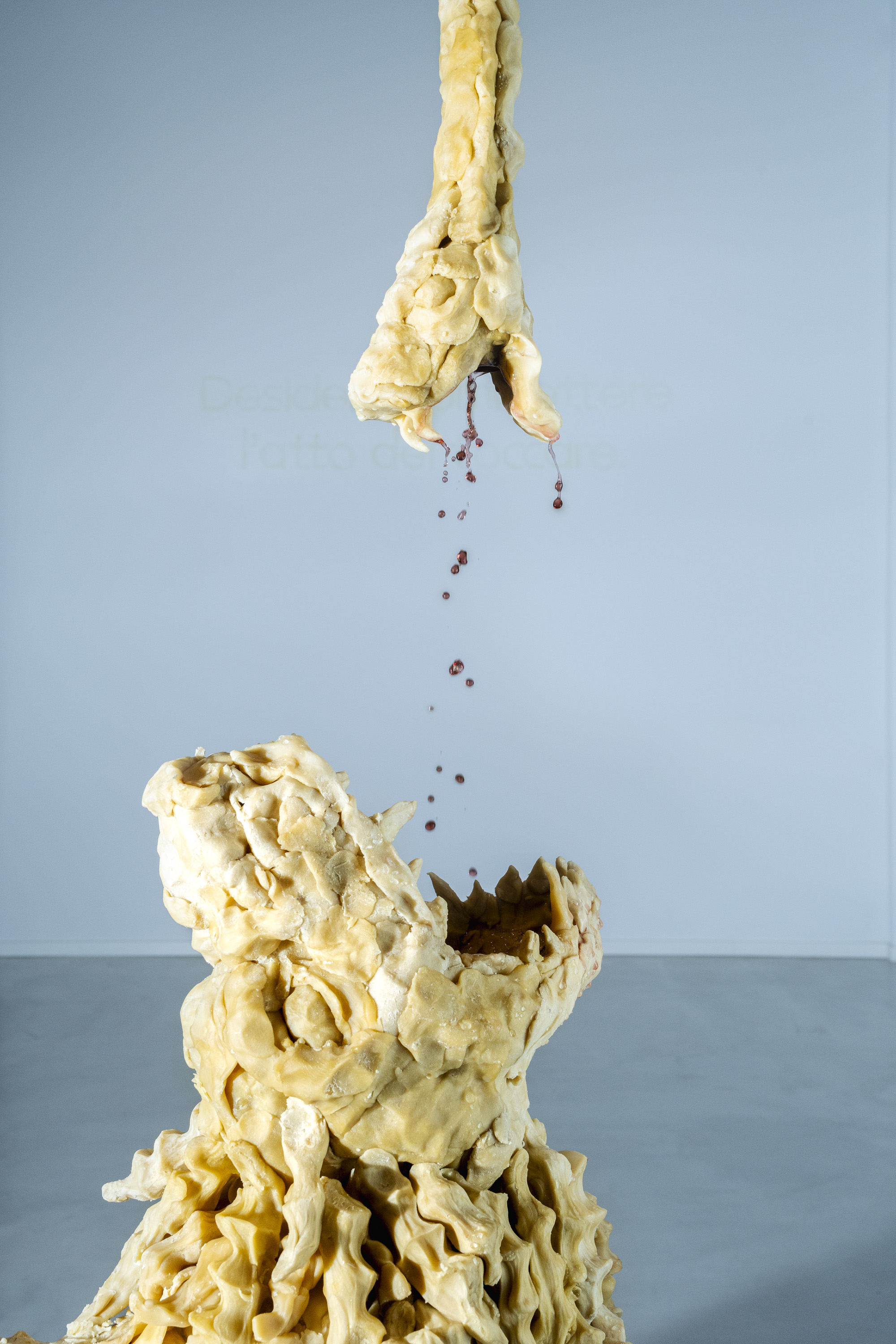
Bekhbaatar Enkhtur’s reflection on territory can only begin with his country of origin, Mongolia, whose culture and iconography play a central role in the artist’s work. During his residency in Castrignano de’ Greci, he drew inspiration from the earliest western travellers, the explorers from the “known” world to the distant “Orient”, to the edges of what was then unknown, recounting its wonders and traditions. Enkhtur’s work is therefore modulated according to the notes of travel and discovery. Fountain is a sculpture inspired by the stories of Flemish missionary William de Rubruck, who between 1253 and 1255 travelled as far as the Khan’s palace in Karakorum. Here, according to de Rubruck’s account, travellers were welcomed into a garden where at the centre there was a large fountain, described as “the silver tree”, decorated with cherubs, trumpets, lions and snakes, from whose mouths flowed wine, milk, rice liquor and a drink based on honey. Such a device, much more than just an ornamental sculpture, was used to distribute intoxicating beverages, and to entertain guests at feasts or audiences. Fountain presents the same theatrical combination of forms and elements, distributed over two floors of the Fondazione. Just as the fountain in the courtyard of the Karakorum palace welcomed travellers, traders and diplomats, Enkhtur’s work invites visitors to lose themselves in its sinuous forms and to help themselves to the wine flowing from its spouts. Enkhtur’s work thus reveals another approach to space and territory, no longer physical, neither mystical nor biographical, but imaginative.
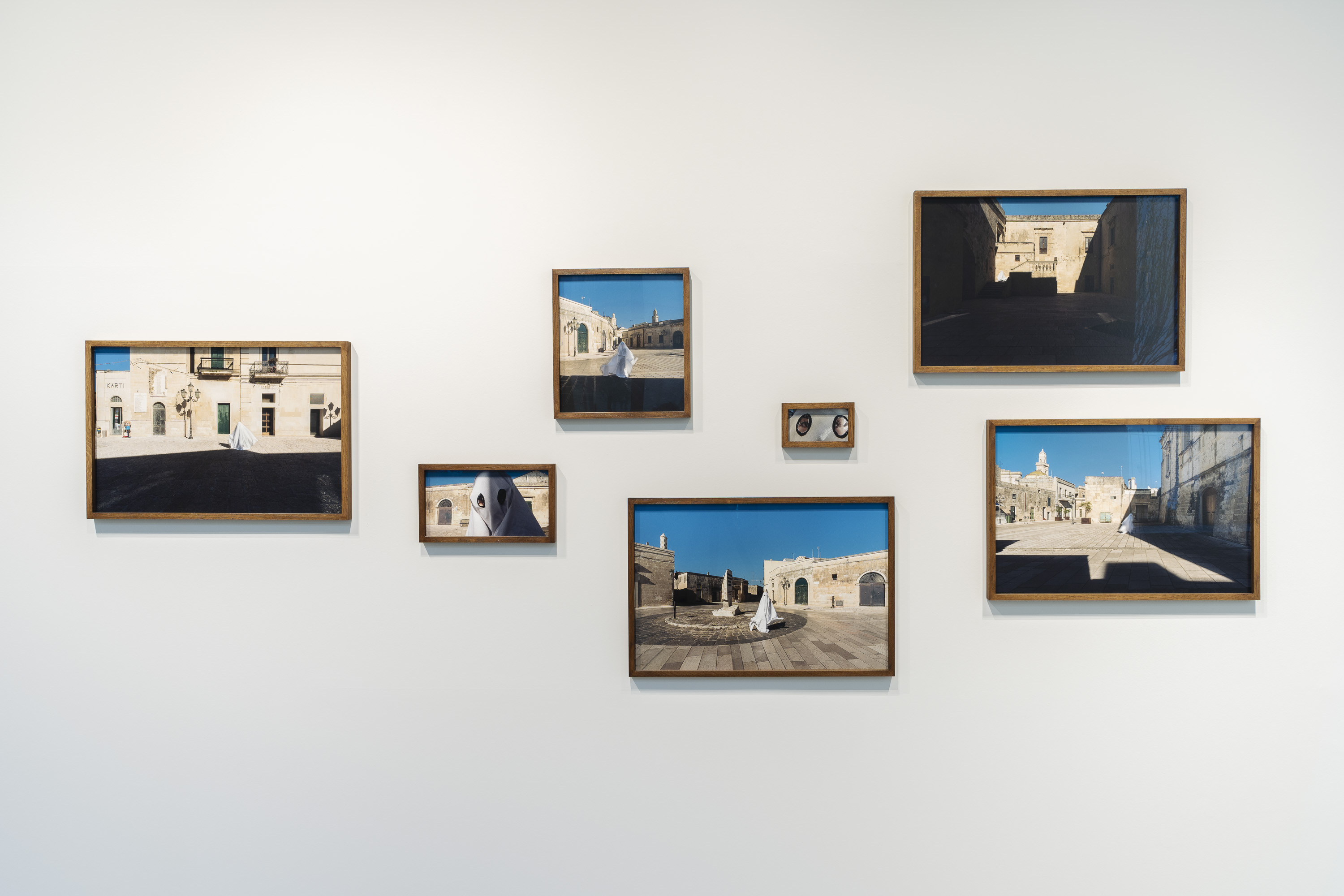
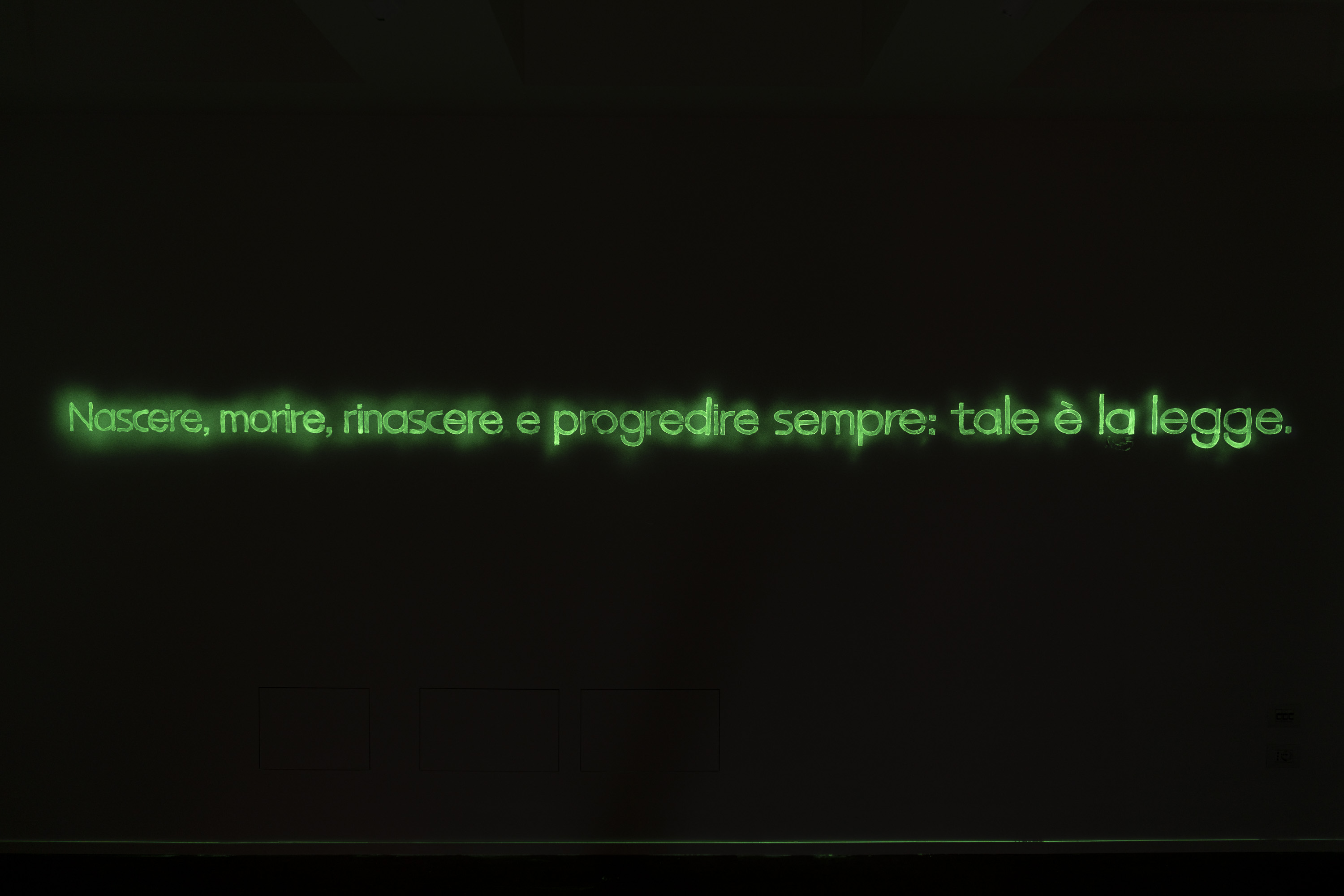
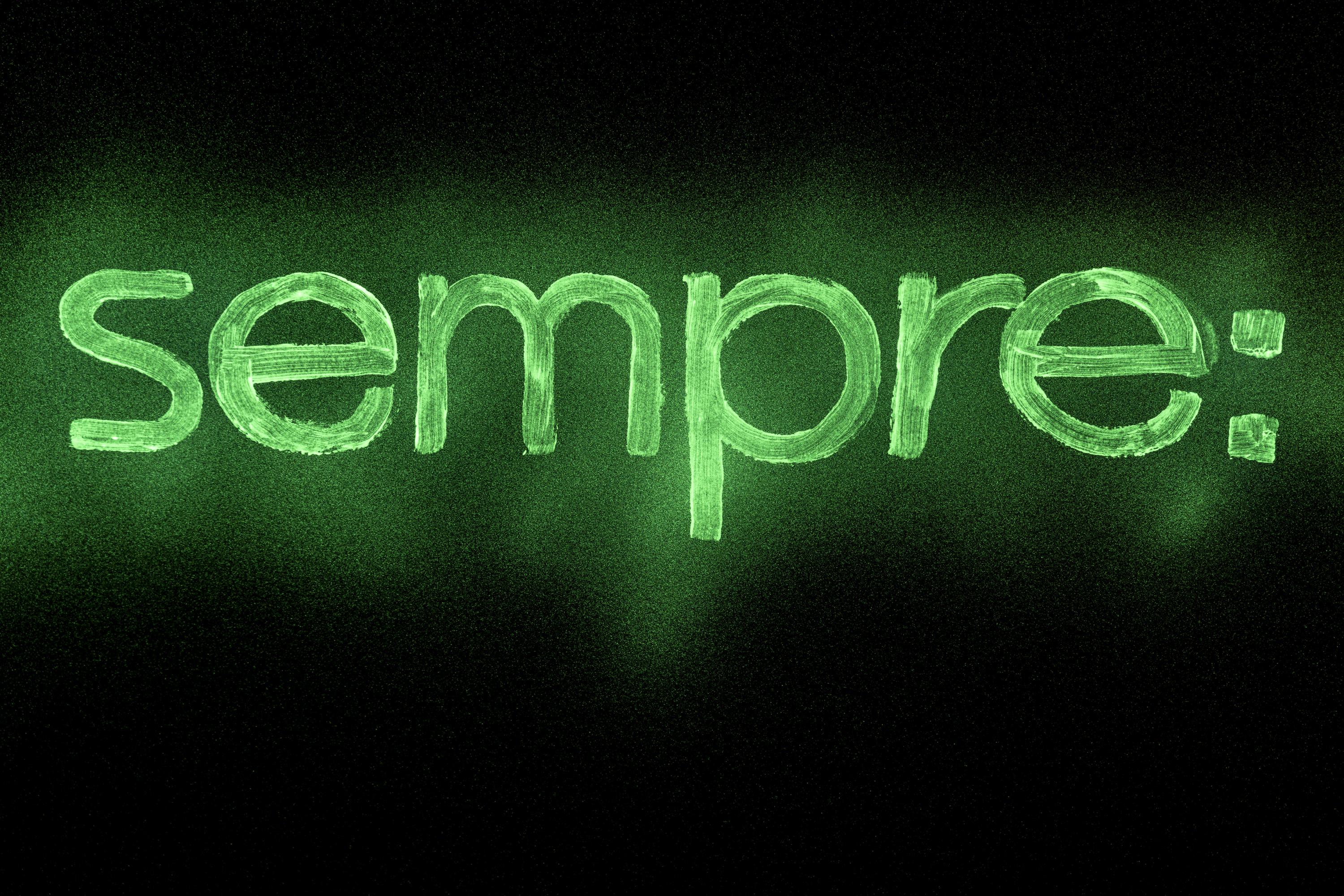
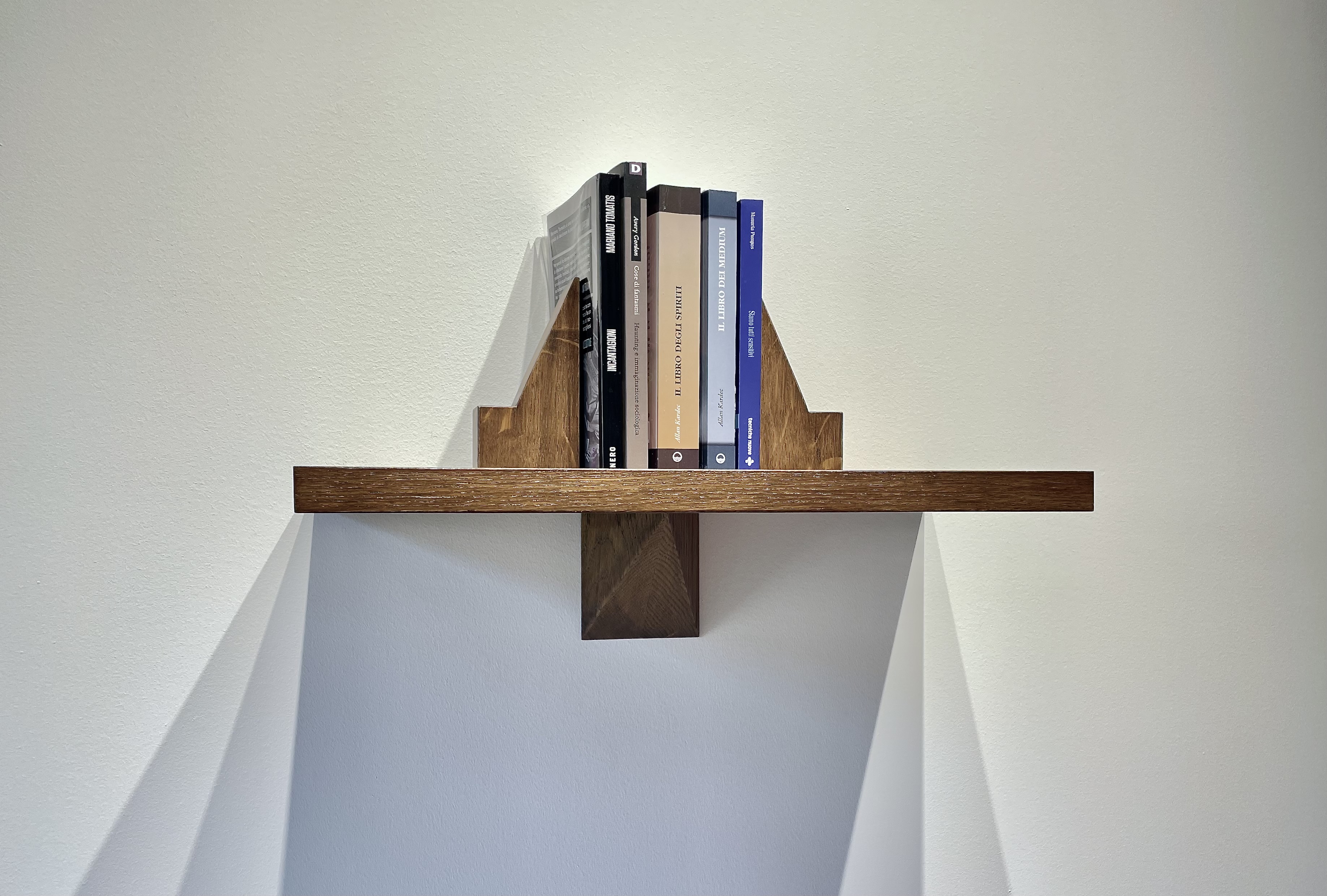
Martina Melilli develops field research by borrowing techniques and approaches from the world of documentary filmmaking and anthropology. During her stay in Salento, she explored the mystical interpretations linked to the concept of controra, a time of day corresponding to the early hours of the afternoon, the hottest hours, when human activities fade into torpor, time slows down and is charged with suggestions, legends, ghosts and spirits. Adopting the same approach, the artist launched an investigation into the memory of the former laundry that houses Fondazione Elpis, with the people and stories that inhabited it and built its identity. It has been possible to reconstruct only very little of what took place at number 25 in Via Orti, and what has been achieved is due to the testimonies of the historical inhabitants and the owners of the workshops in the neighbourhood, the only people who still preserve the memory of this space. This is the case of Signor (Mr.) Ercole, born in 1940, whose stories also provided the exhibition’s title, Chi ghe pi Nisün! (No-one is left there!). In order to fill in the gaps in what their memories cannot recall, the artist relied on a medium, Cristina Pasqualini, and a metaphonist, Antonio Fois, to reveal the stratified memory of this place by digging into its “other” historical dimensions.
To symbolise this parallel quest, three phrases emerge from some of the walls. They are quotations taken from the founding texts of the spiritist discipline and beyond, evoking the idea of tangibility and contact with other dimensions. Some of these texts can be consulted in the exhibition space and constitute a small library. The photographic composition on the ground floor portrays a ghost walking on the boundary between light and shadow in the streets of Castrignano de’ Greci, during controra. If, as Avery Gordon writes, “behind every spectre there is a wound to be healed”, the artist wonders whether this wound might also apply to a place.
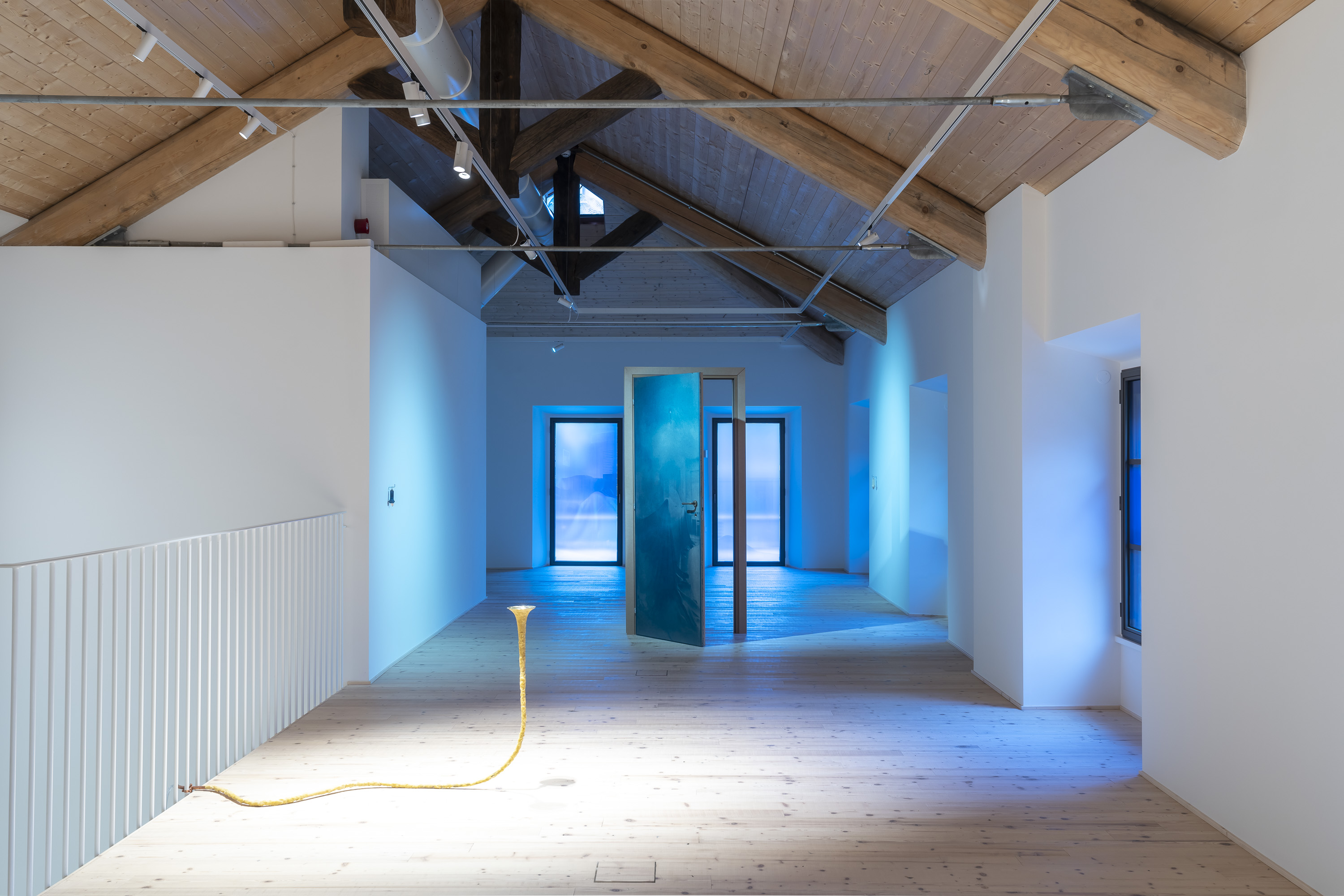
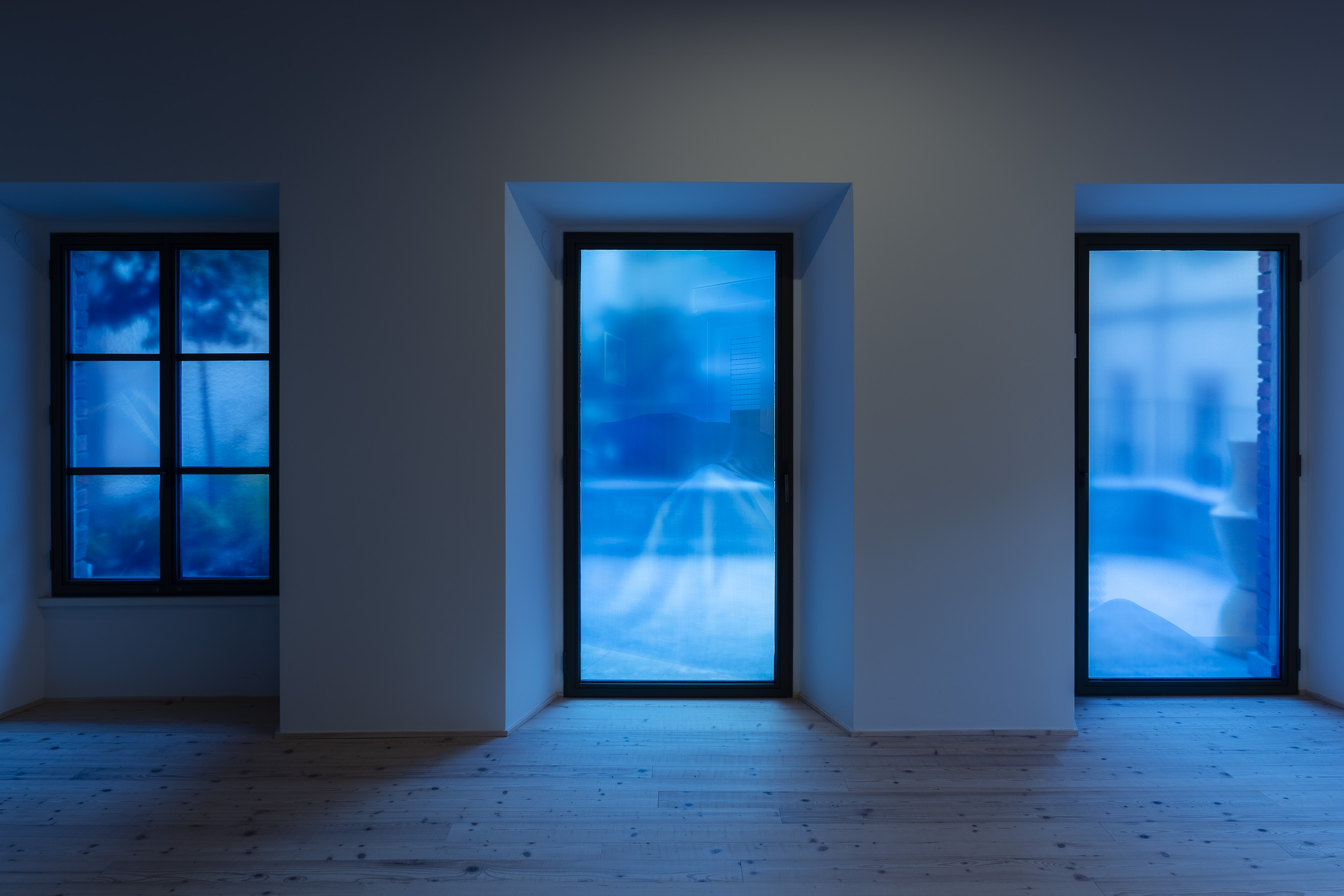
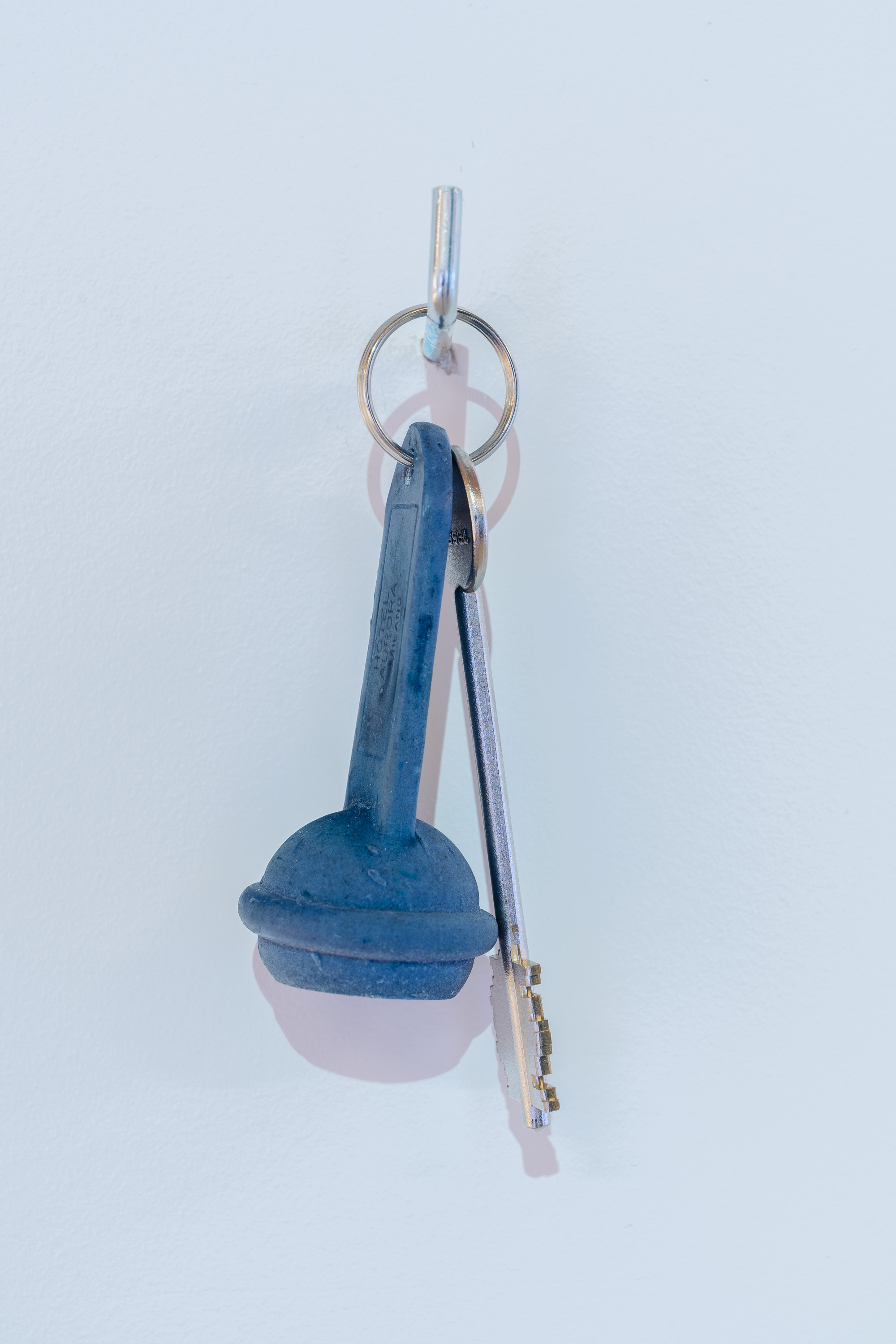
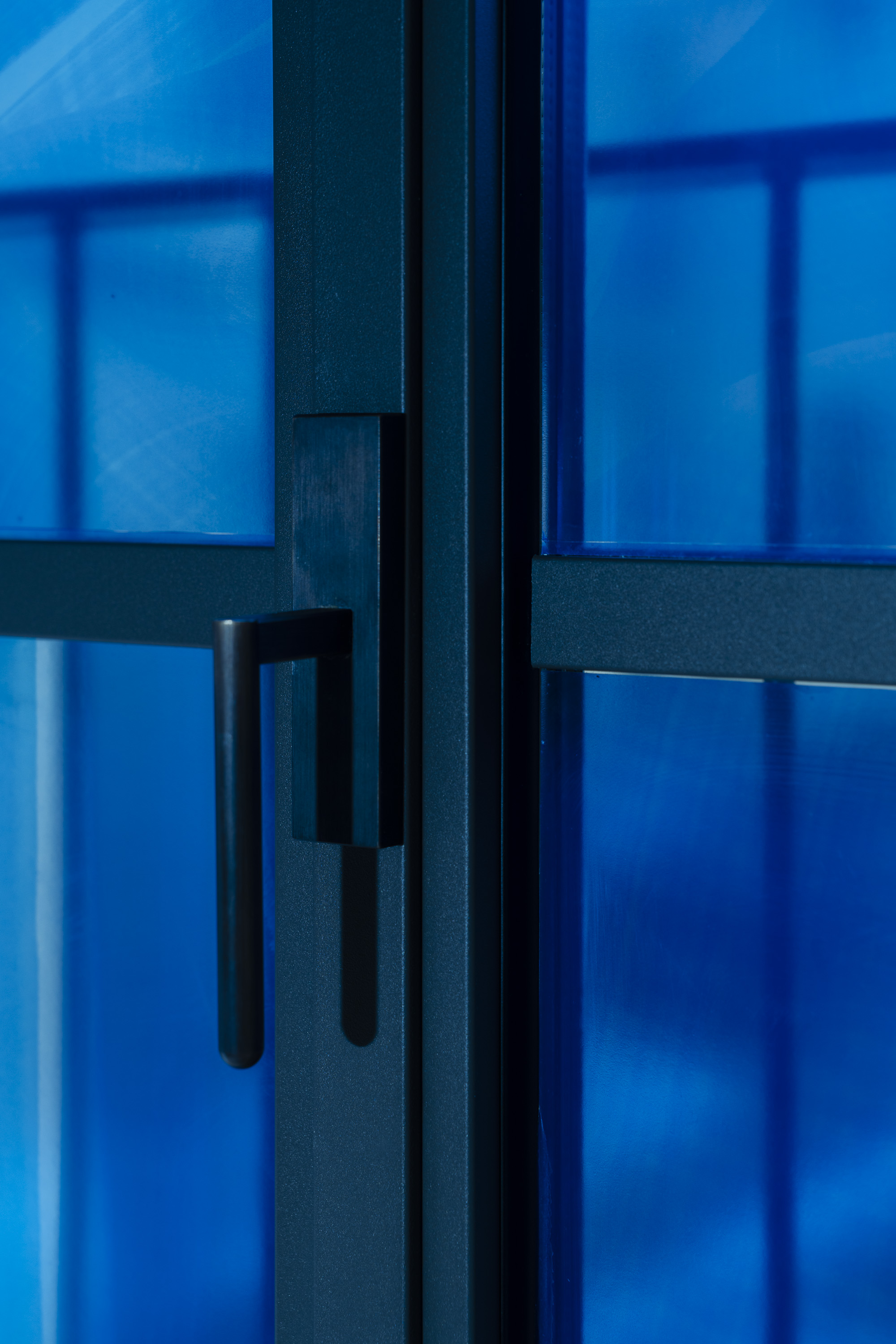
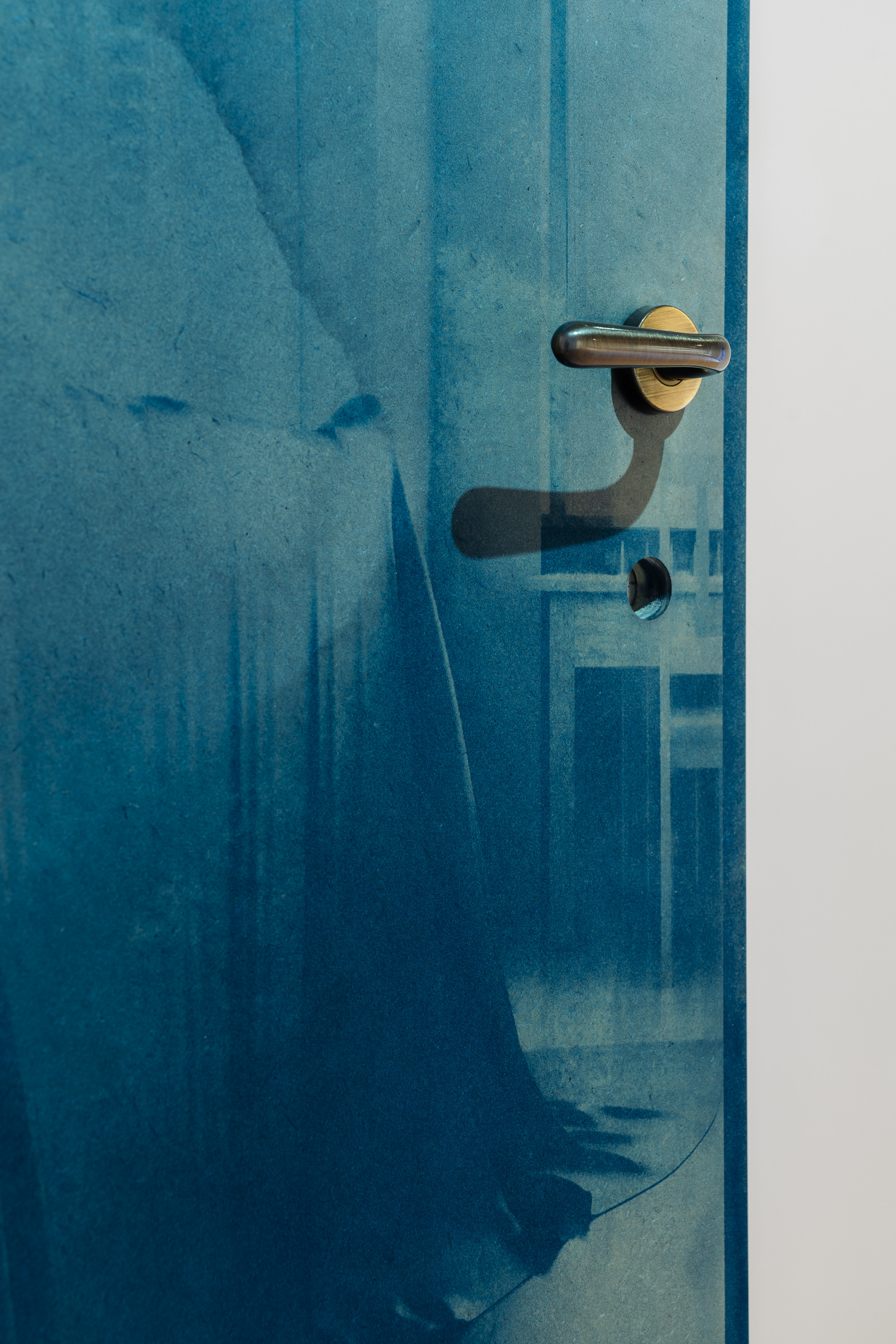
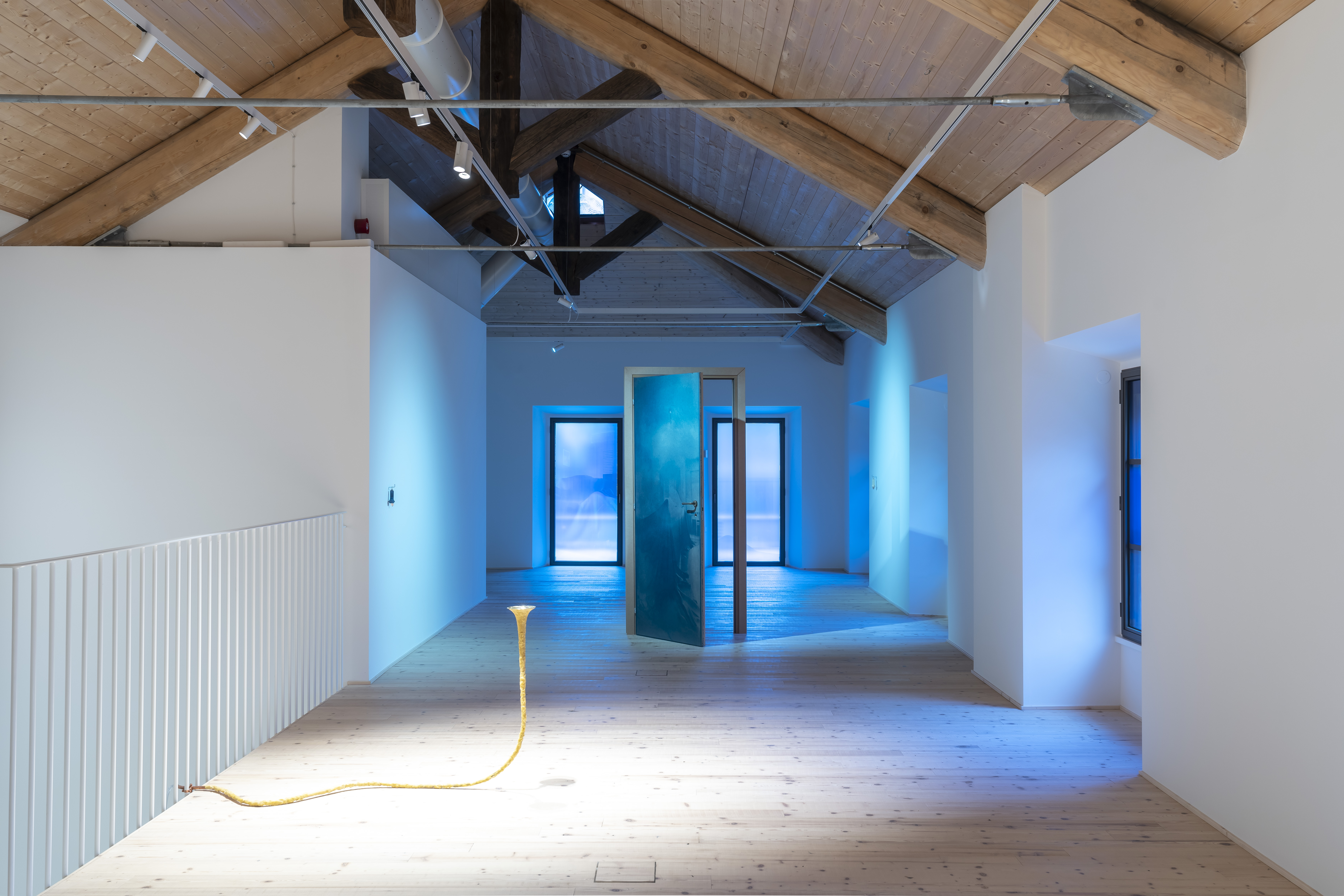
Matteo Pizzolante delves into the memory of the territory through a work that takes on biographical overtones. Originally from Salento, during his residency in Castrignano de’ Greci the artist decided to explore the family’s legacy of stories and tales and investigate the case of a hotel that belonged to his grandfather. Starting from the accounts of some relatives, the Hotel Aurora, abandoned since the early 1990s, was reconstructed using 3D modelling software from which the artist obtained images that he then printed in cyanotype on some doors. The hotel thus becomes the start of a process of personal and collective analysis that mirrors the historical and social dynamics of a territory.
On display in the former laundry, Pizzolante interacts with the building’s structural elements by inserting sculptural objects and thus placing the hotel’s reconstructed environment into communication with the space that hosts it. The installation was completed by the discovery of a hotel of the same name in Milan, where Pizzolante spent a night, transforming his room into an artist’s studio for those hours. Here, with the strange feeling of being a tourist in his own city, he chose some objects, such as door handles and key rings, and made casts of them, which he then integrated into the narrative flow of his work. The same objects were inserted into decals made by the artist to create new images, in which the atmospheres of the two hotels interact as if in a double-exposure photo. Aurora therefore takes the form of a sort of design of memory, in which software usually used to create images referring to future living situations is in this case used to reconstruct a past made of memories.
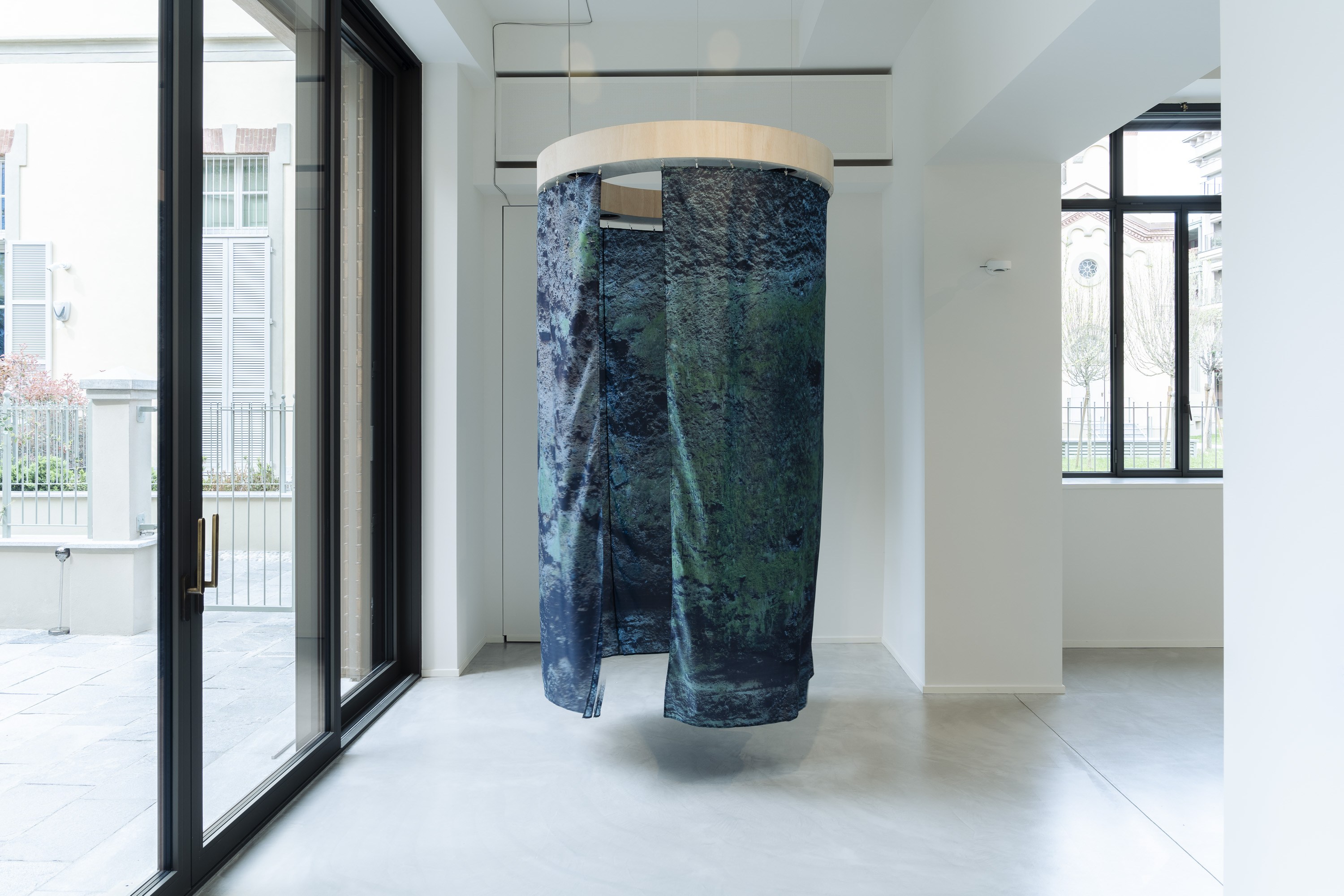
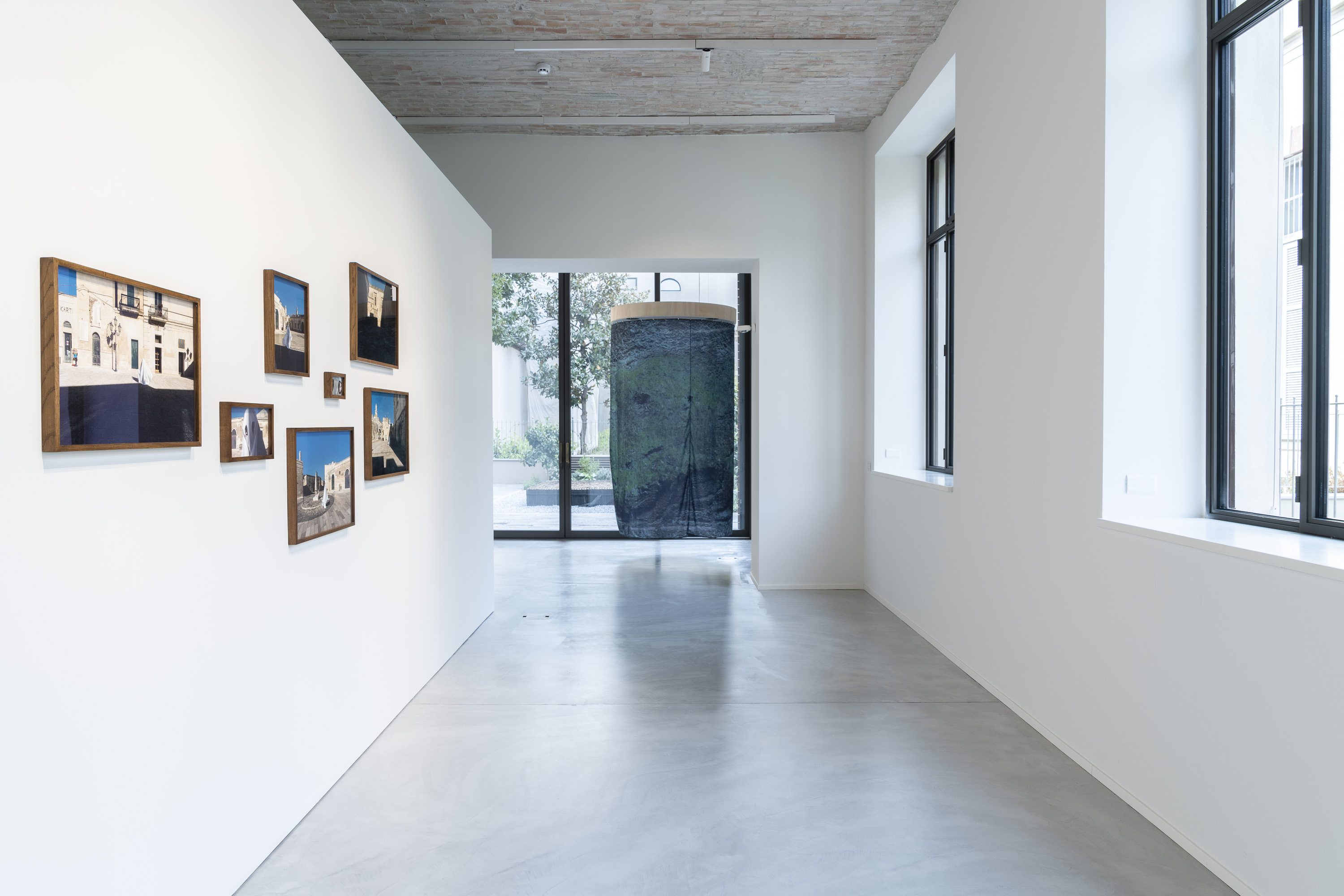
For Agnese Spolverini, the observation of the geographies of living is given the concrete form of the materials that shape the landscape. In Spolverini’s work, the relationship with the territory becomes physical. It is the stone that becomes the body: on the one hand the white, smooth and polished Lecce stone, on the other the porous, dark, volcanic tuff. She encountered the former, previously unknown to her, during her residency in Apulia, while the latter is typical of the artist’s homeland, Tuscia. The first is hard, perfect for building in height, the second is friable, and it encourages one, through its very nature, to dig dens deep down. Two different yet closely-related geological types. Both, in fact, evoke the idea of decentralised living with all the consequences that this implies, such as the need to find a balance between protecting the territory and opening up to the outside world. In Insediamento (Settlement), the work presented in the exhibition, the image of a tuff wall is printed onto fabric to form a cylindrical membrane, a permeable and traversable container. Inside, one can listen to a poetic composition created by the artist, inspired by personal experiences and at the same time by theoretical texts and essays such as “Riabitare l’Italia” (re-inhabiting Italy) that address the idea of living far from the centre, in an ecosystem in contact with nature. Spolverini’s work does not seek to provide answers, but rather to question established visions of living through the combination of direct experience and contributions from scholars.